
The Role of Environment in Employee Retention and Workplace Morale
Introduction: Why People Leave Places, Not Just Jobs
Employee retention is often discussed in terms of compensation, leadership style, career progression, or company culture. These are valid and important factors. Yet one of the most underestimated influences on whether employees stay, disengage, or leave altogether is the physical work environment.
The environment employees operate in every day silently shapes how they feel, how they perform, and how connected they are to their organization. From lighting and air quality to cleanliness, maintenance reliability, noise levels, and spatial design, the workplace environment communicates powerful messages — whether intentional or not — about value, care, and professionalism.
Organizations spend significant resources attracting talent, onboarding employees, and building internal culture. However, when the environment itself becomes a source of daily friction, discomfort, or stress, even the most engaged employees eventually disconnect. Over time, morale declines, productivity suffers, and retention becomes an uphill battle.
This is where workplace environment employee retention becomes more than a theoretical concept. It becomes an operational priority.
This article explores the deep, often overlooked relationship between the workplace environment, employee morale, and long-term retention. It also examines why organizations that take facility management seriously gain a measurable advantage in employee satisfaction, performance, and loyalty.

The Environment as a Silent Influencer of Behavior and Emotion
Human beings are deeply responsive to their surroundings. Long before a manager speaks or a policy is enforced, the environment is already shaping perception and behavior. An office that feels neglected, cluttered, poorly maintained, or uncomfortable sends a message—even if unintentionally—that people are expected to “make do.”
Over time, this message erodes morale.
Employees may not always articulate dissatisfaction in terms of facilities, but the effects surface in subtle ways: increased irritability, reduced collaboration, higher absenteeism, and emotional disengagement. When employees feel physically uncomfortable or unsafe, their mental energy shifts from creativity and problem-solving to endurance and survival.
On the other hand, a clean, predictable, and well-maintained environment communicates stability and respect. It signals that leadership values not just output, but the people producing it. This psychological safety directly influences how employees show up—emotionally and professionally.
Research consistently shows that workplace conditions influence mood, stress levels, and cognitive performance. Poor air quality leads to fatigue. Inadequate lighting causes eye strain and headaches. Noise disruptions break concentration. Unreliable facilities create daily uncertainty. Each factor alone may seem minor; combined, they significantly affect morale.
When discussing employee morale and productivity, environment is not a background detail—it is a core driver.
Employee Retention Begins with Daily Experience, Not Exit Interviews
Many organizations attempt to address retention only after employees leave, through exit interviews and post-departure surveys. While these tools offer insight, they often come too late. The decision to disengage or leave is usually made months earlier, during repeated negative daily experiences.
The workplace environment plays a major role in this slow erosion.
When employees encounter broken systems that remain unfixed, inconsistent cleaning standards, or spaces that feel unsafe or poorly managed, they internalize a sense of neglect. Over time, they stop reporting issues. They stop expecting improvement. Eventually, they start looking elsewhere.
This is particularly relevant in sectors such as healthcare, education, corporate offices, and managed facilities where employees spend long hours on site. A poorly maintained environment amplifies stress in already demanding roles, accelerating burnout and turnover.
Conversely, organizations that invest in consistent facility management often see improvements in retention without changing compensation structures or benefits. Why? Because employees experience fewer daily frustrations. They feel supported in tangible ways. Their energy is preserved rather than depleted.
In this sense, workplace environment employee retention is less about grand gestures and more about operational consistency.
Cleanliness, Order, and the Psychology of Respect
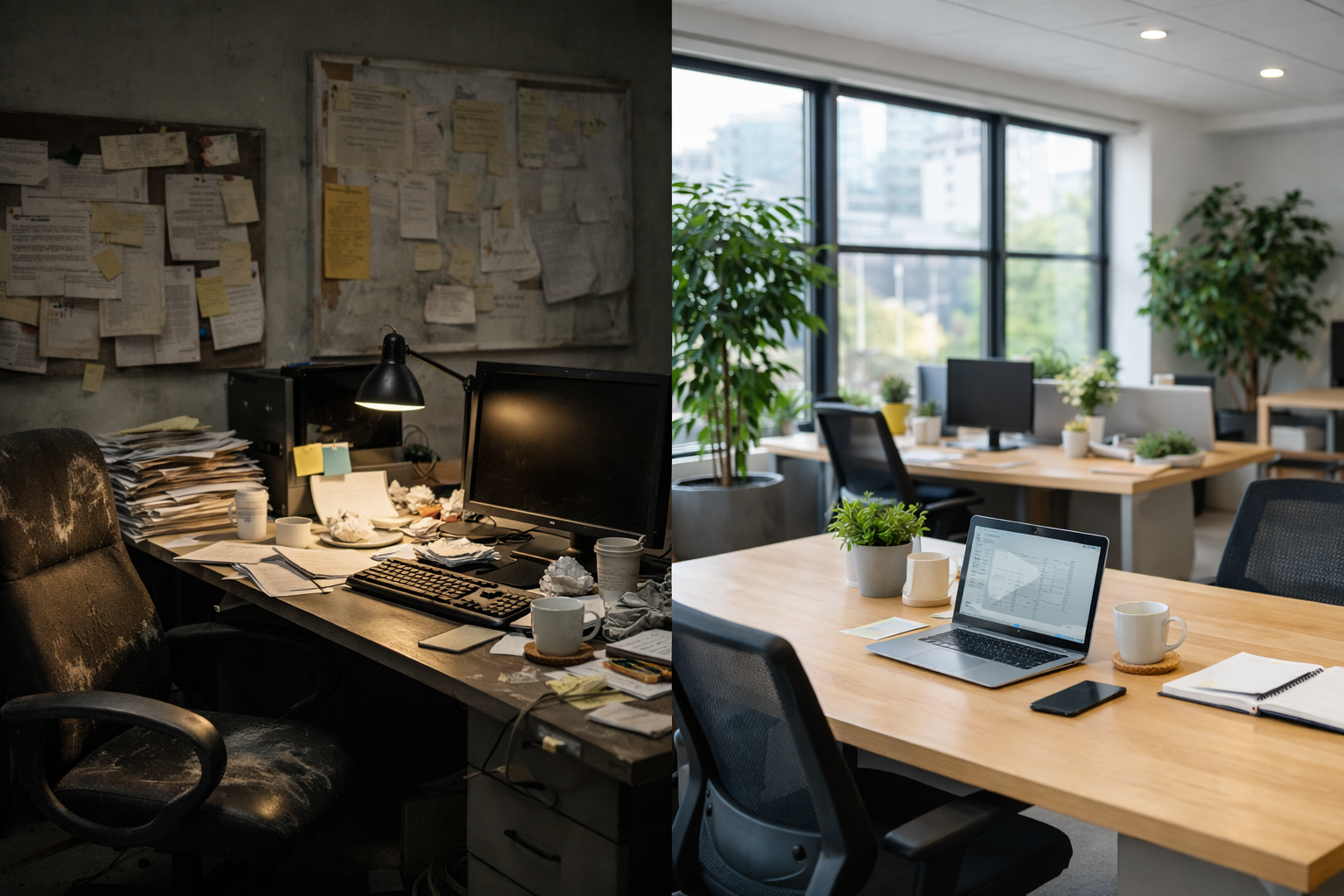
Cleanliness is one of the most visible and emotionally charged aspects of any workplace environment. It directly affects perception, trust, and pride.
A clean environment signals respect—for the work being done and for the people doing it. It reinforces professionalism and order. Employees are more likely to take pride in their work when the space around them reflects care and attention.
On the contrary, inconsistent cleaning standards communicate indifference. When employees repeatedly encounter dirty restrooms, overflowing trash, dusty surfaces, or neglected shared spaces, morale suffers. The message becomes clear: comfort and dignity are not priorities.
This dynamic is especially impactful in high-traffic environments such as hospitals, schools, office parks, and corporate facilities. In these spaces, cleanliness is not just aesthetic; it is functional and psychological.
Employees working in clean, organized environments are more likely to:
Feel calm and focused
Engage more positively with colleagues
Trust leadership decisions
Stay longer with the organization
This connection between cleanliness and morale highlights why facility management and employee satisfaction are inseparable.
Predictability and Maintenance: The Hidden Foundations of Morale
One of the most underrated contributors to workplace morale is predictability. Employees perform best when they can rely on systems working as expected. When facilities are consistently maintained, employees rarely think about them—and that is precisely the point.
However, when maintenance becomes reactive rather than proactive, stress increases. Broken elevators, faulty HVAC systems, unreliable lighting, or recurring plumbing issues create constant interruptions. Employees are forced to adapt repeatedly, draining cognitive and emotional energy.
Over time, this unpredictability fosters frustration and resentment. Employees may feel their time is being wasted or that leadership is indifferent to their daily challenges.
In contrast, well-managed facilities fade into the background, allowing employees to focus on their roles rather than their surroundings. This operational stability supports higher morale, better collaboration, and stronger retention.
Organizations that understand this invest in preventive maintenance and professional facility management, recognizing that morale is built through reliability, not just motivational speeches.
The Emotional Impact of Space Design and Comfort
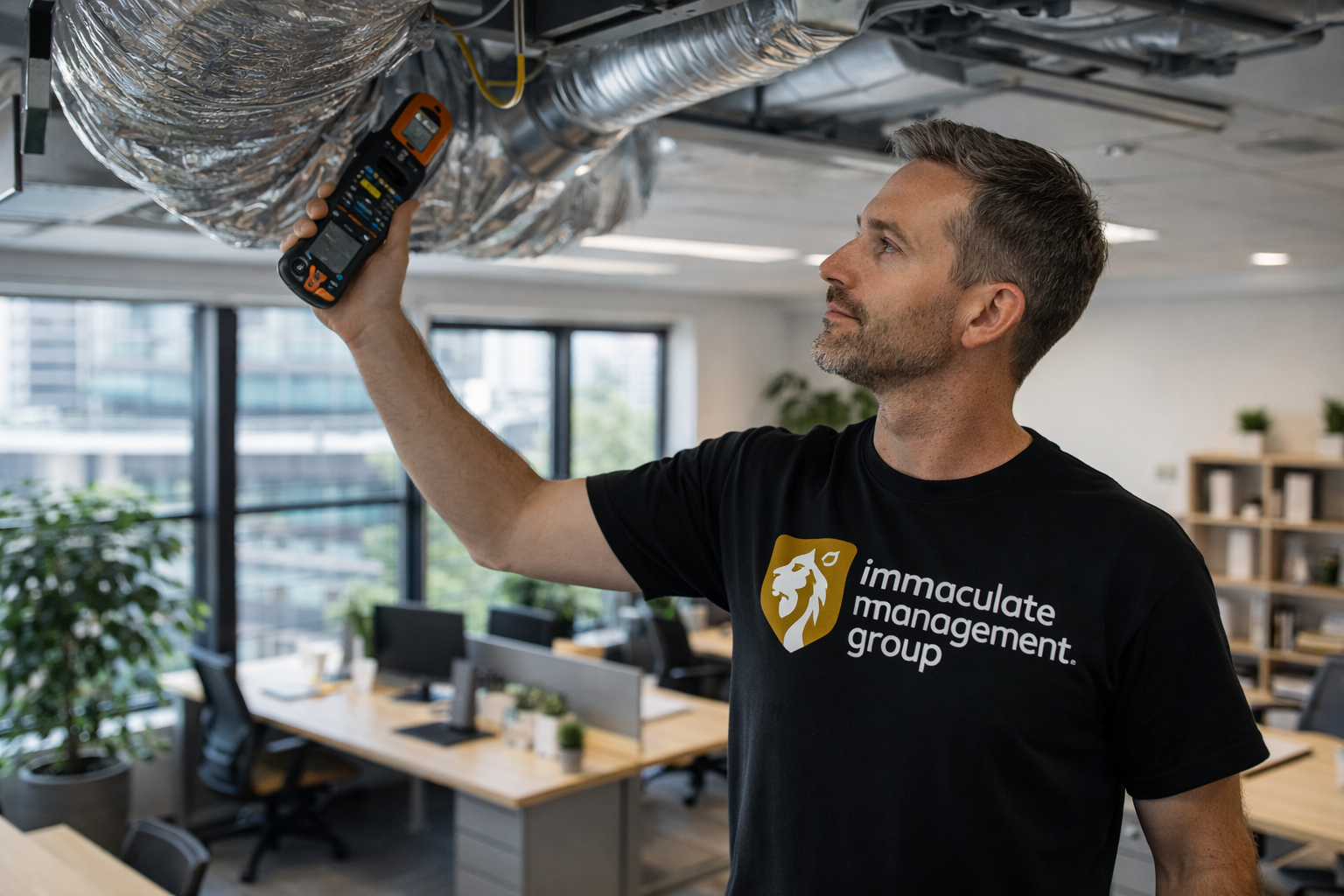
Beyond maintenance and cleanliness, the design and comfort of a workplace environment significantly influence how employees feel. Factors such as natural light, ventilation, ergonomic furniture, noise control, and spatial layout all contribute to daily experience.
Poorly designed spaces can lead to physical discomfort, fatigue, and disengagement. Crowded layouts increase stress. Insufficient lighting affects mood. Inadequate ventilation contributes to sluggishness and reduced focus.
Well-designed spaces, however, encourage collaboration, creativity, and well-being. They allow employees to move comfortably, concentrate effectively, and interact naturally. Even small design improvements can have a disproportionate impact on morale.
This is particularly relevant as organizations compete for talent in environments where flexibility and well-being are increasingly valued. Employees may tolerate short-term challenges, but they are unlikely to remain long-term in environments that consistently undermine comfort and focus.
Thus, workplace design becomes a strategic retention tool, not just an aesthetic choice.
Leadership Signals Embedded in the Environment
Employees often interpret the state of their environment as a reflection of leadership priorities. When facilities are neglected, employees may assume leadership is disconnected from daily realities or unwilling to invest in foundational needs.
This perception damages trust.
On the other hand, organizations that maintain clean, safe, and functional environments demonstrate attentiveness and accountability. These visible actions reinforce internal messaging about values, care, and professionalism.
Leadership credibility is not built only through communication; it is reinforced through consistent environmental standards.
When employees feel that leadership takes their physical working conditions seriously, they are more likely to reciprocate with loyalty and engagement.

Environment, Engagement, and Long-Term Performance
Employee engagement is often treated as a cultural or managerial challenge. While leadership and communication matter, engagement cannot thrive in environments that undermine daily performance.
A supportive environment reduces friction, preserves energy, and enables focus. Employees who are not constantly navigating discomfort or dysfunction are more likely to contribute ideas, collaborate, and take initiative.
Over time, this creates a virtuous cycle:
Better environment → higher morale → stronger engagement → improved retention → organizational stability.
Organizations that overlook this cycle often struggle with recurring turnover despite strong recruitment efforts. Those that understand it invest strategically in facility management as part of their retention strategy.
Rethink Retention Beyond Compensation
If employee retention is a priority, it may be time to look beyond salaries and benefits and evaluate the everyday environment employees experience.
Organizations that retain talent consistently ask, "What does our workplace communicate every single day?”
Reframing retention through this lens opens opportunities for improvement that are operational, measurable, and sustainable.
Facility Management as a Strategic Retention Tool
Professional facility management is not simply about keeping buildings functional. It is about creating environments that support people.
By implementing structured maintenance schedules, consistent cleaning standards, safety protocols, and responsive support systems, organizations reduce environmental stressors that quietly erode morale.
This strategic approach aligns facilities with organizational goals, ensuring that the environment reinforces rather than undermines employee experience.
For organizations managing complex facilities, partnering with experienced facility management providers ensures that standards remain consistent, predictable, and aligned with employee needs.

Evaluate Your Environment Through Your Employees’ Eyes
Before implementing new engagement initiatives, leaders can benefit from assessing the physical environment from an employee perspective.
Questions worth asking include:
Are facilities reliable and well-maintained?
Does the space support focus, comfort, and safety?
Are environmental issues addressed proactively or reactively?
Often, meaningful improvements begin with awareness.
Retention Is Built Into the Walls
Employee retention is not shaped only by policies, pay, or performance reviews. It is shaped daily by the spaces employees occupy and the conditions they work within.
The workplace environment influences mood, energy, trust, and engagement — quietly but powerfully. Organizations that recognize this gain a strategic advantage, not only in retaining talent but in sustaining performance and morale.
By treating facility management as an investment in people rather than an operational expense, organizations build environments where employees choose to stay.
Build Environments That People Want to Stay In
Organizations committed to long-term growth understand that people thrive in spaces designed with intention, consistency, and care.
Aligning facility management with employee experience is not just a facilities decision—it is a leadership one.