
How AI Predictive Maintenance Will Transform US Facility Management in 2026 for Cost Savings and Efficiency
The New Reality of Facility Management in the United States

Facility management in the United States has entered a defining moment in 2026. Across commercial, industrial, healthcare, and institutional environments, facility leaders are grappling with a convergence of pressures that traditional maintenance models were never designed to handle. Aging infrastructure, rising energy costs, hybrid occupancy patterns, and heightened regulatory expectations are forcing decision-makers to rethink how buildings are operated, maintained, and optimized.
Facility management in the United States has entered a defining moment in 2026. Across commercial, industrial, healthcare, and institutional environments, facility leaders are grappling with a convergence of pressures that traditional maintenance models were never designed to handle. Aging infrastructure, rising energy costs, hybrid occupancy patterns, and heightened regulatory expectations are forcing decision-makers to rethink how buildings are operated, maintained, and optimized.
Much of the US built environment was constructed decades ago, with HVAC systems, electrical infrastructure, elevators, and mechanical assets operating beyond their originally intended lifespans. According to industry estimates, more than 60% of commercial buildings in the US are over 30 years old, significantly increasing the likelihood of equipment failure and energy inefficiency.
At the same time, facility managers are being asked to do more with less—smaller teams, tighter budgets, and greater accountability for uptime, sustainability, and occupant experience.
Hybrid work models have further complicated operations. Office buildings no longer follow predictable usage patterns, while healthcare, logistics, and manufacturing facilities face nonstop operational demands where downtime is not merely inconvenient, but costly and risky. In manufacturing alone, unplanned downtime can cost organizations $50,000 or more per hour, while in healthcare settings, equipment failure can compromise patient safety and regulatory compliance.
Energy volatility has added another layer of strain. With energy prices remaining elevated and ESG expectations becoming enforceable rather than optional, facilities are under pressure to reduce waste, improve efficiency, and document performance. Poorly maintained equipment can consume up to 20% more energy than optimized systems, directly impacting operating expenses and carbon footprints.
Against this backdrop, the limitations of traditional maintenance strategies are becoming increasingly evident. Preventive maintenance schedules based on time intervals rather than actual equipment condition often lead to unnecessary servicing on one hand, and unexpected breakdowns on the other. Reactive maintenance, meanwhile, results in emergency repairs, inflated costs, operational disruption, and reputational damage.
For facility leaders focused on reliability, efficiency, and long-term value, the question is no longer whether change is needed—but how to transition from reactive firefighting to intelligent, data-driven operations. This challenge sets the stage for a fundamental shift in facility management strategy, one that prioritizes foresight over hindsight and prevention over repair.
Why Traditional Maintenance Is Failing in 2026

While facility challenges have intensified, maintenance strategies in many US buildings have remained largely unchanged. Preventive schedules based on fixed timelines and reactive repairs after failure still dominate operations across commercial, industrial, healthcare, and institutional portfolios. In 2026, this disconnect between modern facility demands and outdated maintenance models is no longer sustainable.
Traditional preventive maintenance was designed for a more stable era—one where asset usage was predictable, energy costs were relatively steady, and compliance expectations were less rigorous. Today’s facilities operate in far more volatile conditions. Equipment loads fluctuate daily due to hybrid occupancy, extended operating hours, and increased reliance on automation. Yet many maintenance plans still assume linear wear patterns, leading to over-servicing low-risk assets while missing early warning signs on critical equipment.
Reactive maintenance compounds the problem. Emergency repairs typically cost 3–5 times more than planned interventions due to expedited labor, after-hours work, and premium-priced replacement parts.
Beyond direct costs, breakdowns disrupt tenants, patients, students, or production schedules—often triggering downstream losses that far exceed the repair itself. For logistics and manufacturing facilities, a single unexpected failure can halt operations entirely, eroding service-level agreements and customer trust.
Energy inefficiency is another hidden consequence of outdated maintenance approaches. Assets operating outside optimal performance parameters—such as HVAC units with failing components or poorly calibrated controls—consume significantly more energy. Studies show that inadequately maintained mechanical systems can drive 15–20% excess energy consumption, directly increasing operating expenses and undermining sustainability commitments.
Labor constraints further expose the weakness of traditional models. Skilled facility technicians are in short supply nationwide, yet manual inspections and routine checks still absorb a large share of available labor hours. This leaves teams stretched thin, focused on repetitive tasks instead of strategic improvements, asset optimization, or capital planning. In effect, facilities are paying premium labor costs for low-value activity.
Regulatory and ESG pressures amplify these inefficiencies. State energy codes, federal efficiency incentives, and emerging climate disclosure requirements demand measurable performance improvements—not assumptions. Traditional maintenance offers limited visibility into asset health, energy performance, or risk exposure, making compliance reactive rather than strategic.
The result is a compounding cycle: rising costs, unpredictable failures, inefficient energy use, and operational stress. Facility leaders may sense that the model is broken, yet without real-time insight into asset behavior, they lack the tools to intervene early. This gap between what facility managers need to know and what traditional maintenance can reveal is precisely where operational risk accumulates.
As 2026 progresses, the cost of inaction continues to rise. Facilities that remain locked in reactive or calendar-based maintenance are not merely inefficient—they are increasingly uncompetitive. This reality creates urgency for a smarter, data-driven alternative that aligns maintenance activity with actual equipment condition and business impact.
What AI Predictive Maintenance Is and Why It Changes Everything

AI predictive maintenance represents a fundamental shift in how facilities are managed, maintained, and optimized. Rather than relying on fixed schedules or reacting after failures occur, predictive maintenance uses artificial intelligence, machine learning, and real-time data to anticipate problems before they disrupt operations. In the context of US facility management in 2026, this shift is less about adopting new technology and more about redefining maintenance as a strategic business function.
At its core, AI predictive maintenance focuses on condition-based decision-making. Sensors embedded in critical assets—such as HVAC units, chillers, generators, elevators, conveyors, and electrical systems—continuously collect performance data. This data includes vibration patterns, temperature fluctuations, pressure levels, runtime hours, and energy consumption. Instead of sitting unused, these data streams are analyzed by machine learning models trained to recognize normal behavior and detect subtle anomalies that signal early-stage failure.
What differentiates predictive maintenance from traditional preventive programs is timing and precision. Preventive maintenance assumes equipment degrades at predictable intervals; predictive maintenance recognizes that assets degrade differently depending on usage, environment, load, and operational context.
By identifying risk patterns early, facility teams can intervene at the optimal moment—neither too early nor too late—reducing waste while preventing costly breakdowns.
In 2026, AI-driven platforms have matured significantly. Accuracy rates for failure prediction now exceed 85–90% for common mechanical and electrical systems, according to industry benchmarks. These insights are delivered through intuitive dashboards that translate complex analytics into actionable recommendations, allowing facility managers and executives to make informed decisions without needing deep technical expertise.
From a business perspective, the impact is transformational. Predictive maintenance converts maintenance from a cost center into a value driver. Downtime becomes predictable and manageable. Maintenance budgets stabilize. Energy performance improves as assets are continuously optimized rather than periodically adjusted. For portfolio-level operators, predictive insights enable benchmarking across sites, revealing underperforming assets and systemic risks that would otherwise remain hidden.
Equally important is how predictive maintenance aligns with modern facility leadership priorities. Reliability improves, supporting tenant satisfaction and operational continuity. Efficiency gains free up skilled labor for higher-value work. Sustainability targets become achievable through data-backed energy optimization. Risk exposure—whether financial, operational, or regulatory—declines as failures are anticipated rather than endured.
For organizations like Immaculate Management Group (IMG), AI predictive maintenance is not viewed as a standalone technology deployment, but as an operational intelligence layer that strengthens decision-making across the entire facility lifecycle. When paired with disciplined execution and strategic oversight, predictive maintenance becomes a powerful enabler of long-term performance, resilience, and competitive advantage.
This foundational shift—from reacting to failures to predicting outcomes—sets the stage for understanding how the technology actually works in practice, and why its adoption is accelerating across US facilities.
How AI Predictive Maintenance Works in Practice

Understanding the value of AI predictive maintenance requires more than a high-level definition; it requires clarity on how the technology operates within real facilities. In practice, predictive maintenance is a layered system that combines physical infrastructure, digital intelligence, and operational workflows to create continuous visibility into asset health and performance. In 2026, this ecosystem has become both robust and accessible for US facility operators.
The process begins at the asset level. IoT-enabled sensors are installed on or integrated into critical building systems such as HVAC units, chillers, pumps, generators, elevators, and electrical panels. These sensors capture high-frequency data points including vibration, temperature, pressure, current draw, runtime cycles, and energy consumption. Unlike periodic manual inspections, data collection is continuous, providing a real-time picture of how equipment behaves under actual operating conditions.
Once captured, data flows into AI-powered analytics platforms, typically via cloud or hybrid cloud architectures. Here, machine learning models analyze incoming signals against historical performance data and known failure patterns.
Over time, these models learn what “normal” looks like for each asset and identify deviations that indicate wear, misalignment, component fatigue, or impending failure. Importantly, the system improves with use—accuracy increases as more data is processed across similar assets and environments.
In modern deployments, edge computing plays a growing role. Instead of transmitting all data to centralized servers, certain analytics are processed on-site, enabling faster detection and response for mission-critical systems. This is particularly valuable for remote facilities, manufacturing plants, and healthcare environments where latency can translate into operational risk.
A critical enabler of adoption in 2026 is integration. Predictive maintenance platforms now connect seamlessly with Building Management Systems (BMS), Computerized Maintenance Management Systems (CMMS), and Enterprise Resource Planning (ERP) tools. When the AI detects a risk event, it can automatically generate a work order, recommend the required parts, and align maintenance activity with operational schedules. This reduces manual coordination and ensures insights translate into action.
Advanced implementations also leverage digital twins—virtual replicas of physical assets or entire facilities. These models allow facility teams to simulate “what-if” scenarios, such as increased load, seasonal demand shifts, or deferred maintenance. By modeling outcomes before they occur, leaders can make informed decisions that balance cost, risk, and performance.
For facility managers, the user experience is intentionally simplified. Dashboards prioritize clarity over complexity, presenting risk scores, maintenance recommendations, and financial impact in plain language. Executives gain portfolio-level visibility, while technicians receive precise, actionable tasks. This alignment between insight and execution is what differentiates successful predictive maintenance programs from failed pilots.
In operational terms, predictive maintenance replaces guesswork with evidence. Instead of asking whether equipment might fail, facility teams know when intervention is needed, why it matters, and what action will deliver the best outcome. This capability not only reduces downtime and cost, but also builds confidence in maintenance decisions—an increasingly valuable asset in high-stakes environments.
US Case Studies Demonstrating Predictive Maintenance Success
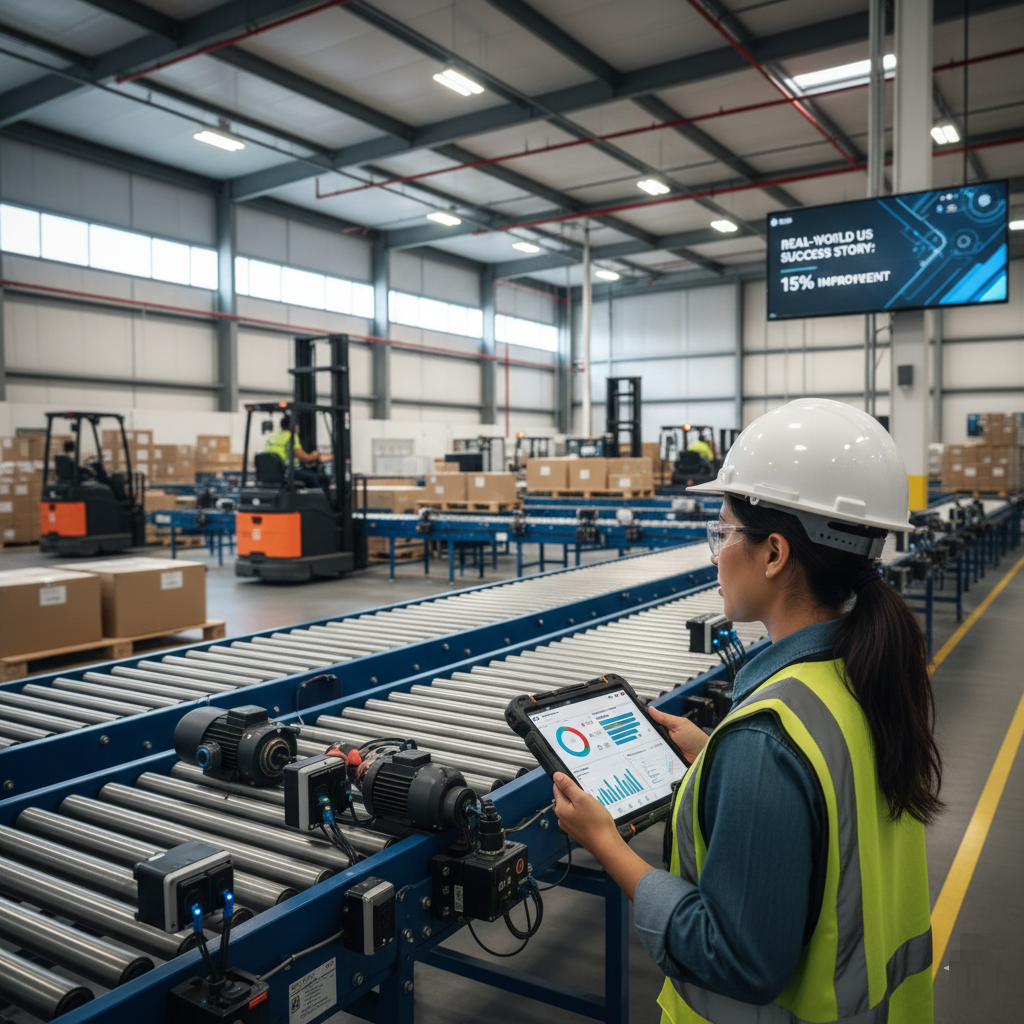
The value of AI predictive maintenance becomes most tangible when viewed through real-world implementation. Across the United States, facilities that have moved beyond pilot programs and embedded predictive maintenance into daily operations are reporting substantial gains in reliability, efficiency, and cost control. These case studies highlight how the technology delivers results across diverse sectors, each with distinct operational risks and performance expectations.
In the logistics and industrial sector, where uptime directly affects revenue and customer commitments, predictive maintenance has proven particularly impactful. A large Midwest logistics hub implemented AI monitoring across its conveyor systems, motors, and sorting equipment. Prior to adoption, the facility experienced frequent belt and bearing failures, resulting in approximately 120 hours of downtime annually. By deploying vibration and temperature sensors linked to machine learning models, the system began detecting abnormal wear patterns weeks in advance. As a result, the facility prevented nearly 95% of potential breakdowns, reducing downtime to just 20 hours per year. The operational savings exceeded $1.2 million annually, while on-time delivery performance improved measurably.
Healthcare facilities present a different but equally critical use case. Reliability, safety, and compliance are non-negotiable, particularly for backup power and life-safety systems. A Florida-based hospital network adopted predictive maintenance for its emergency generators, chillers, and electrical infrastructure following repeated weather-related disruptions. AI-driven monitoring enabled early detection of fuel system degradation and cooling inefficiencies, allowing maintenance teams to intervene before failures occurred. During peak hurricane season, the network achieved 99.9% equipment uptime, while response times to maintenance events fell by 60% due to automated CMMS integration. Beyond cost savings, the initiative strengthened regulatory compliance and patient safety outcomes.
Commercial office portfolios have also leveraged predictive maintenance to adapt to post-pandemic operating models. In New York, a multi-tenant office portfolio implemented AI-driven HVAC and occupancy analytics across several high-rise properties. With fluctuating occupancy levels, traditional scheduling led to over-conditioning empty spaces and under-performing systems in high-use areas. Predictive insights enabled dynamic HVAC optimization based on actual usage and asset condition. Within the first year, the portfolio reduced energy costs by 22%, improved tenant comfort scores, and redirected savings toward further smart-building upgrades. The initiative also supported ESG reporting requirements, enhancing the portfolio’s attractiveness to institutional investors.
These case studies underscore a critical point: predictive maintenance success is not limited to a single sector or asset type. Whether preventing mechanical failure in industrial environments, ensuring resilience in healthcare settings, or optimizing energy use in commercial buildings, AI-driven maintenance delivers consistent value when aligned with operational priorities.
For facility leaders evaluating adoption, these examples provide reassurance that predictive maintenance is no longer experimental. It is a proven, scalable approach that delivers measurable results across the US facility landscape—when implemented with clear objectives, disciplined execution, and the right operational framework.
2026 Trends Accelerating AI Predictive Maintenance Adoption

As AI predictive maintenance moves into the mainstream, several converging trends in 2026 are accelerating adoption across US facilities. These trends reflect not only technological maturity, but also a broader shift in how organizations view facility management—as a strategic contributor to business performance, sustainability, and risk management.
One of the most significant developments is the evolution from predictive to prescriptive maintenance. Early AI systems focused on forecasting failures; today’s platforms go further by recommending the optimal course of action. Prescriptive AI evaluates multiple variables—including asset criticality, operational schedules, labor availability, and cost impact—to suggest when and how maintenance should be performed. This capability enables facility leaders to balance risk and cost dynamically, rather than relying on static maintenance rules.
Integration with Building Information Modeling (BIM) is another key trend reshaping adoption. By linking predictive maintenance data with BIM models, facility teams gain a holistic view of assets across their entire lifecycle—from design and installation to operation and eventual replacement. This integration supports smarter capital planning, allowing organizations to prioritize refurbishment or replacement based on real performance data rather than age alone. For portfolio owners, BIM-enabled insights improve long-term investment decisions and asset valuation.
The rise of edge computing is also transforming predictive maintenance, particularly for distributed or mission-critical facilities. Processing data closer to the source reduces latency and enables faster response times, which is essential in environments such as manufacturing plants, hospitals, and data centers. Edge-enabled systems ensure that critical alerts are generated even when connectivity is limited, increasing operational resilience.
Sustainability and regulatory pressure continue to be powerful adoption drivers. In 2026, ESG performance is no longer a reputational metric—it is a reporting requirement for many organizations. Predictive maintenance supports sustainability objectives by minimizing energy waste, extending asset lifespans, and reducing material consumption associated with emergency repairs. These benefits align directly with emerging SEC climate disclosure requirements and state-level energy regulations, positioning predictive maintenance as a compliance enabler rather than a discretionary investment.
Market data reflects this momentum. Industry surveys indicate that by mid-2026, approximately 65% of US facility operators have either implemented or are actively piloting AI predictive maintenance solutions. Adoption is particularly strong among multi-site operators seeking centralized visibility and standardized performance across geographically dispersed assets.
At the same time, barriers to entry are falling. Modern platforms emphasize user-friendly interfaces and no-code configuration, reducing dependence on specialized data science skills. This democratization of AI allows facility managers, not just IT teams, to own and benefit from predictive insights.
Together, these trends signal a clear trajectory: AI predictive maintenance is becoming a foundational capability in modern facility management. Organizations that delay adoption risk falling behind competitors who are already leveraging data-driven insights to reduce cost, manage risk, and meet evolving regulatory and sustainability expectations.
Implementation Roadmap for Facility Leaders

While the benefits of AI predictive maintenance are well documented, successful adoption depends on disciplined implementation. Facilities that achieve strong ROI approach predictive maintenance not as a one-off technology purchase, but as a phased operational transformation aligned with business objectives. In 2026, leading US organizations are following structured roadmaps that reduce risk while accelerating value realization.
The first step is a comprehensive asset audit and prioritization exercise. Not all equipment delivers equal value when monitored predictively. Facility leaders begin by identifying high-impact assets—those with high failure rates, significant downtime costs, or direct implications for safety and compliance. HVAC systems, generators, chillers, boilers, electrical infrastructure, and production-critical machinery typically rank highest. This targeted approach ensures early wins and prevents unnecessary complexity.
Next comes platform selection and integration planning. Predictive maintenance platforms vary widely in capability, scalability, and integration readiness. Facility leaders must evaluate solutions based on compatibility with existing BMS, CMMS, and ERP systems, as well as data security and compliance standards.
In 2026, many enterprise-grade platforms offer subscription-based pricing, often starting around $10,000 annually for mid-sized facilities, making adoption accessible without heavy upfront capital expenditure.
A controlled pilot deployment follows. Rather than deploying across an entire portfolio immediately, leading organizations implement predictive maintenance on approximately 20% of prioritized assets. During this phase, teams establish baseline performance metrics such as Mean Time Between Failures (MTBF), maintenance costs, downtime hours, and energy consumption. These benchmarks provide a clear basis for evaluating impact and refining configurations before scaling.
Training and change management are critical enablers during the scaling phase. Predictive maintenance succeeds when insights are acted upon consistently. Facility teams require practical training focused on interpreting dashboards, responding to alerts, and integrating recommendations into daily workflows. Modern platforms support this transition through intuitive interfaces and automated work order generation, reducing reliance on manual processes.
As deployment scales, organizations integrate predictive maintenance data into broader financial and operational reporting. Linking maintenance insights with procurement, inventory management, and capital planning enables more accurate forecasting and smarter investment decisions. Over time, predictive data informs asset replacement strategies, shifting capital expenditure from reactive emergency spending to planned, value-driven investment.
Budgeting for implementation is typically modest relative to returns. Facilities should expect to allocate approximately 5–10% of their annual maintenance budget during the initial rollout. Federal and state incentives for energy-efficient and smart building technologies can further offset costs, improving payback periods.
For facility leaders, the roadmap provides clarity and confidence. By following a phased, data-driven approach, organizations minimize disruption, build internal capability, and ensure that predictive maintenance delivers sustainable value rather than short-lived results.
Overcoming Executive Objections and Risk Concerns

Despite the growing body of evidence supporting AI predictive maintenance, executive hesitation remains a common barrier to adoption. For C-suite leaders, concerns typically center on upfront cost, integration risk, cybersecurity, and organizational readiness. Addressing these objections directly is essential for securing buy-in and ensuring predictive maintenance initiatives move from proposal to execution.
The most frequent concern is initial investment versus return. Executives often view AI initiatives as capital-intensive projects with uncertain payback. However, predictive maintenance differs from many digital transformations in one critical respect: returns are fast and measurable. US facilities implementing AI-driven maintenance consistently achieve breakeven within 6 to 12 months, driven by reduced downtime, fewer emergency repairs, and energy savings. When evaluated over a three-year horizon, predictive maintenance programs commonly deliver two to three times the original investment, making them one of the lowest-risk operational investments available to facility leaders.
Integration risk is another common objection, particularly in facilities operating legacy systems. Executives worry that introducing AI platforms will disrupt existing workflows or require costly system replacements. In practice, modern predictive maintenance solutions are designed with API-first architectures, enabling seamless integration with established BMS, CMMS, and ERP platforms
In practice, modern predictive maintenance solutions are designed with API-first architectures, enabling seamless integration with established BMS, CMMS, and ERP platforms. Rather than replacing systems, AI layers enhance them—augmenting existing infrastructure with intelligence while preserving operational continuity.
Cybersecurity and data governance are also top-of-mind in 2026, especially as facilities become more connected. Decision-makers are rightly cautious about exposing operational technology to digital threats. Leading predictive maintenance platforms address this risk through NIST-aligned cybersecurity frameworks, encrypted data transmission, role-based access controls, and secure cloud or hybrid deployments. Some platforms also employ immutable audit logs, ensuring transparency and accountability across maintenance activities.
Organizational readiness presents a more subtle challenge. Executives may question whether internal teams have the skills to manage AI-driven tools. The reality is that predictive maintenance platforms have evolved significantly in usability. No-code interfaces, automated alerts, and clear prioritization reduce the need for advanced technical expertise. With targeted training, facility teams adapt quickly, often finding that predictive insights simplify decision-making rather than complicate it.
For multi-site operators, regulatory complexity can further complicate adoption. Energy codes, safety standards, and reporting requirements vary across states. Centralized AI maintenance platforms help address this challenge by standardizing data collection and reporting while allowing for local compliance adjustments. This capability is particularly valuable for organizations operating across jurisdictions such as California, Texas, and the Northeast.
Ultimately, overcoming executive objections requires reframing predictive maintenance not as a technology experiment, but as a risk management and performance optimization strategy. When leaders understand that AI reduces operational uncertainty, stabilizes costs, and strengthens compliance, resistance gives way to strategic alignment.
The Future Outlook and Strategic Advantage for Facility Leaders
As US facilities look beyond immediate cost pressures and operational challenges, AI predictive maintenance is emerging as a defining capability for long-term success. By 2027, industry forecasts suggest that up to 40% of routine facility management decisions will be automated or AI-assisted, fundamentally reshaping the role of facility leaders. Rather than managing breakdowns and schedules, leaders will increasingly focus on strategy, resilience, and value creation.
Technological advancement will continue to deepen predictive accuracy. Enhanced machine learning models, expanded sensor coverage, and real-time analytics will enable facilities to anticipate not only failures, but also performance degradation and end-of-life scenarios with greater precision. Emerging tools such as augmented reality–assisted diagnostics will allow technicians to visualize asset health in real time, while remote expertise reduces the need for on-site escalation. Over time, these capabilities will further compress response times and reduce operational friction.
The strategic implications for facility leaders are significant. Organizations that embrace predictive maintenance gain cost stability in an inflationary environment, improved asset reliability, and stronger alignment with sustainability objectives. Reliable facilities enhance tenant satisfaction, support uninterrupted operations, and strengthen brand reputation. Energy optimization and waste reduction improve ESG performance, making facilities more attractive to investors, regulators, and corporate stakeholders.
From a competitive standpoint, early adopters establish an operational advantage that compounds over time. Data accumulated through predictive maintenance informs smarter capital planning, extends asset lifespans, and reduces lifecycle costs. As portfolios grow, insights scale across sites, enabling consistent performance and centralized oversight. Facilities that delay adoption risk falling behind peers who are already using data to drive efficiency and resilience.
For Immaculate Management Group (IMG), AI predictive maintenance represents more than a technology trend—it aligns directly with our commitment to reliability, attention to detail, proactivity, and efficiency. We help organizations translate predictive insights into operational excellence, ensuring that technology investments deliver measurable, sustained results rather than isolated gains. Learn more about how we support facility leaders in driving operational success across their portfolios.
The question facing facility leaders in 2026 is no longer whether AI predictive maintenance will become standard practice, but when and how it will be adopted. Those who act now position their facilities for resilience, efficiency, and leadership in an increasingly data-driven built environment.
Facility performance does not improve by chance—it improves by design.
If you are looking to reduce downtime, control maintenance costs, and future-proof your facilities, now is the time to act.
Partner with Immaculate Management Group to evaluate your assets, quantify potential ROI, and design a predictive maintenance strategy tailored to your operational goals.
👉 Start the conversation today and turn maintenance from a cost burden into a strategic advantage.
Facility performance doesn’t improve by chance—it improves by design.
If you want to reduce downtime, control maintenance costs, and future-proof your facilities, now is the time to act.
Partner with Immaculate Management Group (IMG) to:
Evaluate your assets and identify high-risk equipment
Quantify potential ROI from predictive maintenance
Design a tailored strategy for cost savings and operational efficiency
👉 Schedule a strategic consultation with IMG today and turn maintenance from a cost burden into a measurable competitive advantage.