Operational Blind Spots: Facility Issues That Rarely Make Reports but Cause Failures
When Nothing Is Reported, but Everything Is Affected
Operational failures in facilities rarely announce themselves loudly. They do not always arrive as emergencies, shutdowns, or incidents that demand immediate attention. More often, they begin quietly—embedded in routines, absorbed into daily work, and normalized over time. A door that sticks but still opens. A restroom that is clean in the morning but unpleasant by midday. An air-conditioning system that works, just not evenly. None of these issues feel urgent enough to report, yet together they shape how a space performs and how people experience it.
These are operational blind spots: facility issues that escape reports, dashboards, and formal complaints but steadily undermine safety, productivity, morale, and brand perception. They exist not because teams are careless, but because systems are designed to capture what is measurable, not what is gradual, emotional, or cumulative. This essay explores how these blind spots form, why they persist, and how they quietly cause failures long before leadership becomes aware of them.
The Slow Normalization of Small Facility Failures
Facilities rarely fail all at once. They deteriorate in increments so small they are easy to ignore. When a light flickers occasionally, staff adjust. When a door requires extra effort, people compensate. When temperature varies across rooms, employees bring personal fans or sweaters. Over time, these adjustments become routine, and the original problem disappears from attention, even though it has not been resolved.
This normalization is one of the most dangerous blind spots in facility operations. Because systems still function at a basic level, they are classified as “working,” even when they no longer perform optimally. Maintenance becomes reactive rather than preventive, triggered only when failure becomes undeniable. By then, costs are higher, disruptions are greater, and risks are amplified.
What makes this blind spot particularly damaging is that it creates a false sense of stability. Leadership sees no reports, no incidents, and no urgent requests. On the ground, however, people are expending energy adapting to an environment that should be supporting them. The facility becomes something to work around rather than rely on, and operational efficiency quietly erodes.
Experience Gaps That Never Become Complaints
Not all facility failures are visible. Some are felt. Cleanliness, comfort, and environmental quality are experienced emotionally and sensorially, yet they are rarely captured accurately in reports. A space can meet inspection standards and still feel uncomfortable, distracting, or unhygienic to the people who use it daily.
Odors that develop as the day progresses, uneven cleaning across shifts, lingering dust in overlooked areas, or persistent noise from equipment may never trigger formal complaints. People tend to tolerate these issues silently, assuming nothing will change or believing the problem is too minor to mention. Instead of reporting discomfort, they disengage, lose focus, or form negative impressions of the organization.
These experience gaps matter more than many operational metrics suggest. Facilities influence mood, trust, and psychological safety. A well-maintained space signals care, competence, and predictability. A poorly maintained one—even subtly so—creates unease and frustration. When organizations rely solely on checklists and compliance scores, they miss the human side of facility performance, allowing dissatisfaction to grow unnoticed.
Workarounds, Assumptions, and Invisible Risk
As facility issues persist, people adapt. They memorize which areas to avoid, which equipment is unreliable, and which times of day conditions are worst.
These workarounds keep operations moving, but they also hide problems from management. What appears to be a stable system is often one held together by individual effort and institutional memory.
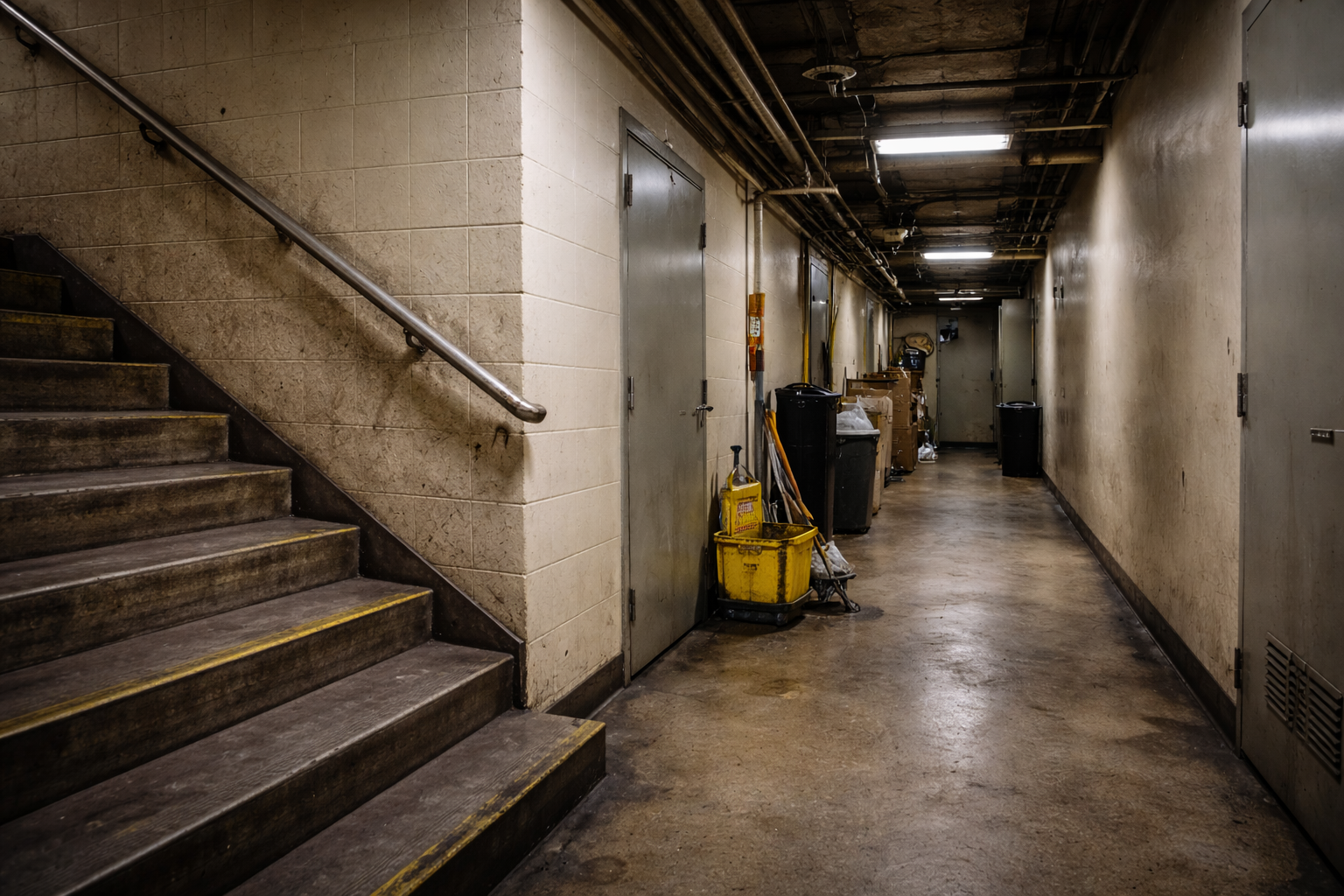
This is where blind spots begin to turn into risk. Safety hazards that do not immediately cause accidents—slippery floors at certain hours, poorly lit stairwells, partially blocked exits—remain unreported because “nothing has happened yet.” Vendor performance is assumed rather than audited, with presence mistaken for effectiveness. Data shows tasks completed and work orders closed, but it does not reveal how much strain the system is under.
When key staff leave, routines change, or usage increases, these fragile arrangements collapse. What failed silently for months or years suddenly becomes visible, often at the worst possible moment. The failure seems sudden, but it has been developing all along, hidden behind adaptation and assumption.
Seeing What Reports Cannot Show
Operational blind spots in facilities are not the result of indifference; they are the byproduct of systems that value silence over insight and surface-level order over lived experience. What goes unreported still shapes outcomes. It shapes how people feel when they walk into a space, how safely they move through it, how much mental energy they spend adapting, and how they judge the organization responsible for the environment.
High-performing organizations learn to look beyond reports and dashboards. They pay attention to patterns, moods, and small frictions. They listen for what people stop mentioning because they assume it is normal. They understand that facilities do not merely support operations; they quietly influence performance, trust, and risk every single day.
The most dangerous facility issues are not the dramatic failures that trigger alarms and investigations. They are the ones everyone learns to live with. Until they don’t.
If you manage or oversee facilities, take time to experience your spaces the way others do. Walk them without a checklist. Sit in them. Notice what feels off before it becomes something that breaks.
If you are responsible for operations, ask not only what is being reported, but what people have stopped reporting. Those silences often carry the most useful information.
And if your organization is growing, changing, or under pressure, this is the moment to look for operational blind spots before they turn into visible failures. Facilities rarely demand attention. They wait for it.