
Why Commercial Tenants Decide Whether to Stay Long Before a Lease Ends
Commercial tenants rarely wake up one morning at the end of a lease and suddenly decide whether to stay or leave. In reality, the decision is usually made months—sometimes over a year—before the lease expiration date. By the time renewal paperwork is discussed, most tenants already know whether they are staying, negotiating, or planning an exit.
For property managers and building owners, this reality can be uncomfortable. It means tenant retention is not driven by last-minute incentives or discounted renewal rates alone. Instead, retention is shaped daily—by the experience tenants and their employees have in the building, by how the facility supports productivity and health, and by whether the environment reflects professionalism and care.
One of the most underestimated influences in this decision-making process is commercial cleaning.
Cleanliness is not a cosmetic detail. It is a silent but constant signal of how a property is managed, how much tenants are valued, and whether the environment supports business success. In offices, healthcare facilities, schools, and commercial spaces of every kind, facility cleanliness plays a direct role in tenant satisfaction, employee morale, and long-term lease decisions.
This article explores why commercial tenants decide to stay—or leave—long before a lease ends and how strategic, consistent commercial cleaning directly supports tenant retention.
Tenant Decisions Are Emotional Before They Are Financial
Commercial real estate decisions are often framed as rational and numbers-driven. Rent, square footage, location, and amenities all matter. But beneath the spreadsheets lies a powerful truth: tenants decide emotionally first, then justify the decision financially.
The Daily Experience Shapes Long-Term Decisions
Tenants and their employees interact with a building every single day. Over time, these daily experiences accumulate into a clear emotional conclusion:
“This building supports our work.”
or“This space constantly creates friction.”
Cleanliness is one of the most consistent daily touchpoints. Unlike rent or lease terms, which are reviewed occasionally, cleanliness is experienced continuously—in restrooms, hallways, offices, break rooms, lobbies, and shared spaces.
When a building feels clean, fresh, and well-maintained, tenants subconsciously associate it with:
Competence
Professionalism
Safety
Stability
When cleanliness is inconsistent or poor, the opposite occurs:
Frustration builds quietly
Complaints feel ignored
Trust in property management erodes
By the time a lease renewal conversation begins, these emotional impressions are already deeply formed.
Cleanliness as a Signal of Management Quality
Commercial tenants often equate building cleanliness with how well a property is managed overall. Even when cleaning is outsourced, tenants rarely separate the cleaning vendor from the property itself.
Dirty restrooms, overflowing trash, dusty vents, or poorly maintained floors don’t just reflect on cleaning—they reflect on management priorities.
Tenants begin to ask themselves:
If basic cleanliness isn’t handled well, what else is being overlooked?
Will issues be addressed promptly as the building ages?
Is this a place we want our employees and clients to associate with our brand?
These questions may never be voiced aloud, but they influence decisions months before a lease ends.
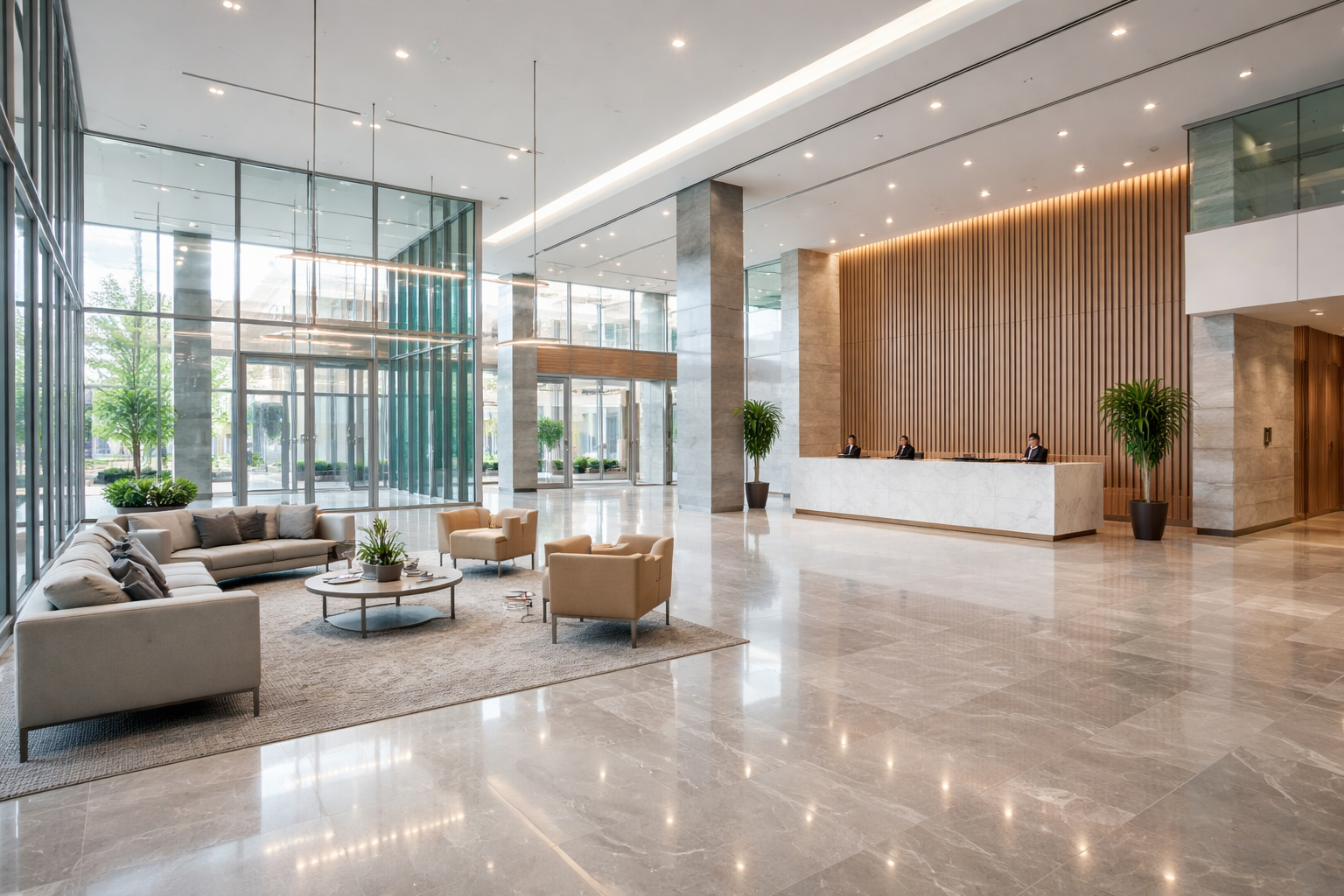
Facility Cleanliness Directly Impacts Employee Retention and Productivity
Commercial tenants don’t just lease space—they create workplaces. And workplaces are evaluated not only by leadership but by employees who spend eight or more hours a day inside the facility.
Employees Experience the Building More Than Executives Do
While executives may focus on lease terms and location, employees experience:
Restroom conditions
Desk and floor cleanliness
Break room hygiene
Odors, dust, and air quality
Overall comfort and health standards
When cleanliness is poor, employees notice immediately—and they talk about it. Over time, these conditions affect morale, engagement, and even retention.
For tenants, this creates a serious business risk.
If a facility contributes to:
Increased sick days
Reduced productivity
Lower employee satisfaction
Difficulty attracting talent
then the building itself becomes a liability, regardless of rent or location.
Clean Workspaces Support Business Growth
High-quality commercial cleaning contributes to:
Reduced absenteeism
Better indoor air quality
Improved focus and performance
Higher employee satisfaction
In industries such as healthcare, education, and professional services, cleanliness is not optional—it is tied to compliance, reputation, and operational success.
When tenants recognize that a clean, well-maintained facility supports their business goals, they begin to see the building as a strategic asset rather than a temporary space. This realization happens long before a lease expires.
Is your building supporting tenant satisfaction—or quietly pushing tenants away?
👉 Schedule a professional facility walkthrough to identify hidden cleanliness gaps before they impact lease renewals.
Inconsistent Cleaning Is a Silent Deal Breaker
One of the biggest mistakes property managers make is assuming that “some cleaning” is good enough. In reality, inconsistency is often more damaging than occasional issues.
Tenants Value Reliability Over Perfection
Commercial tenants understand that no building is perfect. What they expect is consistency:
Restrooms cleaned daily and stocked
Floors maintained to a predictable standard
Trash removed on schedule
High-touch surfaces disinfected regularly
When standards fluctuate—clean one week, neglected the next—tenants lose confidence. They stop reporting issues because they assume nothing will change. That silence is dangerous.
By the time tenants stop complaining, they have often started planning their exit.
The Cost of Reactive Cleaning
Reactive cleaning—responding only after complaints—signals disorganization and lack of foresight. Proactive, scheduled commercial cleaning communicates the opposite:
Planning
Accountability
Long-term care
Tenants who see consistent cleanliness begin to trust that the building is being managed for the long haul. That trust directly influences renewal decisions.
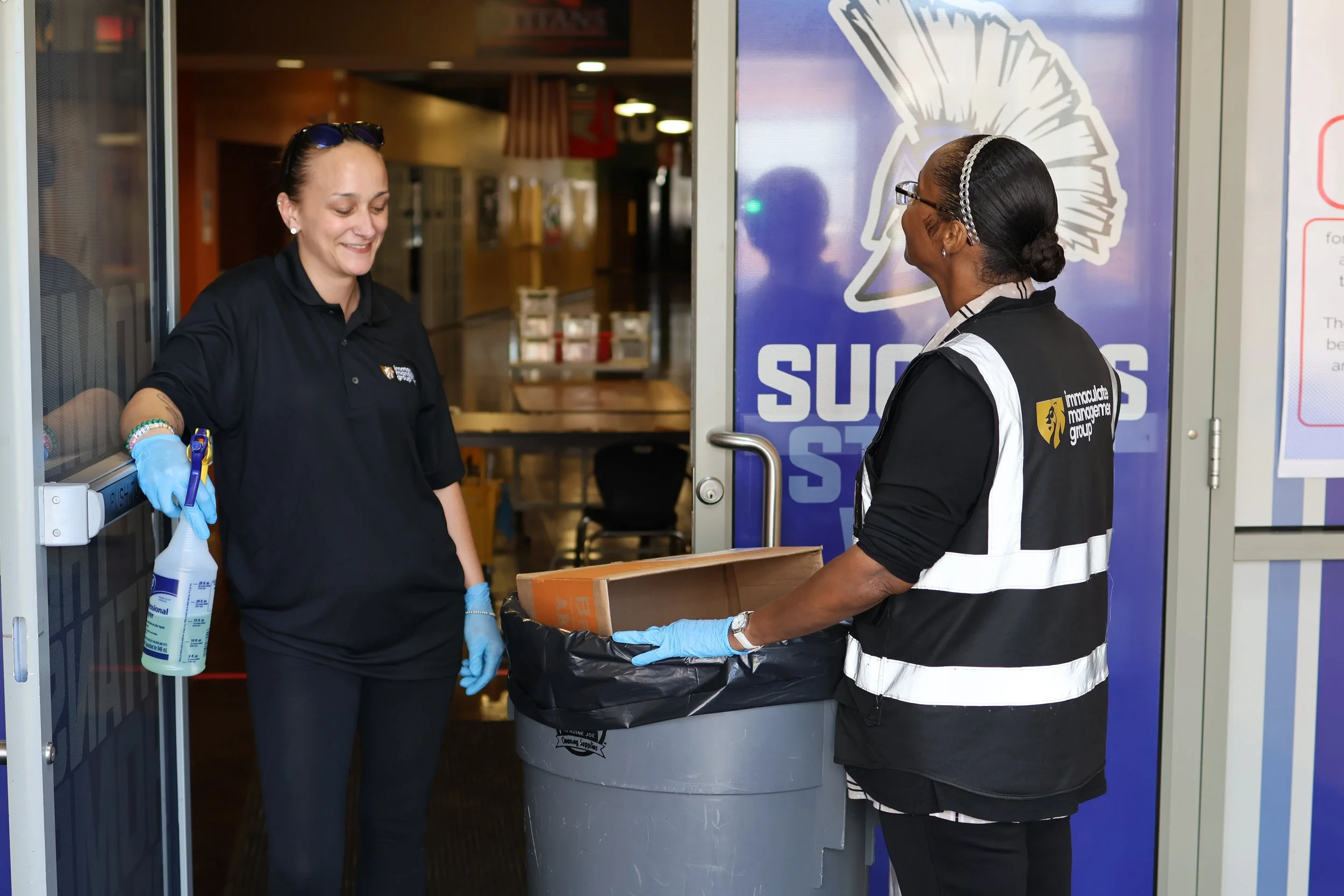
Cleanliness Influences Client Perception and Brand Reputation
For many commercial tenants, the building is not just a workplace—it is part of their brand.
First Impressions Matter More Than Ever
Clients, patients, parents, and partners often form opinions within seconds of entering a facility. Smudged glass, stained carpets, unpleasant odors, or unclean restrooms can instantly damage credibility.
For tenants in:
Medical facilities
Schools and daycare centers
Corporate offices
Professional service firms
Cleanliness is directly tied to trust.
Tenants quickly ask:
What message does this environment send to our clients?
Are we proud to bring people here?
Does this space align with our brand values?
If the answer is no, the lease clock starts ticking—quietly.
Property Managers Share Responsibility
Even when tenants control their internal space, common areas belong to the property. Lobbies, elevators, stairwells, parking areas, and shared restrooms all shape perception.
When these areas are poorly maintained, tenants feel their brand is being undermined by factors outside their control. That frustration often leads to relocation rather than renewal.
Lease Renewal Decisions Begin With Small Frustrations
Rarely do tenants leave because of one major issue. Instead, decisions are driven by a collection of small, unresolved frustrations.
The Accumulation Effect
Examples include:
Restrooms that are “usually” clean but often run out of supplies
Floors that are vacuumed but never deep cleaned
Trash areas that smell or overflow occasionally
Dust buildup in vents and corners
Individually, these issues seem minor. Collectively, they create a feeling that the building is “just okay”—and “just okay” is rarely enough to justify renewal.
Tenants begin to compare:
“What if we moved somewhere newer?”
“What if management cared more?”
“What if we had a cleaner, healthier environment?”
By the time renewal discussions arise, the mental comparison has already been made.
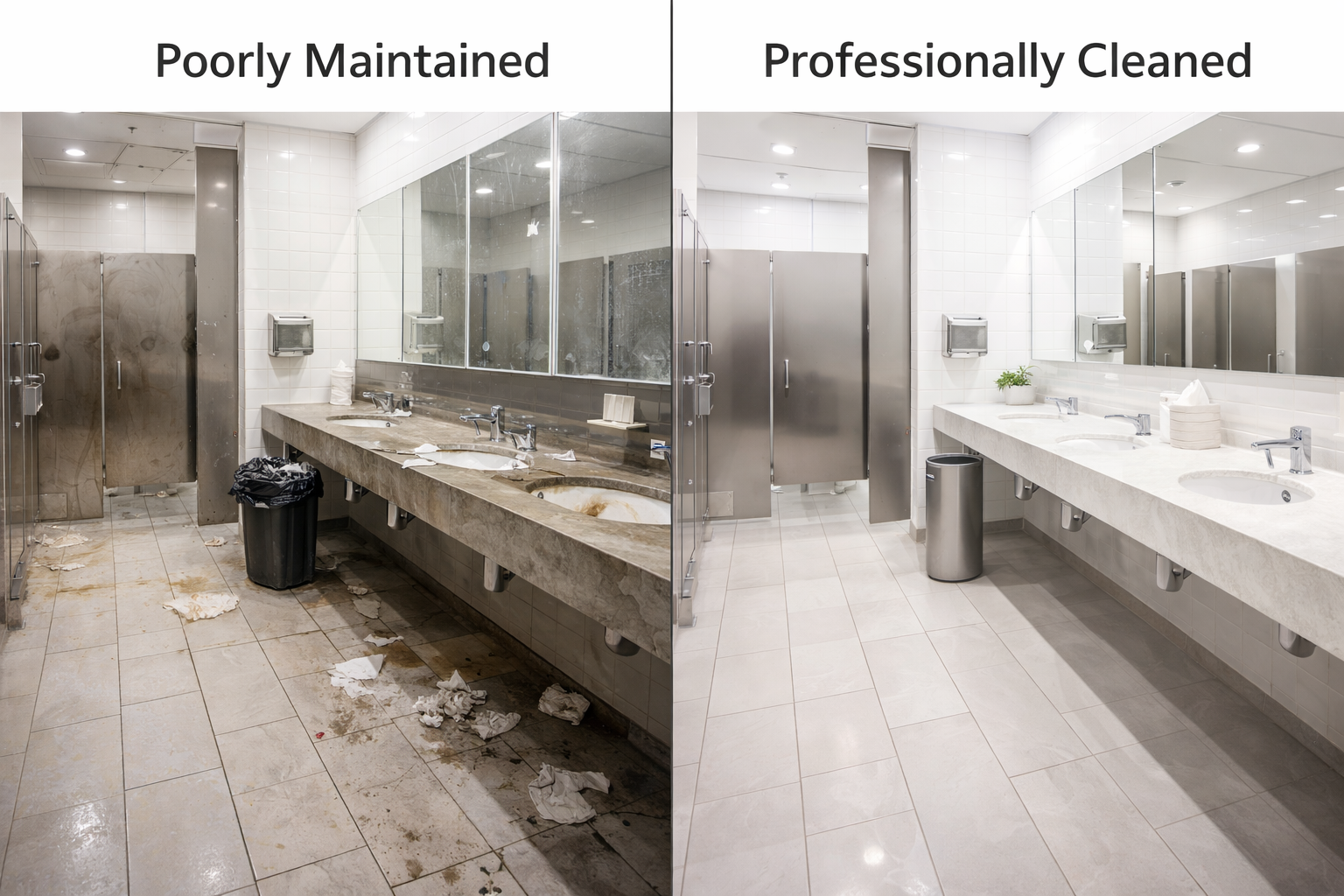
Proactive Commercial Cleaning as a Retention Strategy
Forward-thinking property managers and building owners no longer view cleaning as a cost center. They see it as a tenant retention strategy.
Strategic Cleaning Goes Beyond Surface-Level Tasks
Effective commercial cleaning includes:
Scheduled deep cleaning
High-touch surface disinfection
Floor care and maintenance
Restroom sanitation and monitoring
Seasonal cleaning adjustments
Industry-specific protocols (especially for medical facilities and schools)
When cleaning is aligned with tenant needs and building usage patterns, it becomes a competitive advantage.
Retention Is Cheaper Than Replacement
The cost of losing a tenant often includes:
Vacancy periods
Marketing expenses
Tenant improvement allowances
Reduced property reputation
In comparison, investing in consistent, professional commercial cleaning is relatively small—and it pays dividends in longer lease terms and stronger tenant relationships.
Tenants Decide Early—Cleaning Shapes the Decision
Commercial tenants do not wait until the final months of a lease to decide whether to stay. They decide gradually, through daily experiences that either build confidence or create friction.
Cleanliness is one of the most powerful—and overlooked—factors in this process.
A consistently clean, well-maintained facility:
Builds trust
Supports employee health and productivity
Protects tenant brands
Signals long-term stability
An inconsistent or neglected facility quietly pushes tenants toward the exit—long before renewal paperwork appears.
For property managers and building owners who want to improve commercial tenant retention, the message is clear:
Cleaning is not just maintenance. It is strategy.