
The True Cost of Deferred Maintenance in Commercial Properties
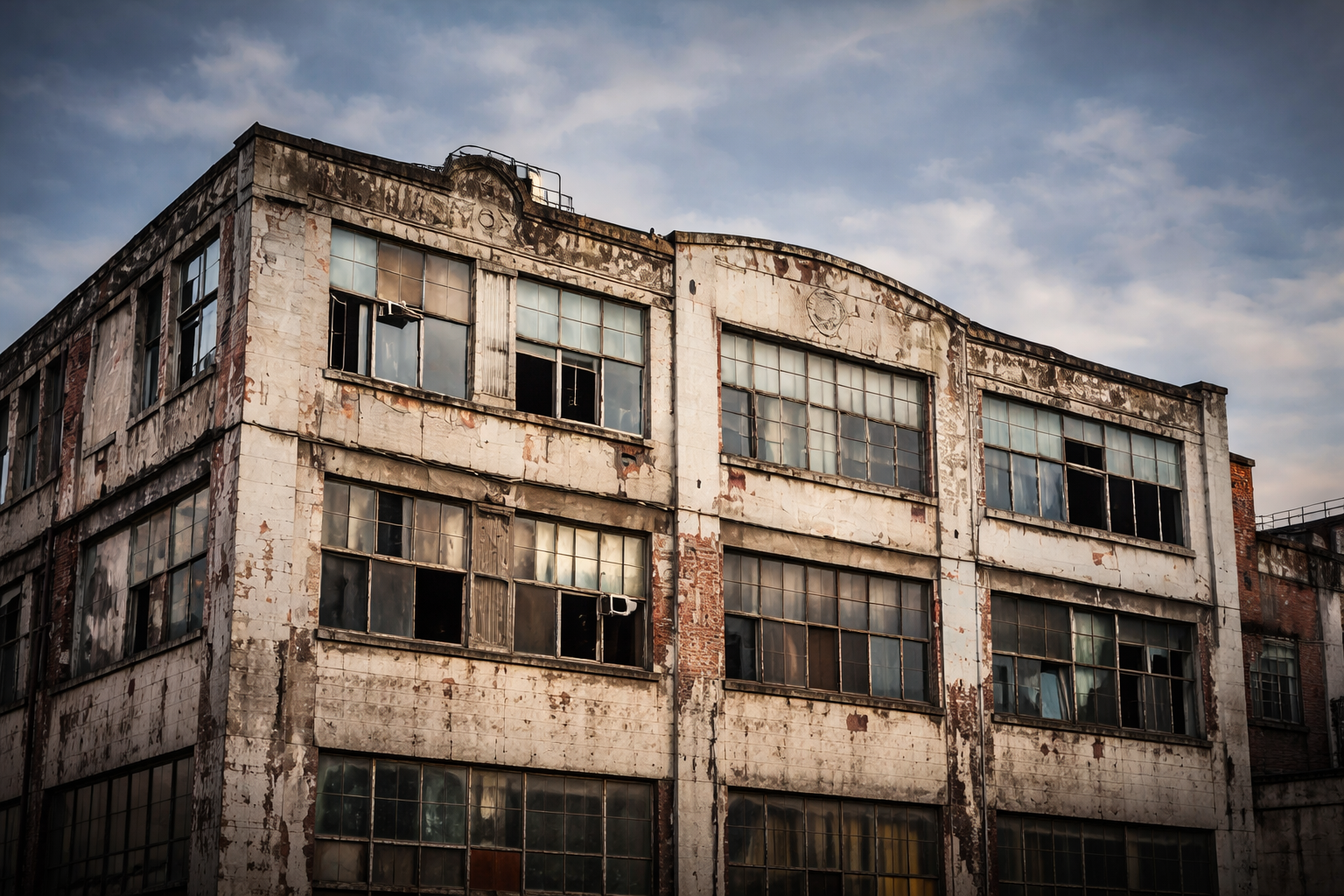
Abandoned factory building with weathered facade.
Deferred maintenance is one of the most underestimated threats to the long-term performance of commercial properties. Often viewed as a short-term cost-saving strategy, it quietly erodes asset value, operational efficiency, tenant satisfaction, and owner profitability. While postponing repairs may appear financially prudent in the moment—especially during economic uncertainty—the true cost of deferred maintenance compounds over time, manifesting in far more expensive, disruptive, and avoidable consequences.
In commercial real estate, buildings are not static assets. They are living systems composed of interdependent components—structural, mechanical, electrical, environmental, and aesthetic. When maintenance is delayed, stress accumulates across these systems, creating a chain reaction that affects not just the physical structure but also the business operations housed within it. What begins as a minor repair quickly evolves into a capital-intensive crisis.
This essay explores the real, often hidden costs of deferred maintenance in commercial properties. From financial losses and tenant turnover to safety liabilities, regulatory exposure, and reputational damage, the price paid for inaction is far greater than the expense of timely upkeep.
Understanding Deferred Maintenance: More Than Just “Putting It Off”
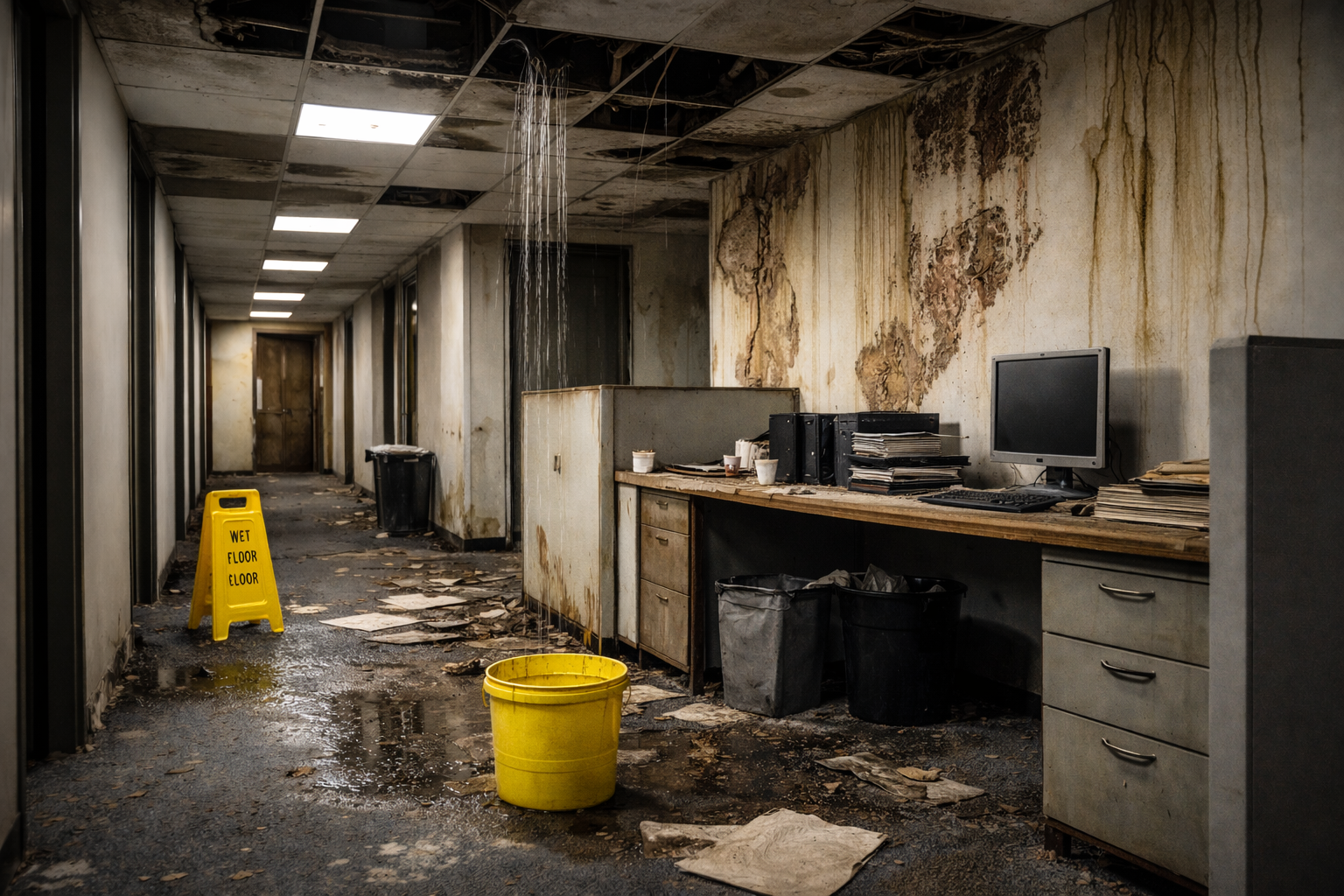
Abandoned office with severe water damage.
Deferred maintenance refers to the practice of postponing regular repairs, replacements, or servicing of building systems and components. In commercial properties, this can include anything from delaying HVAC servicing and roof repairs to ignoring plumbing leaks, façade deterioration, or outdated electrical systems.
At face value, deferring maintenance may seem like a reasonable budgeting decision. Property owners may be responding to cash flow constraints, vacancy challenges, or shifting investment priorities. However, the core problem with deferred maintenance is not the delay itself—it is the assumption that building systems degrade linearly. In reality, deterioration accelerates.
A roof leak left unaddressed does not remain a roof issue. Over time, it compromises insulation, ceiling materials, electrical wiring, and indoor air quality. A neglected HVAC system does not simply lose efficiency; it increases energy consumption, shortens equipment lifespan, and creates uncomfortable or unhealthy indoor environments. Each delayed intervention magnifies the scope and cost of eventual repairs.
In commercial real estate, where properties are income-producing assets, deferred maintenance directly undermines the very mechanisms that generate value.
The Financial Illusion: Short-Term Savings vs. Long-Term Losses
Repair cost report with construction tools.
One of the most persistent myths surrounding deferred maintenance is that it saves money. While it may reduce expenses in the current fiscal year, it almost always increases total lifecycle costs. Studies in facility management consistently show that every dollar not spent on preventive maintenance can result in four to five dollars in corrective or emergency repairs later.
Emergency repairs are inherently more expensive. They often require expedited labor, premium pricing for parts, after-hours service, and temporary operational shutdowns. In commercial environments—such as office buildings, retail centers, healthcare facilities, and industrial properties—these disruptions can also translate into lost revenue for tenants, lease disputes, or rent concessions.
Moreover, deferred maintenance shifts costs from predictable operating expenses (OPEX) to unpredictable capital expenditures (CAPEX). This destabilizes financial planning and reduces an owner’s ability to allocate capital strategically. Instead of upgrading amenities, expanding portfolios, or improving tenant experience, funds are diverted to address avoidable crises.
For investors and asset managers, this erosion of financial efficiency directly impacts net operating income (NOI) and, by extension, property valuation.
Asset Devaluation and Reduced Market Competitiveness
Commercial properties compete not only on location and price but also on condition, functionality, and perceived quality. Deferred maintenance quietly degrades all three.
As systems age without proper care, buildings become less attractive to prospective tenants and buyers. Outdated mechanical systems, visible deterioration, inconsistent climate control, and poor lighting all signal neglect. Even when rent is competitive, tenants increasingly prioritize buildings that support productivity, comfort, and sustainability.
In valuation terms, deferred maintenance introduces risk. Appraisers factor in the remaining useful life of major systems, anticipated capital repairs, and compliance requirements. Properties with visible or documented maintenance backlogs are discounted accordingly. What might have been preserved as equity is instead written off as deferred liability.
This is particularly critical during refinancing or sale. Deferred maintenance often surfaces during due diligence, inspections, and environmental assessments. At that stage, owners lose negotiating leverage. Buyers demand price reductions, repair credits, or escrow holds—often exceeding what proactive maintenance would have cost.
Tenant Experience, Retention, and Revenue Stability

A property manager looking stressed while handling a difficult tenant phone call at her desk.
Tenants experience deferred maintenance daily, even when owners do not. Fluctuating indoor temperatures, malfunctioning elevators, poor lighting, plumbing issues, and an unreliable power supply directly affect tenant operations and employee morale.
In competitive markets, tenants have choices. When maintenance issues persist, renewal rates decline. Turnover increases. Vacancy periods lengthen. Each lost tenant represents not only lost rent but also leasing commissions, marketing costs, tenant improvement allowances, and downtime.
Deferred maintenance also strains landlord-tenant relationships. Frequent service disruptions lead to complaints, escalations, and, in some cases, legal disputes over habitability or lease obligations. In properties governed by triple-net (NNN) leases, unclear maintenance responsibilities can further complicate matters, especially when deferred issues escalate into major repairs.
Over time, a reputation for poor maintenance spreads. Property managers and brokers talk. Tenants share experiences. What begins as a cost-saving decision quietly undermines revenue stability.
Safety, Liability, and Regulatory Exposure
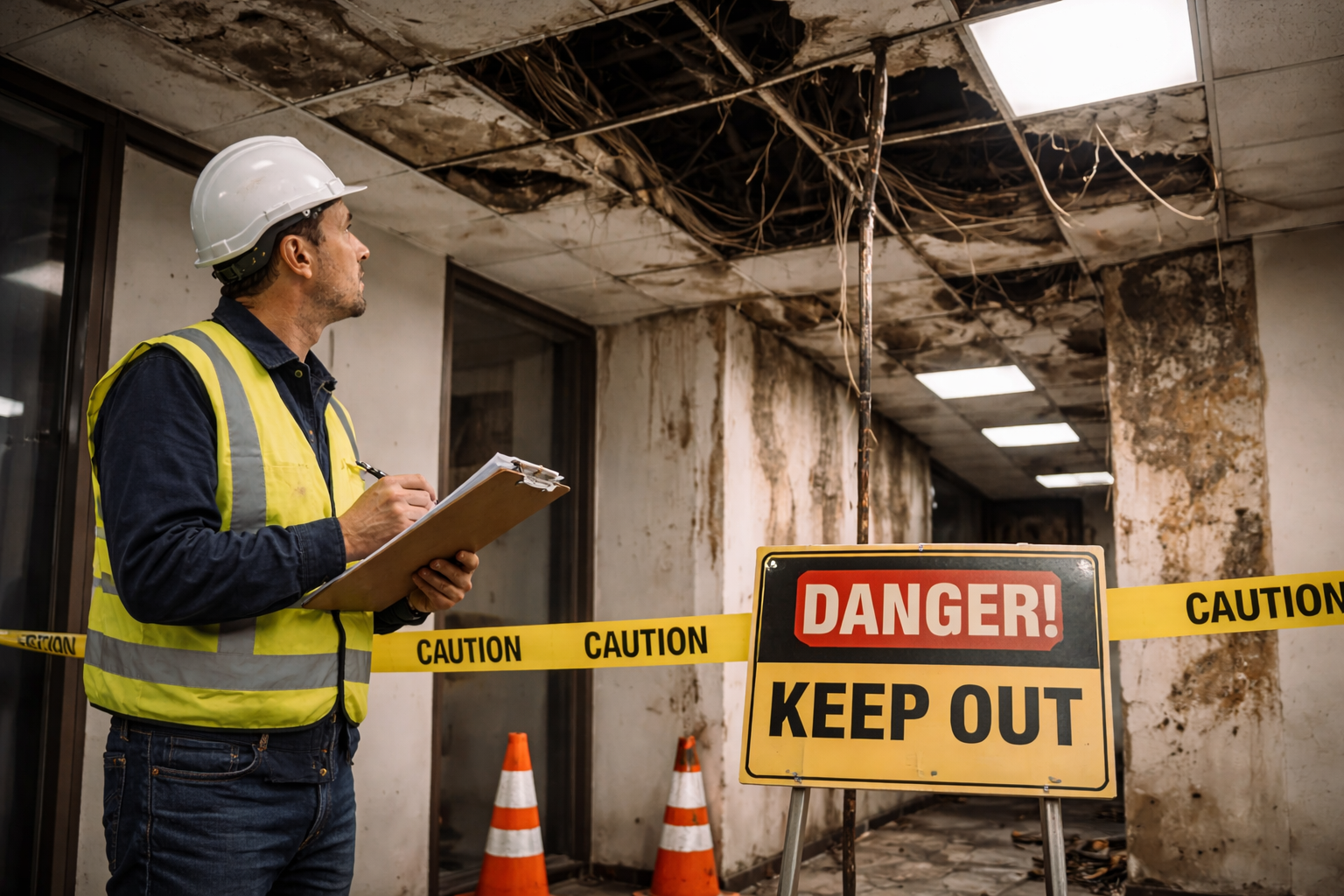
Safety inspector surveying a dangerously damaged, restricted building hallway.
Deferred maintenance is not merely a financial issue—it is a safety and legal risk. Commercial property owners have a duty of care to tenants, employees, customers, and visitors. When maintenance is delayed, the likelihood of accidents increases.
Faulty electrical systems pose fire hazards. Poorly maintained elevators can malfunction. Leaking roofs create slip-and-fall risks. Neglected structural components may compromise building integrity. Each incident carries the potential for injury, litigation, insurance claims, and reputational damage.
Regulatory compliance adds another layer of risk. Commercial properties are subject to building codes, fire safety regulations, accessibility standards, and environmental requirements enforced by authorities such as OSHA and local building departments. Deferred maintenance can lead to violations, fines, mandated shutdowns, or costly retrofits under regulatory pressure rather than planned improvement.
Insurance providers are also increasingly scrutinizing maintenance practices. Claims related to neglect may result in higher premiums, reduced coverage, or denial of claims altogether.
Energy Inefficiency and Sustainability Costs
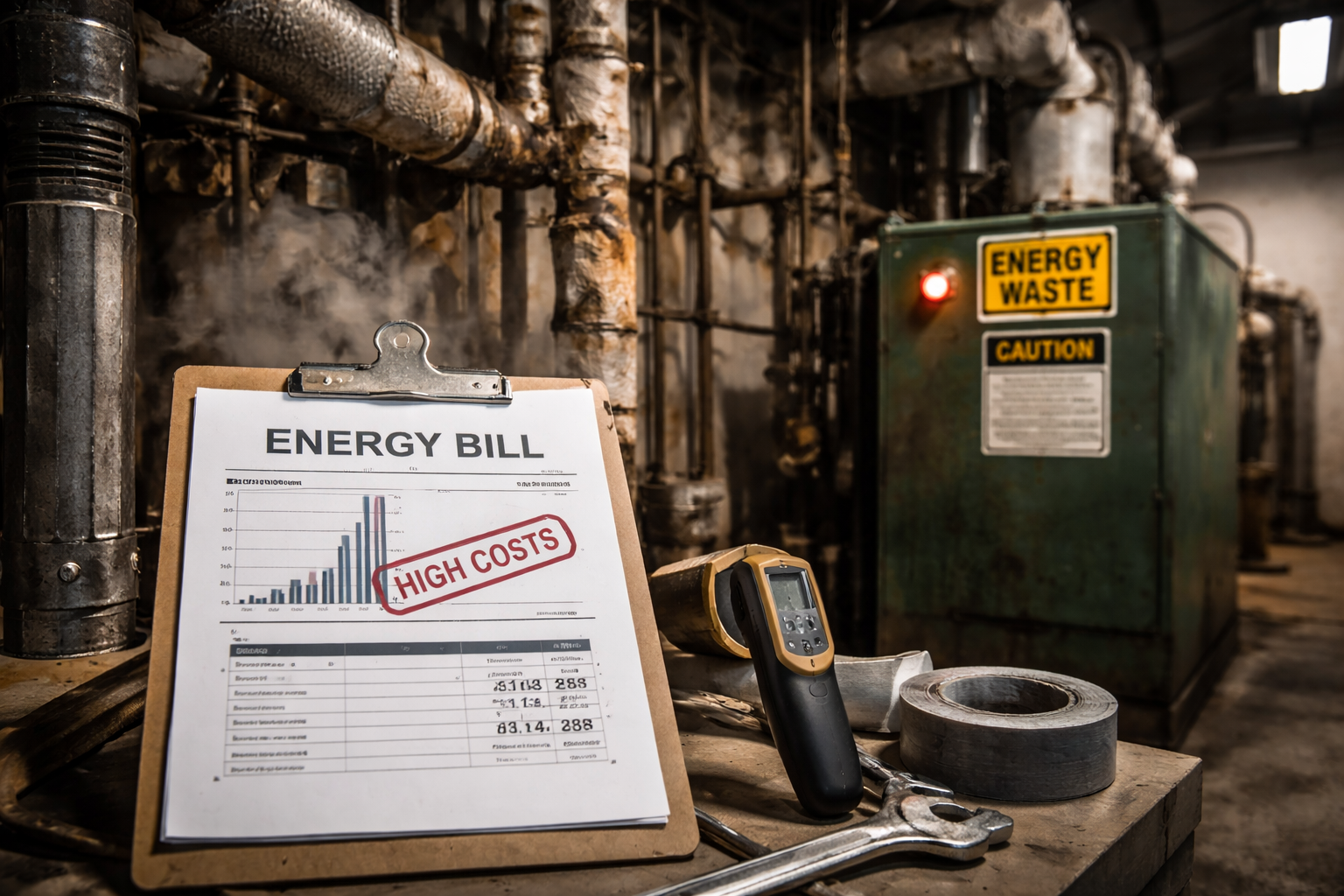
Old boiler room causing energy waste and dangerously high utility costs.
Modern commercial real estate is inseparable from sustainability considerations. Energy efficiency, environmental performance, and ESG (Environmental, Social, and Governance) metrics are no longer optional—they influence tenant decisions, investor interest, and regulatory compliance.
Deferred maintenance undermines all sustainability goals. Aging HVAC systems consume more energy. Poor insulation increases heating and cooling loads. Leaking plumbing wastes water. Inefficient lighting inflates utility costs.
Over time, these inefficiencies compound. Operating expenses rise, eroding NOI. Properties fall behind evolving energy standards and green building benchmarks promoted by organizations such as BOMA and sustainability frameworks used by institutional investors.
In contrast, proactive maintenance supports energy optimization, extends equipment life, and positions properties to benefit from retrofits, incentives, and green certifications. Deferred maintenance closes those doors.
The Operational Ripple Effect Across Building Systems
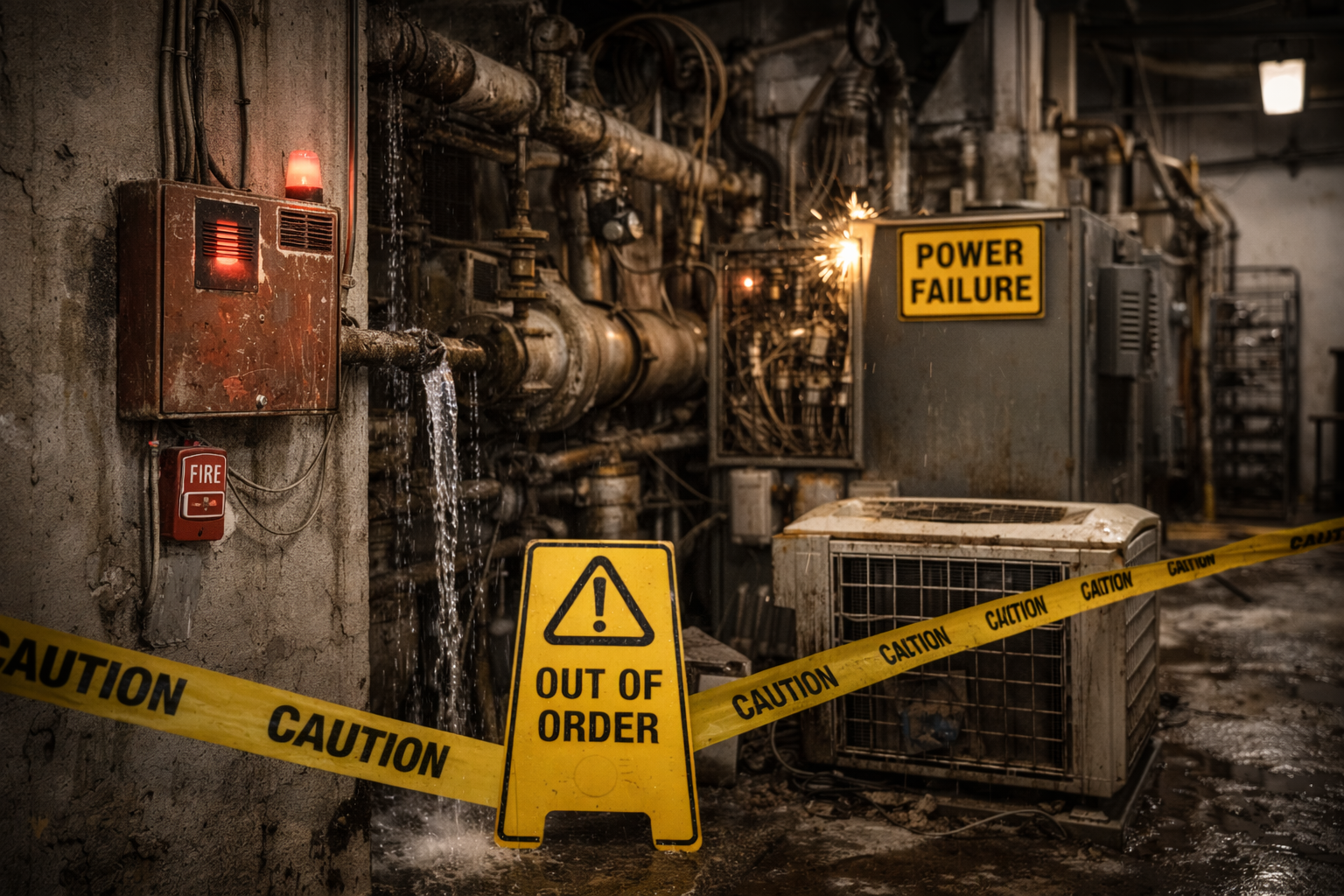
Industrial machinery room experiencing hazardous leaks, outages, and equipment failure.
Commercial buildings operate as integrated ecosystems. When one system fails, others are affected. Deferred maintenance disrupts this balance.
For example, neglected roofing allows moisture intrusion, which damages insulation, corrodes electrical systems, and degrades indoor air quality. Poor air quality affects tenant health and productivity, potentially leading to absenteeism or complaints. Similarly, deferred electrical maintenance can overload circuits, damage sensitive equipment, and create fire risks.
These cascading failures increase operational complexity and management burden. Property managers spend more time reacting to emergencies than executing strategic improvements. Maintenance teams become overwhelmed, leading to further delays and inefficiencies.
Ultimately, deferred maintenance shifts operations from proactive stewardship to constant crisis management—a costly and unsustainable mode of operation.
Impact on Long-Term Capital Planning
Strategic asset management relies on accurate forecasting of capital needs. Deferred maintenance distorts this process. When routine repairs are postponed, it becomes difficult to distinguish between maintenance, replacement, and upgrade.
Capital reserves that should fund planned improvements are instead consumed by urgent repairs. Replacement cycles shorten. Equipment that could have lasted 20 years fails in 12. This unpredictability discourages long-term investment and reduces portfolio resilience.
For owners managing multiple properties, deferred maintenance in one asset can divert resources from others, creating a domino effect across the portfolio. What begins as a localized decision becomes a systemic financial strain.
Breaking the Cycle: Maintenance as an Investment Strategy
The solution to deferred maintenance is not simply “spending more.” It is reframing maintenance as an investment rather than an expense.
Preventive and predictive maintenance programs—supported by regular inspections, data tracking, and lifecycle analysis—allow owners to address issues early, when they are least costly. Planned maintenance stabilizes budgets, protects asset value, and enhances tenant satisfaction.
Modern property management increasingly leverages technology: computerized maintenance management systems (CMMS), energy monitoring, and building automation. These tools provide visibility into asset performance and help prioritize interventions based on risk and return.
Ultimately, well-maintained buildings outperform neglected ones—not only financially, but operationally and reputationally.
Deferred maintenance rarely announces itself with a single dramatic failure. Instead, it accumulates quietly—through rising operating costs, declining tenant satisfaction, increased safety risks, and gradual erosion of asset value. By the time these issues become unavoidable, property owners are often forced into reactive decisions that cost significantly more than proactive care ever would.
In commercial real estate, maintenance is not an optional expense—it is a strategic investment. Well-maintained properties outperform neglected ones in tenant retention, operational efficiency, regulatory compliance, and long-term valuation. Owners who prioritize preventive maintenance preserve flexibility, protect income streams, and position their assets for sustainable growth.
The question is no longer whether deferred maintenance is costly—but how long you can afford to ignore it.
If you’re unsure where deferred maintenance may be silently impacting your property, now is the time to act. Schedule a property assessment to identify risks early, control costs, and protect your asset’s long-term value.
Reach out today to begin building a proactive maintenance strategy that supports tenant satisfaction, regulatory compliance, and long-term performance.