
10 Facility Manager Priorities for 2026 | Northeast Ohio FM Guide
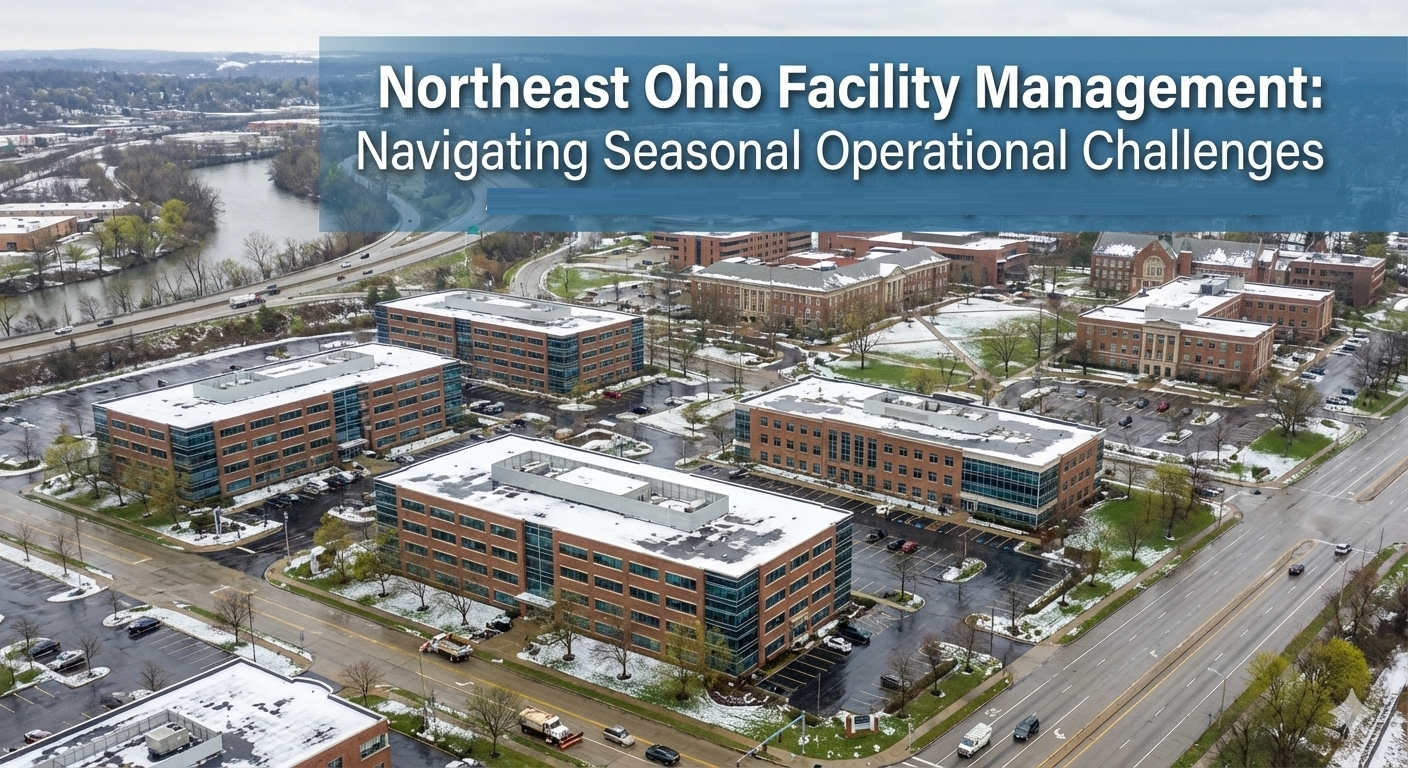
The Facilities Management Landscape Is Changing — Fast
Facilities management is no longer a background function. By 2026, facility managers will be judged less on task completion and more on risk prevention, financial stewardship, compliance readiness, and strategic decision-making.
For facility leaders in Northeast Ohio, these pressures are amplified.
Aging infrastructure, extreme seasonal weather, labor shortages, tightening compliance requirements, and rising operational costs are forcing organizations to rethink how facilities are managed across healthcare, education, commercial, industrial, and public spaces.
This article outlines the 10 most critical focus areas every facility manager should prioritize in 2026 — not in theory, but in practical, operational terms relevant to Northeast Ohio.
Each section answers:
Why it matters
What happens if it’s ignored
What facility managers should be doing now
Deferred Maintenance Risk Management
Why Deferred Maintenance Will Be One of the Biggest FM Risks in 2026
Deferred maintenance increases operational costs, safety risks, and compliance exposure — especially in older Northeast Ohio facilities.
Deferred maintenance is no longer just a budgeting issue. By 2026, it will be a risk multiplier.
Across Northeast Ohio, many facilities were built decades ago. Aging roofs, mechanical systems, parking structures, plumbing, and electrical infrastructure are already operating beyond their intended lifecycle. When maintenance is postponed, small issues quietly become high-cost failures.
Facility managers are increasingly expected to quantify deferred maintenance risk, not just report it.
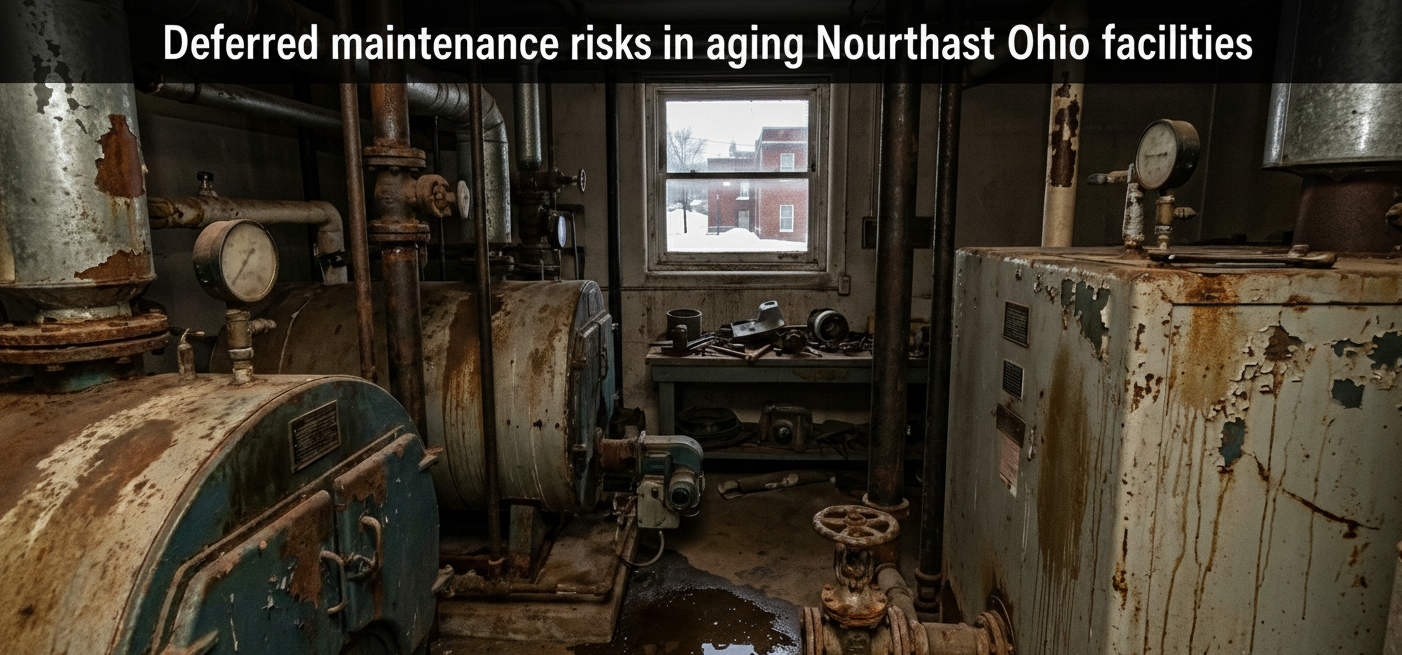
Two large, rusted industrial boilers sit in a dark, abandoned basement with concrete walls.
Why This Is a Northeast Ohio Issue
Freeze–thaw cycles accelerate structural wear
Heavy snow loads stress roofs and drainage systems
Older HVAC systems struggle with temperature extremes
Moisture intrusion leads to mold and indoor air quality issues
These regional factors make deferred maintenance especially dangerous for:
Hospitals and healthcare facilities
School districts and universities
Municipal and government buildings
Commercial and mixed-use properties
What Happens When Deferred Maintenance Is Ignored
Facility managers who delay maintenance often face:
Emergency repairs at 3–5x the planned cost
Increased safety incidents and liability exposure
Failed inspections and compliance violations
Operational downtime that disrupts occupants
By 2026, leadership teams will expect facility managers to prove they understand these risks in financial terms.
What Facility Managers Should Be Doing Now
To prepare for 2026, facility managers should:
Conduct facility condition assessments annually
Assign risk scores to deferred maintenance items
Prioritize life-safety and compliance-related assets
Translate deferred maintenance into budget impact language
Align maintenance plans with long-term capital forecasting
Deferred maintenance should no longer live in spreadsheets — it should live in executive conversations.
Extreme Weather Preparedness & Seasonal Planning
Why Extreme Weather Readiness Will Separate Strong Facility Teams from Reactive Ones in 2026
Facility managers who plan proactively for extreme weather reduce liability, downtime, and emergency costs—especially in regions like Northeast Ohio with high seasonal volatility.
By 2026, extreme weather will no longer be treated as an exception. It will be a baseline operational variable that facility managers are expected to plan for, budget against, and document.
For Northeast Ohio facilities, weather is not just inconvenient—it is operationally disruptive.
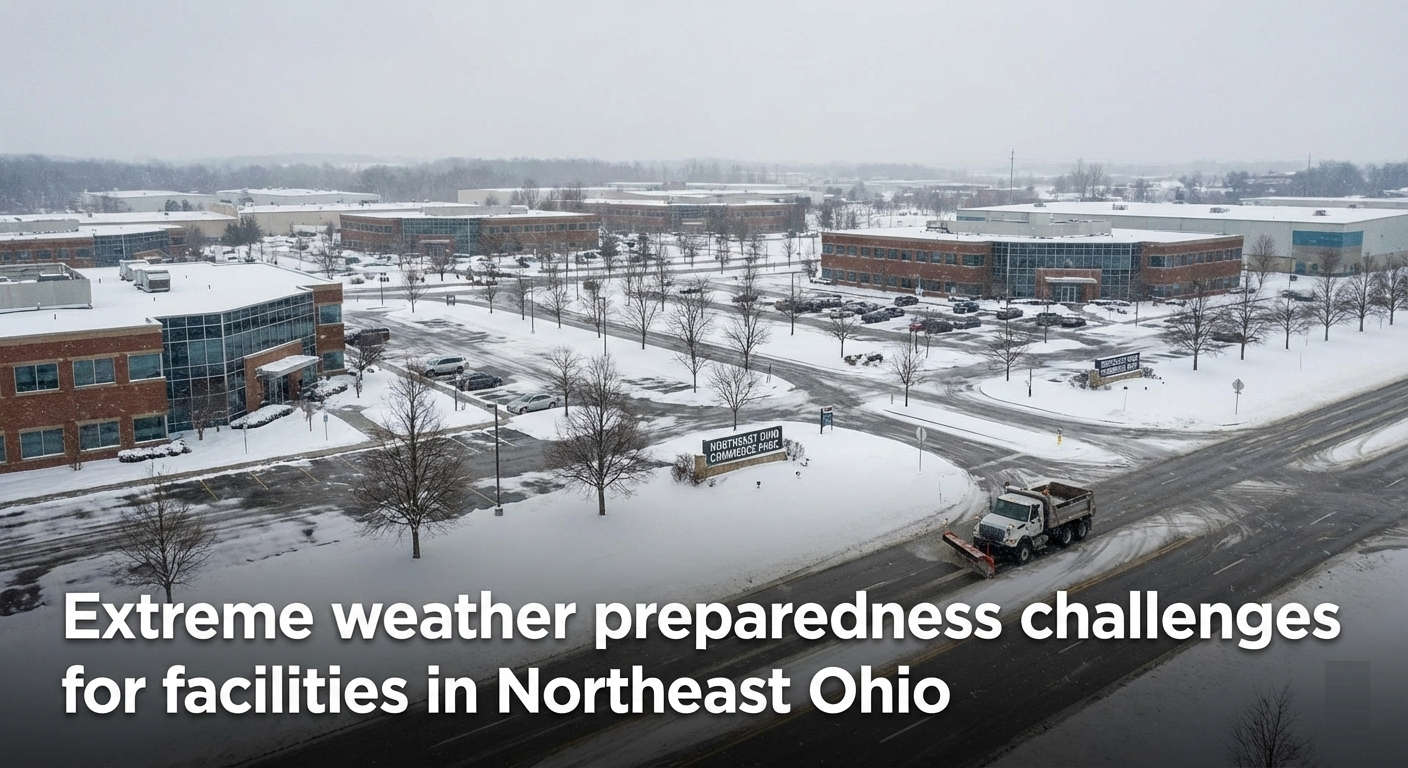
An aerial view of a snow-covered business park in Northeast Ohio with several brick buildings.
Why This Matters More in Northeast Ohio
Northeast Ohio presents one of the most challenging seasonal operating environments in the U.S.:
Heavy snowfall and ice accumulation
Freeze–thaw cycles that damage concrete, asphalt, and building envelopes
Intense spring rain leading to flooding and drainage failures
Summer heat waves stressing HVAC and electrical systems
Facilities in Cleveland, Akron, Canton, Youngstown, and surrounding counties must operate year-round under these conditions—often with limited staff and aging infrastructure.
By 2026, leadership teams will expect facility managers to anticipate weather-related risks, not simply respond after damage occurs.
The Real Cost of Poor Seasonal Planning
Facilities that lack structured weather preparedness often experience:
Slip-and-fall incidents and legal claims
Roof collapses due to snow load mismanagement
Parking lot deterioration from untreated freeze damage
Flooding caused by blocked drains and failing infrastructure
Emergency vendor callouts at premium rates
These costs rarely show up as “weather failures” in reports—they appear as unplanned expenses, insurance claims, and operational disruptions.
What Effective Weather Preparedness Looks Like in 2026
Forward-thinking facility managers are shifting from reactive responses to seasonal operating frameworks.
This includes:
Pre-winter inspections of roofs, drains, and exterior systems
Documented snow and ice response plans
Vendor readiness verification before peak seasons
Spring and fall transition checklists
Weather-related risk logs tied to incident prevention
In 2026, preparedness will be measured not by how fast teams respond—but by how few emergencies occur.
Seasonal Planning Is Also a Compliance and Liability Issue
Weather-related incidents increasingly intersect with:
OSHA safety expectations
Insurance requirements
Risk management audits
Tenant and occupant safety standards
Facility managers must be able to demonstrate:
Preventive planning
Documented response procedures
Vendor accountability
Incident prevention measures
In high-risk environments like healthcare, education, and public facilities, weather readiness is no longer optional—it is a duty of care.
What Facility Managers Should Be Doing Now
To prepare for 2026, facility managers in Northeast Ohio should:
Develop season-specific operational playbooks
Conduct pre-season risk assessments
Align snow, landscaping, and exterior maintenance vendors early
Budget proactively for seasonal services
Track weather-related incidents and near-misses
Weather preparedness should be treated as a core facilities competency, not a seasonal scramble.
Vendor Performance Tracking & Consolidation
Why Vendor Management Will Be a Core FM Competency by 2026
Facility managers who actively track vendor performance and consolidate services reduce costs, improve service quality, and lower operational risk.
By 2026, facilities management success will be closely tied to how well vendors are managed, not how many are hired.
For many facility teams in Northeast Ohio, vendor sprawl has quietly become a problem: multiple contractors, inconsistent standards, overlapping scopes, unclear accountability, and rising costs with little performance visibility.
What once felt like flexibility is now an operational liability.
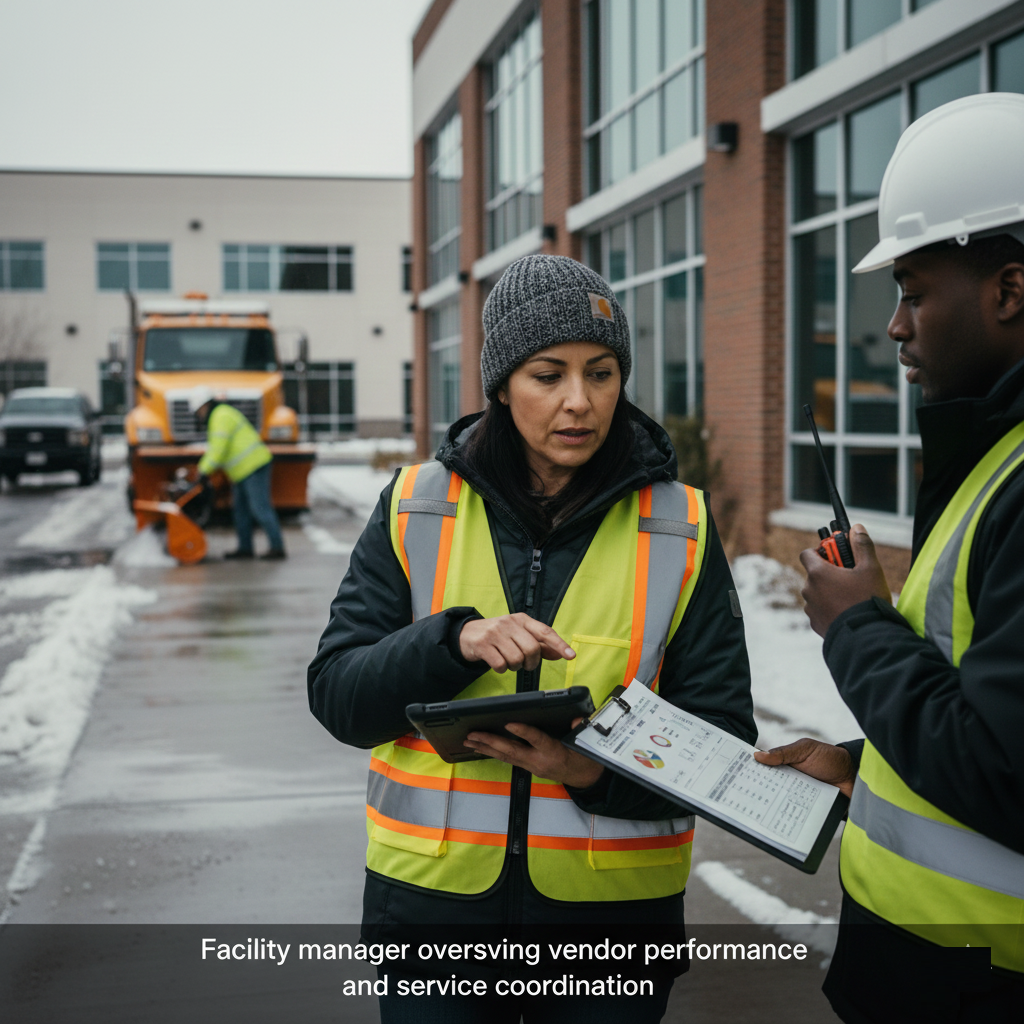
Two facility managers in safety vests review documents outdoors near a snow-plowing operation.
The Hidden Risks of Poor Vendor Oversight
Facilities that lack structured vendor performance tracking often face:
Inconsistent service quality across sites
Missed scope details and undocumented work
Delayed response times during emergencies
Budget overruns caused by change orders
Increased liability due to unclear responsibility
In regions like Cleveland, Akron, and surrounding counties, where weather, aging infrastructure, and compliance pressures are high, weak vendor management compounds existing risk.
By 2026, facility managers will be expected to prove vendor value, not just manage invoices.
Why Vendor Consolidation Is Gaining Momentum
Vendor consolidation is becoming a strategic priority across:
Healthcare systems
School districts and universities
Commercial property portfolios
Municipal and public-sector facilities
The goal is not fewer vendors for convenience — it is fewer vendors with clearer accountability.
Benefits of consolidation include:
Standardized service levels
Simplified communication and reporting
Improved response coordination
Better cost predictability
Stronger long-term partnerships
In Northeast Ohio, consolidation also improves seasonal readiness, especially for services like snow removal, landscaping, cleaning, and exterior maintenance.
What Vendor Performance Tracking Looks Like in 2026
Forward-thinking facility managers are moving beyond informal feedback and toward measurable performance systems.
Key tracking areas include:
Response times
Scope compliance
Safety performance
Documentation accuracy
Cost control
Seasonal preparedness
These metrics allow facility leaders to:
Identify underperforming vendors early
Justify vendor changes with data
Support budget and contract negotiations
Reduce operational surprises
Vendor performance is no longer subjective — it is reportable.
Northeast Ohio Considerations for Vendor Strategy
Facility managers in Northeast Ohio should account for:
Regional labor shortages affecting vendor reliability
Weather-driven service variability
Aging facilities requiring specialized experience
Local compliance and safety standards
Selecting vendors who understand the regional operating environment is increasingly critical.
Local knowledge is not a bonus — it is a risk mitigation tool.
What Facility Managers Should Be Doing Now
To prepare for 2026, facility managers should:
Audit current vendor lists and overlapping scopes
Define clear performance expectations and KPIs
Standardize contracts and service-level agreements
Track vendor performance consistently
Identify opportunities to consolidate services strategically
Strong vendor management frees facility teams to focus on strategy instead of firefighting.
Budget Forecasting & Cost Control
Why Budget Accuracy Will Matter More Than Budget Size in 2026
Facility managers who can accurately forecast costs and control spend will be valued as strategic partners, not cost centers.
By 2026, facilities budgets will face increased scrutiny. Rising labor costs, inflationary pressures, energy volatility, and deferred maintenance are forcing organizations to demand greater financial predictability from facility leaders.
For facility managers in Northeast Ohio, cost control is especially complex due to:
Seasonal service fluctuations
Aging infrastructure requiring capital investment
Weather-driven emergency spending
Vendor cost variability
Leadership teams will no longer accept reactive explanations — they will expect forecast-driven decision-making.
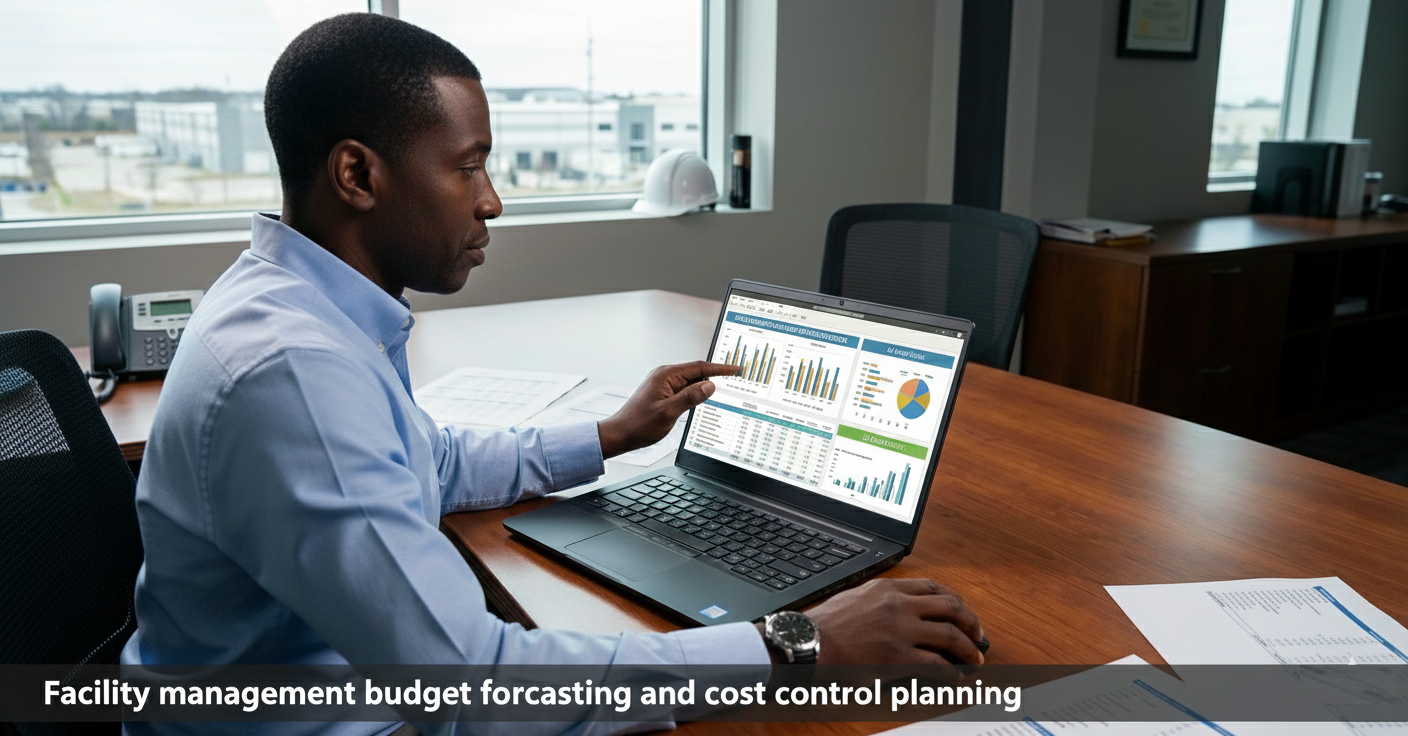
A facility manager analyzes budget forecasting data and charts on a laptop in an office.
The Shift from “Staying Within Budget” to “Explaining the Budget”
Historically, facility managers were judged on whether they stayed within budget. In 2026, the expectation changes.
Facility managers must be able to:
Explain why costs changed
Forecast where future costs will rise
Justify when spending should be accelerated or delayed
This requires a shift from expense tracking to financial storytelling.
Common Budgeting Gaps in Facilities Management
Many facilities still struggle with:
Flat year-over-year budgeting that ignores asset condition
Lack of seasonal cost modeling
Poor visibility into vendor-driven expenses
Reactive emergency spending
Disconnect between maintenance and capital planning
These gaps make budgets fragile — especially in regions like Northeast Ohio, where winter-related costs alone can derail annual forecasts.
What Strong FM Budget Forecasting Looks Like in 2026
Effective facility budget forecasting integrates:
Asset lifecycle data
Deferred maintenance risk
Seasonal service cost modeling
Vendor contract analysis
Energy usage trends
Rather than static spreadsheets, forward-looking facility managers use rolling forecasts that adapt to changing conditions.
This approach allows leadership to see:
Trade-offs between preventive and emergency spending
Long-term cost avoidance opportunities
Capital planning priorities
Cost Control Without Cutting Corners
Cost control in 2026 is not about cutting services — it’s about spending smarter.
High-performing facility teams focus on:
Preventive maintenance to avoid failures
Vendor consolidation to reduce redundancy
Energy efficiency initiatives with measurable ROI
Data-driven decision-making
In Northeast Ohio, proactive snow planning, landscaping coordination, and infrastructure upkeep can significantly reduce emergency costs.
What Facility Managers Should Be Doing Now
To strengthen budget control ahead of 2026, facility managers should:
Align maintenance plans with financial forecasts
Track costs by asset, not just by department
Separate planned vs unplanned spending clearly
Build weather-related contingencies into budgets
Communicate budget implications in business terms
Facilities leaders who master budgeting will increasingly be seen as risk managers and financial stewards, not overhead.
Compliance Documentation & Audits
Why Compliance Readiness Will Be Non-Negotiable for Facility Managers in 2026
Facility managers who maintain clear, up-to-date compliance documentation reduce legal risk, avoid failed audits, and protect their organizations from costly violations.
By 2026, facilities compliance will no longer be treated as an occasional audit event. It will be an always-on operational requirement.
Regulatory expectations are increasing across healthcare, education, commercial, and public facilities. Facility managers are now expected to produce documentation quickly, accurately, and consistently—not scramble when an inspection occurs.
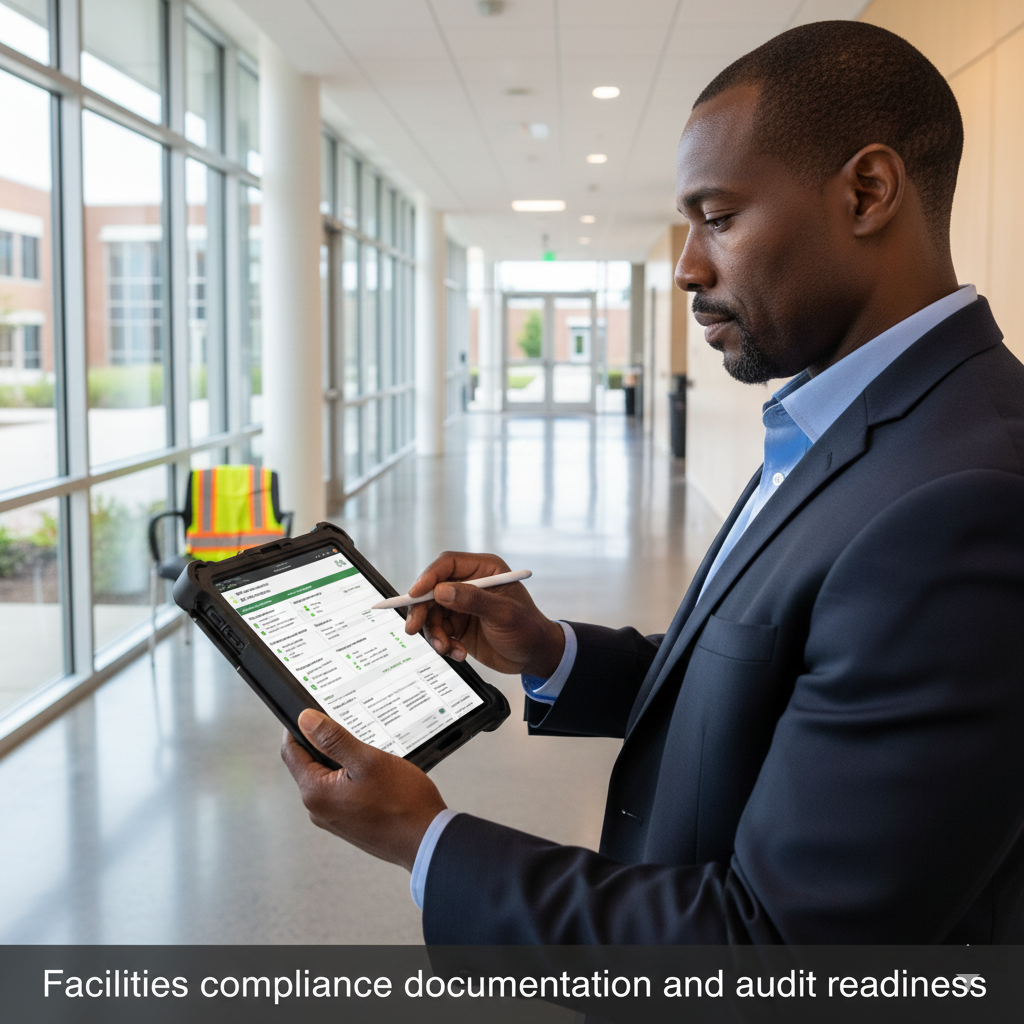
A professional man in a suit uses a digital tablet to review facility management data.
Why Compliance Pressure Is Increasing in Northeast Ohio
Facilities in Northeast Ohio face heightened scrutiny due to:
Aging infrastructure and legacy systems
Weather-related safety risks (ice, snow, flooding)
OSHA and safety enforcement trends
Insurance carrier documentation requirements
Public-sector and healthcare regulatory oversight
In cities like Cleveland, Akron, and Canton, inspections increasingly focus on whether risks were anticipated and documented, not just whether issues were fixed afterward.
Common Compliance Gaps in Facilities Management
Many facility teams still struggle with:
Incomplete maintenance records
Inconsistent vendor documentation
Lack of safety inspection logs
Poor incident and near-miss reporting
Missing proof of preventive maintenance
These gaps expose organizations to:
Failed inspections
Insurance disputes
Legal liability
Reputational damage
In 2026, “we fixed it” will no longer be enough—facility managers will need to show when, how, and why decisions were made.
What Strong Compliance Documentation Looks Like in 2026
High-performing facility teams maintain:
Centralized documentation systems
Time-stamped maintenance and inspection logs
Vendor compliance certificates and insurance records
Safety training documentation
Incident and corrective-action reports
This documentation serves multiple purposes:
Audit readiness
Risk management
Budget justification
Leadership reporting
Compliance is no longer administrative—it is strategic protection.
Audits Are Becoming Continuous, Not Periodic
By 2026, many organizations will adopt:
Rolling internal audits
Digital compliance dashboards
Third-party risk assessments
Facility managers who proactively audit their own operations gain:
Early visibility into risk
Greater control over outcomes
Stronger credibility with leadership
In Northeast Ohio, where facilities face both environmental and regulatory complexity, this proactive stance is becoming a competitive advantage.
What Facility Managers Should Be Doing Now
To prepare for 2026, facility managers should:
Standardize documentation processes across sites
Ensure vendors meet and document compliance requirements
Conduct internal compliance reviews regularly
Train teams on documentation best practices
Treat audits as operational checkpoints, not emergencies
Strong documentation turns compliance from a burden into a defensive asset.
Energy Efficiency & Sustainability Mandates
Why Energy Efficiency Will Shift from “Nice to Have” to Operational Requirement by 2026
Facility managers who prioritize energy efficiency reduce operating costs, meet regulatory expectations, and protect long-term asset value.
By 2026, sustainability will no longer be driven by branding or optional initiatives. It will be driven by cost pressure, regulatory requirements, and stakeholder expectations.
Energy efficiency is becoming one of the few areas where facility managers can directly influence operating expenses while also meeting environmental and compliance goals.
The Northeast Ohio Energy Reality
Facilities in Northeast Ohio face unique energy challenges:
Cold winters driving high heating demand
Hot, humid summers increasing cooling loads
Older buildings with outdated insulation and HVAC systems
Rising utility costs and volatile energy pricing
For many facilities in Cleveland, Akron, and surrounding counties, inefficient energy systems represent one of the largest controllable cost leaks.
By 2026, leadership will expect facility managers to understand—and actively manage—this exposure.
Sustainability Is Becoming a Compliance and Reporting Issue
Energy efficiency is increasingly tied to:
ESG reporting requirements
Public-sector sustainability mandates
Healthcare and education accreditation standards
Investor and board-level oversight
Facility managers are now expected to provide:
Measurable energy performance data
Documented efficiency improvements
Clear ROI justifications
Sustainability without data will no longer be credible.
What Practical Energy Efficiency Looks Like in 2026
Forward-thinking facility teams focus on:
HVAC optimization and preventative tuning
Lighting upgrades and controls
Building envelope improvements
Energy benchmarking and monitoring
Vendor accountability for energy-impacting services
Rather than chasing large capital projects immediately, many Northeast Ohio facilities start with operational efficiency improvements that deliver faster returns.
The Cost of Ignoring Energy Efficiency
Facilities that fail to address energy performance face:
Escalating utility costs
Increased strain on aging systems
Reduced asset lifespan
Difficulty meeting future mandates
By 2026, energy inefficiency will be viewed not just as waste—but as poor facilities governance.
What Facility Managers Should Be Doing Now
To prepare for 2026, facility managers should:
Benchmark current energy usage
Identify high-impact efficiency opportunities
Integrate energy goals into maintenance planning
Track savings and performance improvements
Communicate energy results in financial terms
Energy efficiency is no longer about being “green.”
It’s about being operationally disciplined.
Technology Adoption (CMMS, IoT & Operational Dashboards)
Why Technology Will Be Expected — but Not Excused — by 2026
Facility managers who adopt the right technology improve visibility, reduce downtime, and make defensible decisions—without adding operational complexity.
By 2026, technology adoption in facilities management will no longer be optional. However, facility leaders will not be rewarded for having tools only for using them effectively.
The challenge for many facility managers is not access to technology, but implementation discipline.
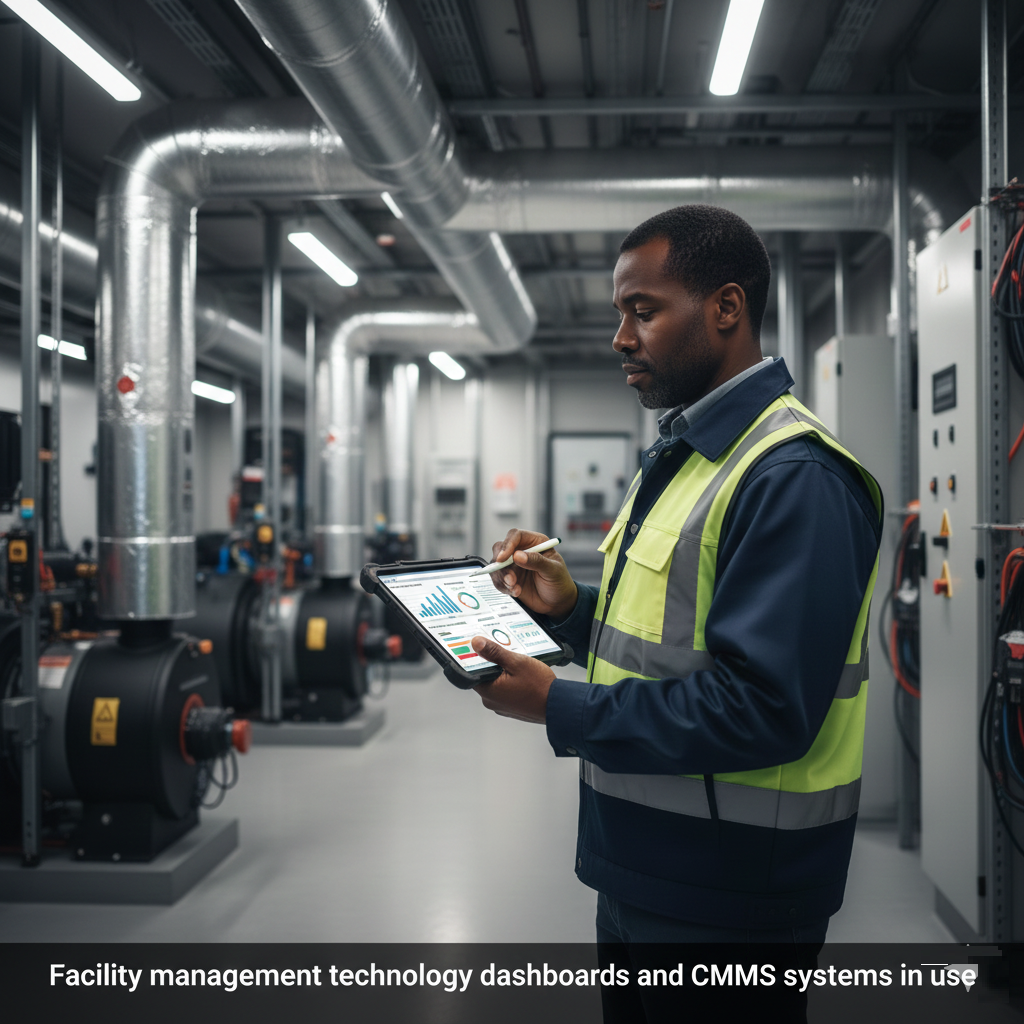
A facility manager in a safety vest uses a tablet to monitor industrial mechanical equipment.
The Technology Gap in Facilities Management
Many facilities still rely on:
Spreadsheets and email-based work orders
Paper inspection logs
Informal vendor communication
Manual reporting to leadership
These approaches limit visibility, slow decision-making, and increase compliance risk—especially in multi-site or weather-impacted environments like Northeast Ohio.
What Practical FM Technology Looks Like in 2026
High-performing facility teams focus on core functionality, not feature overload.
Key tools include:
CMMS platforms for work order tracking, asset history, and preventive maintenance
IoT sensors for monitoring critical systems (HVAC, leaks, temperature)
Operational dashboards for real-time reporting to leadership
These tools allow facility managers to shift from anecdotal explanations to data-backed insights.
Northeast Ohio Use Cases for FM Technology
Technology adoption is particularly valuable in Northeast Ohio for:
Monitoring HVAC performance during extreme temperature swings
Tracking snow and weather-related service response
Managing aging assets with limited capital budgets
Supporting compliance documentation and audits
When used correctly, technology reduces both risk and manual workload.
The Biggest Technology Mistakes Facility Managers Make
Common pitfalls include:
Implementing too many systems at once
Failing to train staff properly
Using technology without clear objectives
Not integrating tools into daily workflows
By 2026, ineffective tech adoption will be viewed as a leadership issue—not a resource issue.
What Facility Managers Should Be Doing Now
To prepare for 2026, facility managers should:
Identify one or two high-impact technology gaps
Select tools that align with actual workflows
Train teams consistently and document usage
Use dashboards to communicate value to leadership
Review and refine systems regularly
Technology should simplify operations—not complicate them.
Workforce Training & Retention
Why People Will Be the Most Constrained FM Resource in 2026
Facility managers who invest in training and retention reduce operational risk, maintain service quality, and stabilize costs in a tight labor market.
By 2026, workforce challenges will be one of the largest limiting factors in facilities management. Labor shortages, skill gaps, and turnover are already affecting service reliability across the sector.
For facility managers in Northeast Ohio, these pressures are intensified by:
An aging skilled trades workforce
Increased competition for maintenance talent
Rising labor costs
Reliance on third-party vendors with staffing constraints
Facilities that ignore workforce strategy will experience declining performance regardless of budget or technology.
The Hidden Cost of Turnover in Facilities Operations
High turnover creates more than staffing gaps—it introduces risk.
Common consequences include:
Missed preventive maintenance
Inconsistent safety practices
Knowledge loss around building systems
Increased reliance on emergency vendors
Higher long-term labor costs
By 2026, leadership will increasingly expect facility managers to manage people risk, not just headcount.
What Workforce Readiness Looks Like in 2026
High-performing facility teams focus on:
Cross-training staff to reduce single points of failure
Clear standard operating procedures (SOPs)
Ongoing safety and compliance training
Structured onboarding and skill development
In Northeast Ohio, where weather and infrastructure complexity demand versatility, workforce readiness is a core operational requirement.
Training Is a Risk Mitigation Strategy
Training is often viewed as a cost, but in facilities management it is a control mechanism.
Well-trained teams:
Respond faster to issues
Prevent incidents before they escalate
Reduce reliance on external contractors
Improve compliance outcomes
By 2026, undertrained teams will be seen as an avoidable operational risk.
Retention Requires More Than Competitive Pay
While compensation matters, retention is increasingly influenced by:
Predictable schedules
Clear expectations
Access to tools and training
Feeling supported by leadership
Facility managers who create stable, well-organized operations are more likely to retain talent—even in competitive labor markets like Northeast Ohio.
What Facility Managers Should Be Doing Now
To prepare for 2026, facility managers should:
Identify critical skill gaps within teams
Invest in cross-training and documentation
Strengthen onboarding processes
Partner with reliable vendors for workforce support
Treat retention as an operational KPI
Facilities succeed when the people behind them are prepared, supported, and retained.
Safety, Liability & Incident Prevention
Why Safety Will Be a Board-Level FM Priority in 2026
By 2026, facility safety will be directly tied to organizational risk, insurance costs, and executive accountability.
Safety is no longer viewed as a checklist item or compliance exercise. In today’s environment, a single incident can result in:
Legal exposure
Insurance premium increases
Reputational damage
Operational disruption
For facility managers, safety is now a strategic responsibility, not just an operational one.
The Expanding Liability Landscape for Facility Managers
Facility-related incidents are becoming more costly due to:
Stricter regulatory enforcement
Higher litigation frequency
Increased documentation expectations
Public visibility via social media and reporting platforms
In Northeast Ohio, where facilities face seasonal weather risks, aging infrastructure, and high foot traffic in healthcare, education, and commercial properties, liability exposure is amplified.
Common Safety Gaps Facilities Must Eliminate Before 2026
Many incidents are not caused by sudden failures—but by overlooked basics.
High-risk gaps include:
Poorly documented inspections
Inconsistent incident reporting
Deferred repairs creating trip and fall hazards
Inadequate lighting and signage
Limited emergency response planning
Facility managers who fail to close these gaps may struggle to justify decisions during audits or legal reviews.
Incident Prevention Starts with Data, Not Reaction
Reactive safety management increases costs and risk.
Proactive facilities:
Track incidents and near-misses
Analyze recurring patterns
Address root causes instead of symptoms
Integrate safety checks into preventive maintenance
By 2026, leadership will expect facility managers to demonstrate prevention, not just response.
Weather-Driven Risk in Northeast Ohio Facilities
Few regions experience the seasonal variability of Northeast Ohio.
Facility safety strategies must account for:
Snow and ice accumulation
Freeze-thaw cycles damaging walkways
Power outages during storms
HVAC strain during extreme temperature swings
Failing to prepare for seasonal risk increases incident frequency and liability exposure—especially in healthcare, education, and public-facing facilities.
Documentation Is the New Defense
In 2026, documentation will matter as much as action.
Facilities must be able to show:
Inspection logs
Maintenance records
Incident reports
Vendor compliance documentation
Corrective action timelines
Well-documented facilities reduce legal exposure and strengthen executive confidence.
Safety as a Leadership Communication Tool
Facility managers who communicate safety performance effectively:
Gain trust from executives
Support budget requests
Reduce scrutiny during incidents
Position facilities as risk mitigators, not cost centers
Safety metrics are increasingly used to evaluate leadership effectiveness.
What Facility Managers Should Be Doing Now
To prepare for 2026, facility managers should:
Audit current safety programs and documentation
Standardize inspection and reporting processes
Align vendors with safety expectations
Integrate weather-based risk planning
Treat safety metrics as executive-level reporting tools
Safety is not optional—and it is no longer invisible.
Communicating Facility Value to Executive Leadership
Why Facility Managers Must Shift from Operators to Strategic Communicators in 2026
In 2026, facility managers who cannot clearly communicate value in business terms will be overlooked—regardless of how well buildings are run.
Facilities work has always been essential, but it has not always been visible. The challenge moving forward is not execution—it is translation.
Executives do not think in work orders, inspections, or square footage. They think in:
Risk
Cost
Continuity
Compliance
Reputation
Facility managers who align their language to these priorities will earn influence, trust, and budget authority.
Why “Everything Is Fine” Is the Wrong Message
When facility leaders say:
“Nothing’s wrong. Everything is running.”
Executives often hear:
“Facilities are not a strategic concern.”
In reality, well-run facilities:
Prevent financial loss
Reduce liability exposure
Enable workforce productivity
Support regulatory compliance
Protect brand reputation
The value exists—but it must be articulated intentionally.
Translating Facility Work into Executive Metrics
By 2026, facility leaders must connect daily operations to outcomes executives understand.
Examples:
Preventive maintenance → Reduced downtime and repair costs
Safety audits → Lower insurance exposure
Vendor consolidation → Operational efficiency
Energy upgrades → Long-term cost control
Compliance readiness → Risk mitigation
Facilities that fail to quantify value are often first on the list when budgets tighten.
Using Data to Build Executive Confidence
Facility managers should treat reporting as a leadership tool—not an administrative task.
Effective executive reporting includes:
Trends, not just snapshots
Risks avoided, not just issues resolved
Cost savings from preventive actions
Compliance status and audit readiness
Forecasted needs tied to business goals
In Northeast Ohio—where facilities face aging infrastructure, seasonal risks, and compliance pressure—data-driven storytelling matters even more.
Aligning Facility Strategy with Organizational Goals
Facilities should never operate in isolation.
By 2026, successful facility leaders will align with:
Growth plans (new locations, expansions)
Workforce needs (safety, comfort, productivity)
Sustainability targets
Financial planning cycles
Risk management frameworks
Facilities become strategic when they support where the organization is going—not just where it is.
From Cost Center to Risk Shield
One of the most powerful reframes for executive audiences is this:
Facilities are not a cost center.
They are a risk shield.
Well-managed facilities:
Prevent lawsuits
Reduce downtime
Protect assets
Ensure regulatory compliance
Maintain public trust
This perspective changes how executives view investment decisions.
The Facility Manager’s Leadership Opportunity in 2026
Facility managers who:
Communicate clearly
Report strategically
Anticipate risk
Tie actions to outcomes
Will move from reactive roles into trusted leadership positions.
Those who do not may find their expertise undervalued—not because it lacks importance, but because it lacks visibility.
What Facility Managers Should Do Before 2026
To strengthen executive communication:
Standardize reporting dashboards
Prepare quarterly facility risk summaries
Quantify cost avoidance and savings
Align language with leadership priorities
Document impact—not just activity
Visibility is not self-promotion.
It is responsible leadership.
Preparing Facility Management for 2026 in Northeast Ohio
Facilities management in 2026 will demand more than technical expertise—it will require strategic vision, operational discipline, and executive-level communication. Facility managers in Northeast Ohio face unique challenges: aging infrastructure, seasonal weather extremes, labor constraints, rising energy costs, and stricter compliance requirements.
Success will come to those who can integrate these 10 priorities into a cohesive operational strategy:
Deferred Maintenance Risk Management – Proactively assess and mitigate aging asset risks before they become crises.
Extreme Weather Preparedness & Seasonal Planning – Align maintenance, staffing, and vendor strategies with Northeast Ohio’s seasonal variability.
Vendor Performance Tracking & Consolidation – Standardize expectations, monitor KPIs, and consolidate vendors for consistency and cost efficiency.
Budget Forecasting & Cost Control – Use predictive financial planning to justify investments, control spending, and prevent emergency costs.
Compliance Documentation & Audits – Maintain continuous, accurate records to reduce liability and ensure audit readiness.
Energy Efficiency & Sustainability Mandates – Implement practical energy-saving measures that provide measurable ROI and regulatory alignment.
Technology Adoption (CMMS, IoT, Dashboards) – Leverage technology strategically to increase visibility, prevent downtime, and drive data-based decisions.
Workforce Training & Retention – Invest in skills development, cross-training, and retention programs to reduce operational risk.
Safety, Liability & Incident Prevention – Treat safety as a core operational KPI, not just a compliance requirement.
Communicating Facility Value to Executive Leadership – Translate operations into measurable business outcomes that influence decisions and secure leadership support.
Executive Takeaways
Proactivity Wins: Delaying maintenance, training, or reporting will cost more in 2026 than any efficiency gained.
Data Is Your Language: Executives respond to metrics, risk assessments, and ROI—not anecdotal updates.
Regional Awareness Matters: Northeast Ohio’s weather, aging buildings, and labor market create unique risks that must be incorporated into every operational plan.
People Are Assets: Skilled, well-trained staff and reliable vendors are the foundation of every strategic FM initiative.
Communication Creates Value: Facility managers who quantify impact and report effectively move from operational roles into strategic leadership positions.
Facility management in Northeast Ohio is evolving from reactive task management to strategic enterprise leadership. By focusing on these 10 priorities, facility managers will protect assets, reduce costs, mitigate risk, and elevate the perceived value of their role to the executive team.
Frequently Asked Questions (FAQs)
1. What should facility managers in Northeast Ohio focus on in 2026?
Facility managers in Northeast Ohio should focus on 10 key areas: deferred maintenance, extreme weather preparedness, vendor management and consolidation, budget forecasting and cost control, compliance documentation, energy efficiency and sustainability, technology adoption (CMMS, IoT, dashboards), workforce training and retention, safety and incident prevention, and effectively communicating facility value to executive leadership.
2. Why is deferred maintenance a critical concern for facility managers?
Deferred maintenance can increase operational risk, create safety hazards, and lead to higher long-term costs. Proactively addressing aging infrastructure and scheduling preventive maintenance reduces emergency repairs and protects assets.
3. How can facility managers prepare for extreme weather in Northeast Ohio?
Facility managers should implement seasonal planning, pre-winter inspections, vendor readiness checks, emergency protocols, and risk tracking. These measures help minimize downtime, reduce liability, and prevent costly emergency repairs caused by snow, ice, flooding, or temperature extremes.
4. What technologies should facility managers adopt by 2026?
Key technologies include:
CMMS (Computerized Maintenance Management Systems) for work orders and asset tracking
IoT sensors to monitor critical building systems
Operational dashboards to track KPIs, costs, and maintenance performance
These tools help managers make data-driven decisions, prevent downtime, and communicate value to executives.
5. How can facility managers improve workforce training and retention?
Managers should:
Cross-train staff to reduce single points of failure
Document standard operating procedures (SOPs)
Provide ongoing safety and compliance training
Improve onboarding and mentoring
Offer predictable schedules and a supportive work environment
Investing in staff reduces operational risk and improves service reliability.
6. Why is communicating facility value to executives important?
Facility managers need to translate operational work into measurable business outcomes, such as cost savings, risk mitigation, compliance, and productivity. Clear communication elevates facilities from a cost center to a strategic leadership function, ensuring funding and executive support.
7. How can facility managers ensure compliance and audit readiness?
Facility managers should maintain centralized documentation for inspections, maintenance, vendor compliance, and incidents. Regular internal audits, staff training, and standardized reporting ensure that facilities are always prepared for regulatory inspections and audits.
8. What are the top safety priorities for facility managers in 2026?
Top safety priorities include:
Preventing incidents through regular inspections
Identifying and mitigating hazards
Tracking and reporting near-misses and incidents
Planning for seasonal weather risks
Documenting corrective actions and safety compliance
A proactive safety program reduces liability, protects staff and occupants, and builds executive confidence.