
When Facilities Fail Quietly: Early Warning Signs Leaders Should Never Ignore
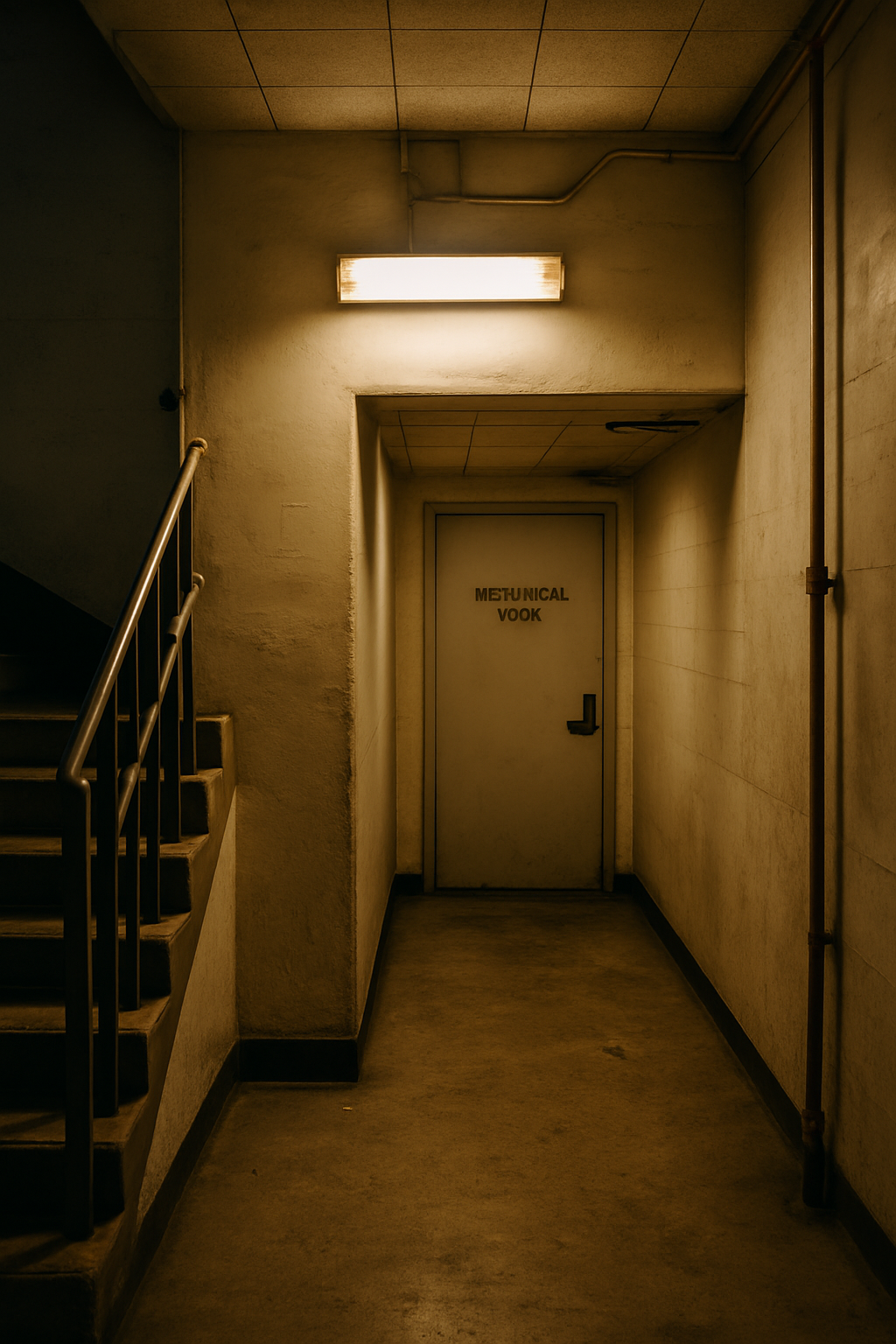
A dimly lit, narrow concrete hallway leads to a door marked "Mechanical Room" next to stairs.
Facility failures rarely announce themselves with urgency. They do not arrive with alarms blaring or immediate crises. More often, they surface subtly, quietly, and repeatedly—small issues dismissed as routine inconveniences rather than indicators of deeper operational strain. A maintenance request that takes longer than usual. A hallway that feels slightly dimmer. A piece of equipment that works, but not quite the way it used to. Individually, these signs feel manageable. Collectively, they form a pattern that leaders often recognize only after a serious incident forces their attention.
In Ohio’s evolving operational landscape—where healthcare systems are expanding, senior living communities are under increased scrutiny, logistics facilities are operating at full capacity, and commercial properties are balancing cost with performance—facility failure has become less about sudden breakdowns and more about gradual erosion. What makes this erosion dangerous is not its speed but its silence.
High-performing organizations understand that facilities do not simply fail; they communicate long before they break. The challenge for leadership is learning how to listen.
The Nature of Quiet Failure
Quiet facility failure is deceptive because it feels familiar. Leaders and managers grow accustomed to small imperfections, especially in buildings that are heavily used or aging. Over time, tolerance increases. What once triggered immediate attention becomes background noise.
A door that no longer closes smoothly becomes “just how that door is.” A recurring leak becomes “something we’ll address in the next budget cycle.” A system that requires frequent resets becomes “temperamental but functional.” These accommodations feel practical in the moment, yet they signal a slow normalization of dysfunction.
Facilities, however, do not operate on goodwill or intent. They respond to physics, wear, usage, and maintenance. When leaders accept degraded performance as normal, they unintentionally create environments where risk compounds quietly. The facility continues to function—until it doesn’t.
This is where many organizations miscalculate. They equate continued operation with acceptable condition. In reality, continued operation can coexist with escalating vulnerability. The building may still open every morning, but its margin for error shrinks with every ignored warning sign.
Quiet failure thrives in environments where responsibility is diffused. When no one clearly owns facility outcomes, issues drift between departments, vendors, and budget conversations. Each party assumes the issue is minor or already being handled. Silence fills the gap where accountability should live.
Early Warning Signs Hidden in Daily Operations
The earliest signs of facility failure often appear not in reports, but in behavior. Staff adapt. They work around problems rather than through them. They develop informal routines to compensate for unreliable systems. These workarounds are rarely documented, yet they reveal more about facility health than any inspection checklist.
When employees arrive earlier than necessary to “get things running,” something is wrong. When certain rooms are avoided without formal explanation, something is wrong. When maintenance teams spend more time resetting systems than improving them, something is wrong. These are not complaints; they are coping mechanisms.
Another early indicator is the increase in repeat issues. A problem that returns shortly after being fixed is rarely a single failure—it is a symptom. Repeated repairs suggest that root causes are not being addressed, often because they require deeper investment, broader coordination, or uncomfortable conversations about capacity and budget.
Facilities also speak through inconsistencies. Temperature variations from room to room, uneven lighting, unpredictable equipment behavior, or fluctuating water pressure all point to systems under stress. Leaders may not experience these inconsistencies directly, especially if they occupy limited spaces. Meanwhile, frontline staff and residents experience them daily.
Over time, these inconsistencies erode confidence. People stop reporting issues because they expect delays or temporary fixes. Silence increases, not because problems disappear, but because trust in resolution diminishes. At that point, the facility has already entered a dangerous phase: problems exist, but visibility has been lost.
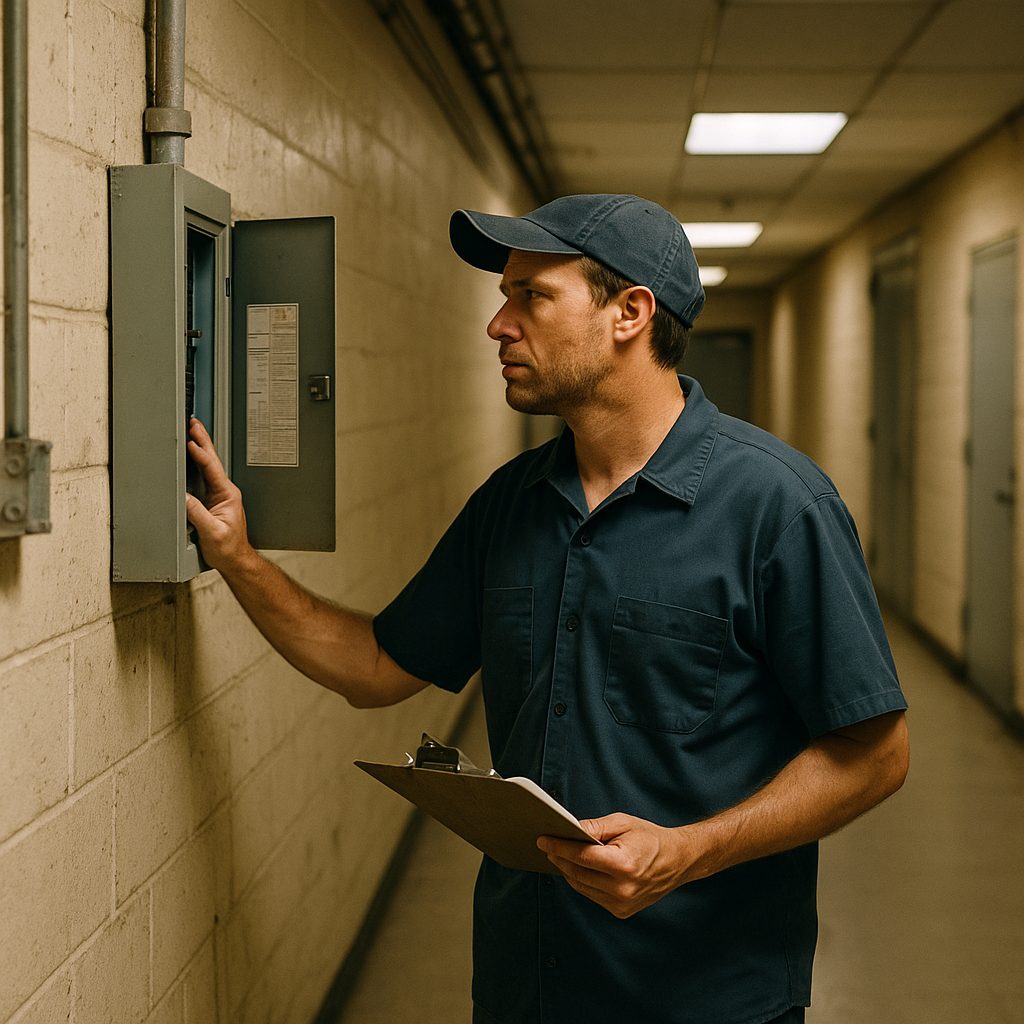
A technician in a blue uniform and cap inspects an open electrical panel in a hallway.
Why Leaders Often Miss the Signs
Leadership oversight does not fail because leaders don’t care. It fails because attention is finite. Executives and senior managers are tasked with strategy, growth, people, finances, and external pressures. Facility issues often feel operational rather than strategic, especially when nothing appears “broken.”
This is compounded by reporting structures. Facility data is often filtered before it reaches leadership. Minor issues are grouped, summarized, or softened to avoid appearing inefficient or alarmist. Over time, leaders receive a version of reality that is technically accurate but operationally incomplete.
There is also the issue of familiarity. Leaders who have worked in the same buildings for years may no longer notice gradual decline. Change that happens slowly is difficult to perceive without deliberate comparison. What feels acceptable today may be significantly worse than it was two years ago, yet no single moment marks the shift.
Another factor is optimism bias. Leaders tend to believe that major failures are rare and that existing safeguards will catch problems before they escalate. While safeguards do exist, they are only as effective as the habits that support them. Inspections that are rushed, documentation that is inconsistent, and maintenance schedules that are flexible under pressure all weaken those safeguards quietly.
In some cases, financial caution accelerates the problem. Deferred maintenance is often framed as responsible cost control, especially during uncertain economic periods. However, deferral without clear reassessment timelines transforms caution into risk. Facilities remember what leaders choose to postpone.
The Moment Quiet Failure Becomes Loud
Quiet facility failure eventually announces itself, but rarely at a convenient time. It surfaces during peak usage, regulatory inspections, weather extremes, leadership transitions, or unexpected incidents. What makes these moments costly is not only the failure itself but also the realization that warning signs were present long before.
A system failure during extreme weather exposes not just mechanical weakness but also planning assumptions. A compliance issue during an inspection reveals not just an oversight, but a pattern. An injury resulting from a neglected condition exposes not only physical risk but also cultural gaps in accountability.
When failure becomes visible, organizations often scramble to respond. Emergency repairs are authorized. Consultants are called. Budgets are reworked under pressure. While these responses may stabilize the situation, they are far more expensive—financially and reputationally—than early intervention would have been.
At this stage, leadership attention intensifies, but the cost of recovery includes more than money. Trust is damaged. Staff morale suffers. External confidence wavers. The organization shifts from proactive management to reactive defense.
What leaders often reflect on afterward is not surprise at the failure but recognition of missed signals. In hindsight, the signs appear obvious. The challenge is learning to recognize them before hindsight is required.
The Cultural Cost of Ignoring Facility Signals
Facilities shape culture in ways that are rarely acknowledged explicitly. The condition of a building communicates what an organization values, regardless of what its mission statement says. When spaces are consistently maintained, people feel respected. When issues linger unresolved, people internalize a message about priorities.
Quiet facility Failure teaches people to lower expectations. They stop reporting issues. They stop assuming improvement is possible. Over time, this mindset extends beyond the physical environment into broader operational behavior. Small compromises become acceptable. Excellence becomes optional.
In environments such as healthcare, education, and senior living, the cultural cost is even higher. People rely on facilities not just for comfort but for safety and dignity. When those environments degrade quietly, the emotional impact on residents, patients, and families is significant—even if no formal complaint is filed.
Culture does not collapse suddenly. It erodes gradually, much like facilities themselves. Leaders who pay attention to facility signals are often the same leaders who protect organizational culture proactively.
What High-Performing Leaders Do Differently
Leaders who prevent quiet facility failure share a common discipline: they seek direct visibility. They do not rely solely on reports. They walk their facilities with curiosity rather than assumption. They ask open-ended questions and listen without rushing to solutions.
They also treat maintenance and facility data as strategic information, not background noise. Trends matter more than isolated incidents. Patterns matter more than single complaints. High-performing leaders ask how often an issue recurs, how long it persists, and how it affects behavior—not just whether it has been “fixed.”
Another key difference is how these leaders frame facility investment. Rather than viewing maintenance as a cost to be minimized, they see it as risk management, performance protection, and cultural reinforcement. They understand that every dollar saved through deferral carries a potential cost multiplier later.
Importantly, they create psychological safety around reporting issues. Staff feel encouraged to surface concerns early without fear of blame or dismissal. This openness turns facilities into early-warning systems rather than silent liabilities.
Building Awareness Before Crisis
Preventing quiet facility failure does not require perfection. It requires awareness, consistency, and humility. Leaders must accept that facilities are dynamic systems subject to constant stress. They must recognize that silence is not confirmation of health.
Regular, intentional facility reviews—paired with honest dialogue—create opportunities to address issues while they are still manageable. Documentation becomes a tool for learning rather than compliance alone. Maintenance schedules become living plans rather than static calendars.
Most importantly, leaders learn to ask a different question. Instead of asking whether the facility is functioning, they ask how it is functioning—and for whom. This shift uncovers insights that checklists alone cannot provide.

A professional man in a navy blazer and glasses holds a tablet in a bright office hallway.
Facilities rarely demand attention until something goes wrong. By then, the cost—financial, operational, and human—is already higher than it needed to be. The organizations that lead well are those that listen earlier, act sooner, and treat their facilities as living systems rather than background infrastructure.
At Immaculate Management Group (IMG), we work with organizations that want clarity before crisis. Our approach focuses on proactive oversight, consistent maintenance standards, and operational visibility—helping leaders identify quiet risks and strengthen facility performance before issues escalate.
If you’d like to discuss what early facility warning signs may look like in your environment, we invite you to schedule a conversation with our team.