
What School Facility Managers Are Getting Right About Post-Pandemic Cleaning Standards
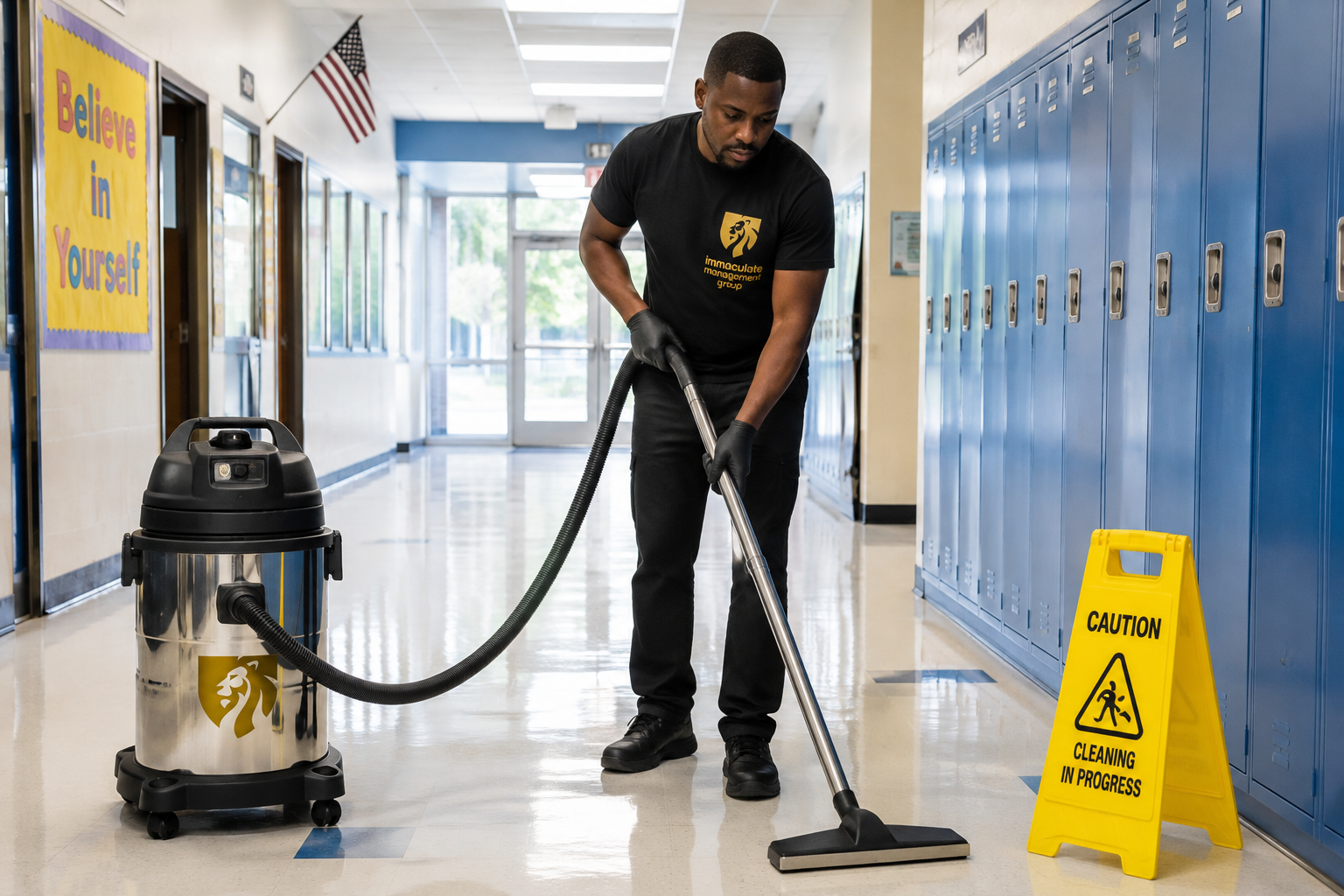
Something shifted in how schools think about cleanliness after 2020, and it has not shifted back.
Before the pandemic, facility cleanliness in a school setting was largely invisible. It happened after hours, it was evaluated by how things looked rather than how they performed, and it rarely made it into conversations about student outcomes, enrollment, or institutional reputation. Cleaning was a cost to manage, not a standard to maintain.
That changed. And the schools that understood the change early, the ones that stopped treating facility cleanliness as a background function and started treating it as a front-line operational priority, are the ones seeing the most measurable results today.
This post is about what those schools are doing differently. Not in theory, but in practice, the specific shifts in cleaning standards, protocols, and facility management approaches that separate the schools managing their facilities well from the ones still operating on a pre-pandemic playbook.
Why the Pre-Pandemic Standard Was Never Enough
Before 2020, the benchmark for school cleanliness in most commercial settings was simple: does it look clean? Floors were mopped, surfaces were wiped, and restrooms were stocked. If a visitor walking through the building saw nothing obviously wrong, the facility passed.
The problem was that visual cleanliness and hygienic cleanliness are not the same thing. A surface can look spotless and still harbor bacteria, viruses, and allergens that affect the health of the people using the space. A floor can appear dry and still carry contamination from foot traffic. A restroom can appear clean and still fall short of the disinfection standards that actually reduce illness transmission.
What the pandemic exposed was not a new problem. It was an existing gap that had always been there, between the appearance of cleanliness and the reality of it. Schools that had been passing the visual test for years were suddenly confronted with the fact that their cleaning programs were not designed to achieve what everyone had assumed they were achieving.
The schools that responded well did not simply add products and call it done. They rebuilt their approach from the ground up, starting with what they were actually trying to achieve, then working backward to the protocols, products, staffing, and documentation systems needed to achieve it.
That is the gap between where most schools are and where the best-managed schools have arrived. And it is a gap that has nothing to do with budget. It has everything to do with standards.
What the Best Schools Are Doing Differently
1. They Have Moved From Cleaning Schedules to Cleaning Protocols
The most significant shift in how high-performing school facilities are managed is the move from schedule-based cleaning to protocol-based cleaning.
A cleaning schedule tells staff when to clean. A cleaning protocol tells staff what to clean, how to clean it, with what products, to what standard, and how that standard will be verified.
The difference matters enormously in practice. A schedule that says "restrooms cleaned daily" leaves enormous room for inconsistency. One staff member may sanitize every surface; another may wipe visible areas and move on. One shift may use an appropriate disinfectant at the correct dwell time; another may use the same product at the wrong concentration, rendering it ineffective. Without a protocol, there is no way to know which is happening and no basis for correcting it when the wrong approach becomes the norm.
High-performing school facilities have protocols for every space type and every cleaning task. Those protocols specify the sequence of tasks, the products to be used and how they are prepared, the contact time required for disinfection to be effective, the surfaces that must be addressed in every cleaning cycle, and the sign-off process that confirms the work was completed to standard.
This is not bureaucracy. It is the minimum structure required to ensure that cleaning actually achieves what it is supposed to achieve, consistently, regardless of who is performing the work on any given day.
2. They Have Adopted a Risk-Based Approach to High-Touch Surfaces
Not every surface in a school carries the same risk. Door handles, light switches, stair railings, shared equipment, cafeteria tables, and restroom fixtures are touched by dozens or hundreds of people every day. Walls, ceilings, window frames, and storage areas are touched rarely if at all.
Before the pandemic, most school cleaning programs treated all surfaces roughly the same, cleaned on the same schedule, and with the same frequency and to the same standard. High-performing schools have moved to a risk-based model that concentrates cleaning and disinfection resources where the actual transmission risk is highest.
In practice this means high-touch surfaces are cleaned and disinfected multiple times per day, not just during the overnight or after-school cleaning cycle. It means day porter services are structured around a specific high-touch surface route that runs throughout the school day, not just a general tidying presence. It means the cleaning products used on high-touch surfaces are specifically selected and tested for efficacy against the pathogens of concern, not simply whatever general-purpose cleaner is most convenient.
This approach does not require a larger cleaning budget. It requires a smarter allocation of the cleaning budget that already exists, redirecting time, staffing, and product toward the surfaces and spaces where cleaning effort has the greatest measurable impact on health outcomes.
3. They Are Using Day Porter Services as a Strategic Tool
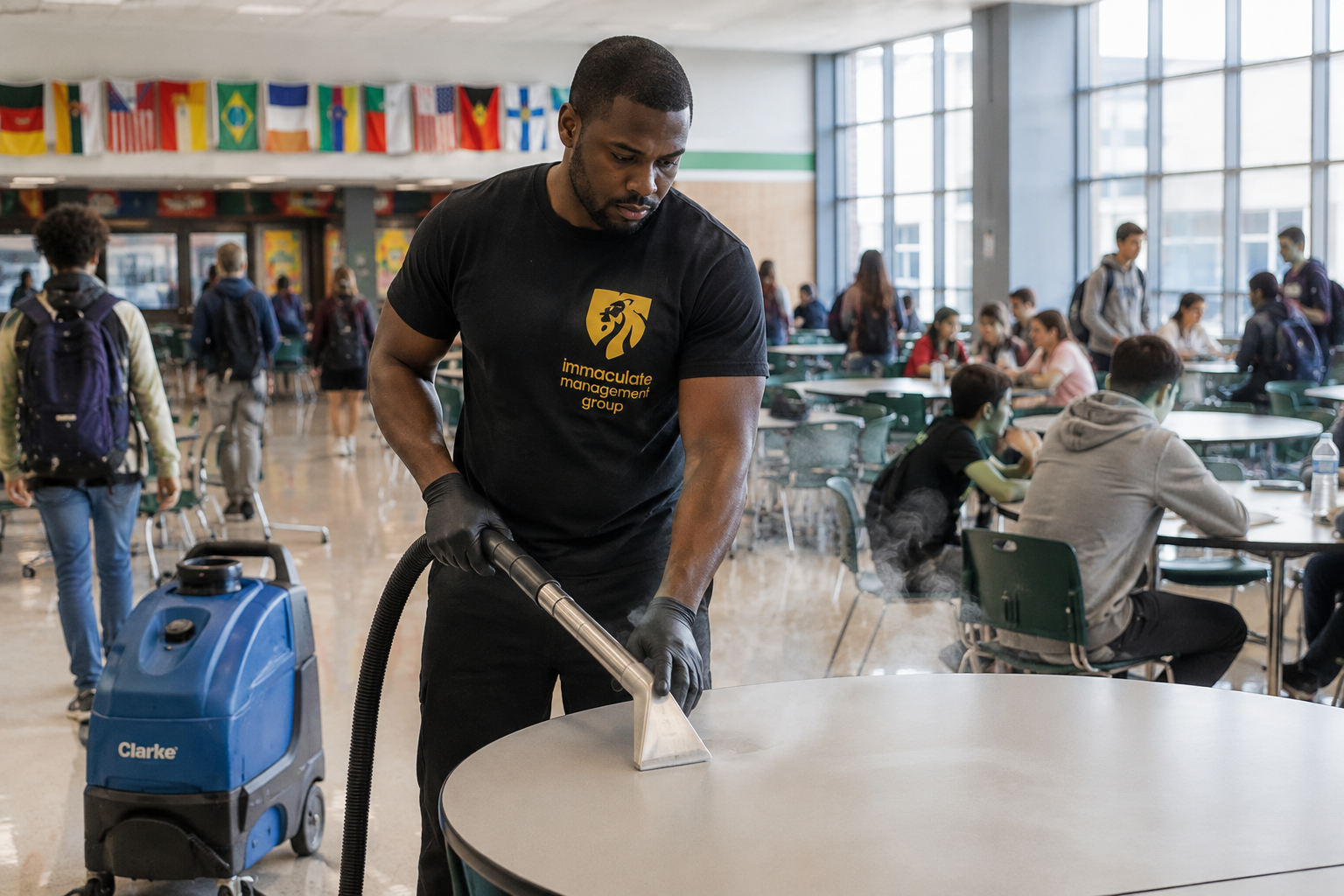
One of the most visible shifts in well-managed school facilities over the past several years is the expanded role of day porter services. Where day porters were once primarily responsible for responding to spills and restocking supplies, the most effective school facilities have repositioned day porter teams as an active infection control and environmental management function.
This means day porters are deployed according to a structured schedule that addresses high-traffic transition periods between class periods, during lunch service, and at the start and end of after-school activities. It means their routes are mapped to the highest-risk zones in the building. It means their work is documented in real time, creating a continuous record of facility condition throughout the school day rather than a single end-of-day cleaning log.
For schools that have implemented this model, the results are measurable. Illness-related absences decline. Parent and visitor perception of the facility improves. Teachers report a cleaner, more orderly working environment. And the facility team has documentation, not just assurance, that the building was maintained to standard throughout the day.
4. They Have Standardized Their Cleaning Products — and Know Why
Walk into the janitorial closet of a school that is managing its facilities well and you will see a curated, standardized set of cleaning products, each selected for a specific purpose, each with documented protocols for use. Walk into the janitorial closet of a school that is not managing its facilities well and you will likely find an assortment of products accumulated over years, with overlapping functions, inconsistent efficacy, and no clear guidance on what to use where.
Product standardization is not a minor operational detail. It is foundational to a consistent cleaning standard.
When every staff member is using the same products, prepared the same way, and applied to the same surfaces with the same dwell time, the outcome of the cleaning process becomes predictable and auditable. When staff are using different products interchangeably or, worse, mixing products without understanding the chemical interactions, the outcome is neither predictable nor safe.
High-performing school facilities have standardized their cleaning product inventory around three core categories: a general-purpose cleaner for non-critical surfaces, a hospital-grade disinfectant for high-touch and high-risk surfaces, and a floor care system appropriate for the flooring types in the building. Everything else is evaluated against those three categories before it is introduced into the program.
This level of standardization also makes training more effective. Staff who learn one disinfectant protocol deeply are more reliable than staff who have a surface-level familiarity with a dozen different products. Fewer products, used correctly and consistently, outperform a wide product assortment used inconsistently every time.
5. They Are Treating Indoor Air Quality as a Facility Management Responsibility
The post-pandemic period has seen a significant shift in how schools think about indoor air quality, and the most forward-thinking school facility managers have incorporated IAQ into their core facility management responsibilities rather than treating it as a separate concern.
This means HVAC filters are inspected and replaced on documented schedules rather than when they appear visibly dirty. It means portable air filtration units are deployed in high-occupancy spaces, classrooms, cafeterias, and gymnasiums, with documented maintenance schedules. It means cleaning products are evaluated for VOC content and potential respiratory impact, not just for cleaning efficacy. And it means the connection between cleaning protocols and air quality is understood and managed, recognizing that improper chemical use, inadequate ventilation during cleaning, and accumulated dust and allergens in carpet and upholstery all affect the air students and staff breathe throughout the school day.
IAQ is not a peripheral concern. Research consistently shows that poor indoor air quality in school buildings is associated with lower academic performance, higher absenteeism, and worse health outcomes for students with respiratory conditions. Schools that manage their air quality as part of their facility management standard are not just checking a compliance box. They are protecting learning.
6. They Have Built Documentation Into the Cleaning Process
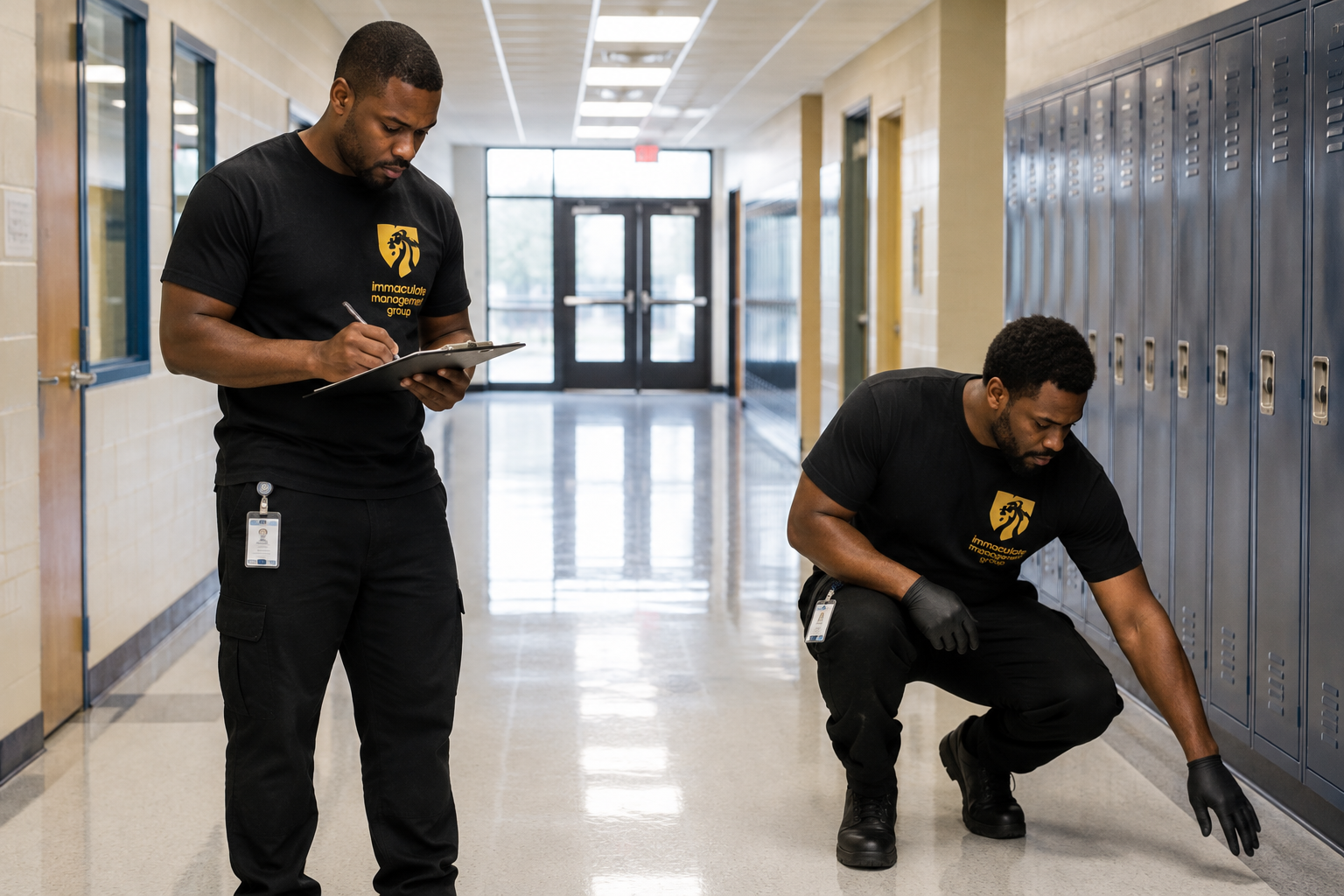
Perhaps the most durable change in how high-performing schools manage facility cleanliness is the shift toward systematic documentation. Where cleaning was once verified by supervisory walkthrough and visual inspection, the best-managed school facilities now maintain continuous written records of what was cleaned, when, by whom, and to what standard.
This documentation serves multiple purposes. It creates accountability within the cleaning team, staff who know their work will be documented consistently maintain higher standards than staff who know their work will only be inspected occasionally. It creates evidence in the event of a health incident, inspection, or parent complaint, the facility can demonstrate not just that it has a cleaning program but that the program was executed as specified. And it creates a data trail that allows facility managers to identify patterns, spaces that are consistently harder to maintain, time periods when standards slip, and staff members who may need additional training or support.
Documentation does not need to be complex to be effective. A simple completion checklist for each cleaning zone, signed off by the staff member who completed the work and the supervisor who verified it, creates the accountability structure that makes consistent standards possible.
The schools that are managing this best have moved beyond paper checklists to digital documentation systems that timestamp each completed task and generate automatic reports. But the principle is the same regardless of the tool: if it was not documented, it was not done, at least not in any way the facility can demonstrate when it matters.
What This Means for School Administrators and Facility Directors
The schools that are getting post-pandemic cleaning standards right are not necessarily the ones with the largest facility budgets. They are the ones that made a decision, at the administrative level, that facility cleanliness was a strategic priority, not just an operational expense.
That decision changes everything downstream. It changes how cleaning contracts are written and evaluated. It changes what questions get asked when a facility management partner is selected. It changes how facility performance is measured and reported. And it changes how the building is experienced, by students, by staff, by parents, and by anyone who walks through the front door.
For school administrators, the practical question is straightforward: does your current cleaning program meet the standard described in this post? Not the standard it met five years ago. Not the standard it looks like it meets on a visual walkthrough. The actual standard, protocol-based, risk-stratified, documented, and consistently executed?
If the honest answer is no, or I am not sure, that is the most important facility conversation you are not having yet.
For facility directors, the question is equally direct: do you have the partner, the protocols, the products, and the documentation systems to operate at this standard? Or are you still running a program that was designed for a different era, with a different set of expectations?
The benchmark has moved. The schools that are thriving are the ones that moved with it.
Why This Matters for Northeast Ohio Schools
For school facilities across Northeast Ohio, from urban campuses in Cleveland and Columbus to suburban schools throughout the region, the post-pandemic cleaning standard is not optional. It is the expectation of every parent, every teacher, and every school board member who has spent the last several years watching how facility management decisions directly affect student health and academic continuity.
The good news is that meeting this standard does not require a complete overhaul of everything. It requires the right partner, one that brings protocol-based cleaning systems, experienced day porter teams, documented quality assurance, and the industry knowledge to help your school reach and maintain the standard that your community expects.
Immaculate Management Group has been building that standard into every facility we serve across Northeast Ohio since 2011. Our commercial cleaning and day porter teams work in school and educational environments where the expectations are high, the traffic is relentless, and there is no acceptable margin for error. We understand what post-pandemic school cleanliness looks like in practice, not just in theory, and we bring that understanding to every building we work in.
If you are a school administrator or facility director in Northeast Ohio who wants to understand what your facility's cleaning program should look like in 2026, we would welcome the conversation.
Immaculate Management Group is a full-service facility management company serving commercial and educational properties across Northeast Ohio. Founded in 2011 by James Barnes, IMG is MBE and EDGE certified, OSHA compliant, and licensed and bonded. Learn more at theimggroup.com.