
Facility Readiness in 2026: What High-Performing Organizations Are Doing Differently in a Changing Ohio

A vibrant sunset illuminates the city skyline and a river bridge in downtown Columbus, Ohio.
Ohio is entering a defining moment. Across the state, industries are shifting, workforce expectations are evolving, and the physical environments that support daily life are under more scrutiny than ever before. From hospitals to manufacturing facilities, corporate offices to senior living communities, schools to logistics hubs, every organization now stands at the intersection of rising operational demands and rapidly changing facility standards. The coming year will not simply test how well buildings look; it will test how well they function, adapt, and protect the people who rely on them every day.
Facility readiness has always mattered, but 2026 elevates its importance in a new, urgent way. The pressures of aging infrastructure, climate unpredictability, regulatory expansion, employee expectations, and economic competition have made the quality of a building’s internal systems as critical as the quality of its external services. Organizations that once viewed facility care as routine maintenance now recognize it as a strategic priority that determines safety, stability, trust, and longevity.
In this new reality, high-performing organizations in Ohio are not waiting to react to challenges. They are building readiness into the fabric of their operations. Their approach is deliberate, integrated, and far more connected to organizational identity than ever before. Facility readiness has become a reflection of leadership, a measure of operational integrity, and a quiet—but powerful—competitive advantage.
This essay explores what these high-performing organizations are doing differently and why 2026 marks a turning point for facility care in Ohio. More importantly, it reveals how facility readiness—long considered a behind-the-scenes function—is now shaping culture, reputation, and resilience in profound ways.
Ohio at a Turning Point: Why 2026 Demands a New Standard of Facility Readiness

A long, empty office hallway with tan tiled floors and sunlight streaming through large side windows.
Ohio has always been a state defined by work ethic, resilience, and the ability to reinvent itself. Manufacturing cities reshaped their economies. Healthcare systems expanded their capabilities. Schools evolved with technology. Senior living communities adapted to new levels of care. Logistics hubs grew into sophisticated engines of commerce. But 2026 brings a convergence of pressures and possibilities that make facility readiness not just important but essential.
Climate unpredictability has increased the demands placed on buildings. Sudden temperature shifts, heavier snowfalls, unexpected storms, and water-related issues require facilities to be prepared in ways that go beyond traditional seasonal routines. This means HVAC systems must be more reliable, drainage systems more efficient, and emergency protocols more refined.
Aging infrastructure also presents a formidable challenge. Many Ohio buildings—from schools and hospitals to government offices and commercial properties—were constructed decades ago. Their internal systems now face the strain of modern use, regulatory changes, and expanded occupancy. Deferred maintenance no longer hides easily; it reveals itself through unexpected failures that disrupt operations and create costly emergencies.
The workforce landscape has changed as well. Employees expect safer, cleaner, more functional workspaces. Residents in senior communities expect dignity and comfort. Patients expect sterile environments. Parents expect well-maintained classrooms. Facility readiness directly impacts retention, satisfaction, and trust—intangible elements that hold extraordinary value in today’s competitive markets.
Regulatory environments are tightening. Insurance carriers are more demanding, evaluating facility habits rather than just incidents. Organizations without strong documentation or consistent maintenance routines face higher liability exposure and increased financial burden.
Taken together, these pressures have transformed facility readiness from an optional pursuit to a requirement for survival. As Ohio continues to grow, organizations that fail to elevate their facility standards risk falling behind—not because they lack ambition, but because their environments cannot support their goals.
High-performing organizations have recognized this shift early. They understand that a building is not simply a structure; it is a living system whose health affects every person it serves. Their readiness mindset is intentional, strategic, and deeply connected to their long-term vision.
How High-Performing Organizations Are Transforming Facility Operations
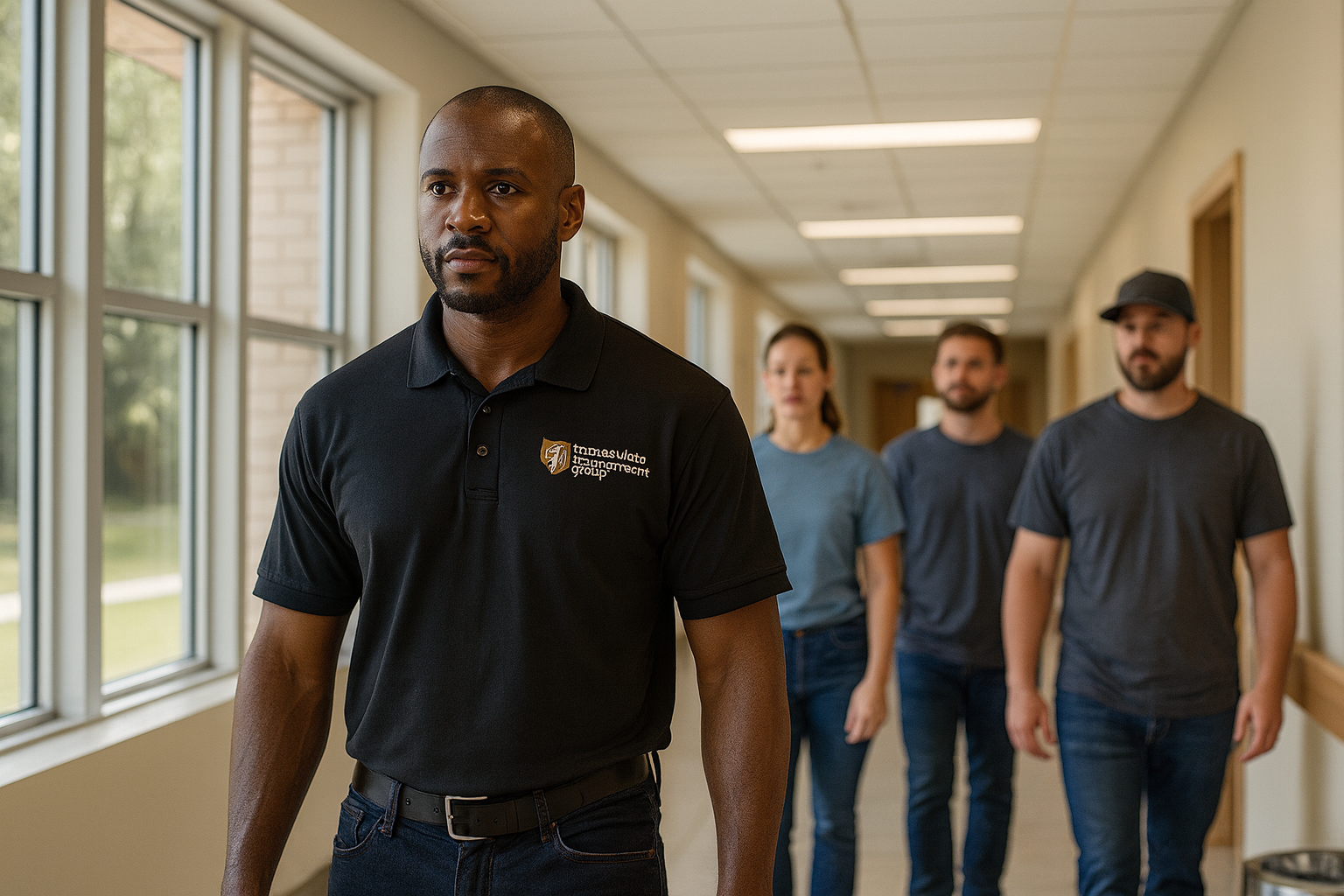
A team of four facility management professionals walks together down a bright, sunlit office hallway.
The organizations leading Ohio’s next chapter of operational excellence share one remarkable trait: they treat facility readiness as a cultural value rather than a task list. Instead of seeing cleaning, maintenance, and inspections as isolated responsibilities, they view them as interconnected elements of organizational performance and identity.
Their approach starts with leadership engagement. Executives and department heads walk their facilities, observe conditions firsthand, and model a mindset of responsibility. They understand that no building remains safe, efficient, or compliant by accident. By being present, they communicate that facility readiness is not the domain of a single team but a shared obligation across the organization.
These organizations also move from reactive maintenance to predictive readiness. They do not wait for equipment to fail or for complaints to arise. Instead, they use proactive strategies, scheduled inspections, and future-focused planning to prevent issues before they disrupt operations. They recognize patterns—the systems that deteriorate faster under specific conditions, the areas prone to moisture, the spaces requiring enhanced sanitation, and the equipment that needs regular calibration. Their readiness mindset is built on anticipation, not repair.
They also invest in documentation, not as paperwork, but as a shield. Every inspection, repair, cleaning routine, and seasonal adjustment is recorded with precision. This documentation protects the organization during audits, insurance evaluations, and compliance reviews. It demonstrates operational maturity and reduces vulnerability to legal exposure.
Moreover, high-performing organizations cultivate teams who feel valued and trained. Facility readiness thrives when people feel empowered, informed, and supported. When frontline teams receive clear expectations, ongoing training, reasonable workloads, and recognition, they deliver excellence consistently. Readiness becomes a shared pursuit rather than a burden.
Many organizations are also embracing technology—not to replace people but to enhance their effectiveness. Tools that support communication, inspection tracking, work order management, or preventive maintenance scheduling help eliminate gaps and strengthen consistency. Technology ensures visibility, but human expertise and attention remain the heart of readiness.
Most importantly, these organizations understand that the condition of their facilities is a reflection of their values. A clean, well-maintained, orderly environment communicates pride, trustworthiness, and care. Visitors feel it. Staff feel it. Residents feel it. Facility readiness becomes a silent message that says, “We take responsibility seriously.”
The Human, Financial, and Operational Impact of Readiness

An older woman and a young man sit in armchairs, smiling and talking in a bright room.
Readiness is not abstract. It reaches into every corner of an organization, shaping outcomes in ways that are often invisible until they are tested.
On a human level, facility readiness influences safety, well-being, and emotional comfort. People instinctively feel the difference between a space that is cared for and one that is neglected. They feel safer in well-lit hallways, more respected in clean and orderly environments, and more confident in buildings that function predictably. A ready facility creates trust without needing to say a word.
Financially, readiness is one of the strongest tools an organization can use to protect long-term stability. Small issues, when ignored, become expensive failures. A minor leak becomes structural damage. A poorly maintained HVAC system becomes an emergency replacement. Irregular cleaning becomes a liability. Inconsistent documentation becomes a denied insurance claim. Facility readiness is not an expense—it is an investment in protecting future resources.
Operational stability also depends heavily on facility conditions. A building that is unreliable creates interruptions in workflow, delays in service, dissatisfaction among residents or customers, and stress among employees. A ready facility, on the other hand, supports seamless operations. It minimizes disruptions, reduces emergencies, and allows teams to perform with confidence.
Beyond these outcomes, facility readiness has a direct influence on an organization's reputation. Families choosing senior living communities, businesses selecting partners, patients choosing hospitals, and employees deciding where to work all make judgments based on environment long before they speak to leadership. A well-maintained space communicates excellence. A neglected one raises questions.
In every sector—public or private—readiness becomes the quiet measure of seriousness. It shapes how people remember their experiences and whether they choose to return.
The Future of Facility Excellence in Ohio
As Ohio moves deeper into 2026 and beyond, facility readiness will become even more central to organizational success. The state’s continued growth in manufacturing, healthcare, senior living, logistics, education, and commercial development will intensify demands on building performance. Communities will expect more transparency. Regulatory agencies will require more accountability. Insurance carriers will increase scrutiny. Workforce culture will depend even more on environment.
The organizations that thrive will be those that embrace readiness as a permanent strategic pillar—not a temporary initiative. They will integrate it into leadership thinking, operational planning, staff development, and long-term investment. They will understand that readiness is not solely about preventing failure but about enabling excellence.
Facility readiness in 2026 is not simply about clean floors or functioning equipment. It is about creating spaces that uplift people, support productivity, maintain compliance, reduce risk, foster dignity, and withstand the unexpected. It is about building environments that actively contribute to success.
Ohio’s future belongs to those who prepare for it—not after problems appear, but long before. And facility readiness, more than ever, stands at the center of that preparation.
Facility readiness is no longer a quiet component of operations; it has become one of the clearest indicators of organizational strength, leadership maturity, and long-term resilience. In a changing Ohio, high-performing organizations are defined as much by how they care for their environments as by the services they provide.
At Immaculate Management Group (IMG), we believe readiness is the foundation of safety, performance, and trust. Our commitment to facility excellence ensures that organizations across Ohio operate in spaces that are not only clean and functional but also strategic assets that enhance reputation, protect people, and support growth.
As 2026 approaches, we stand ready to partner with organizations that want to elevate their facility standards, strengthen their operations, and prepare for a future built on reliability and excellence.
IMG—Clean. Safe. Ready for Tomorrow.