
Why Facility Managers Should Prioritize Roof Inspections Before Summer
As temperatures begin to rise across Ohio and the transition from spring to summer becomes more noticeable, facility managers face an important responsibility that is often underestimated until problems appear—roof inspections.
For many properties, the roof remains “out of sight and out of mind” until leaks, structural damage, or emergency repair costs force immediate attention. Yet the roof is one of the most critical components of any building. It protects residents, employees, patients, students, equipment, and daily operations from environmental exposure. When roofing systems fail, the consequences are rarely small.
This is why proactive roof inspections before summer are not simply maintenance tasks. They are operational necessities.
At Immaculate Management Group (IMG), we understand that preventive maintenance is one of the strongest investments property owners can make. Whether managing healthcare facilities, office parks, schools, retirement communities, or residential properties, roof performance directly affects safety, comfort, operational continuity, and long-term property value.
In Ohio, where buildings endure harsh winters, heavy spring rainfall, fluctuating temperatures, and intense summer heat, roofing systems experience constant seasonal stress. By the time visible interior damage appears, the problem has often existed for months beneath the surface.
Facility managers who inspect early protect more than roofing materials—they protect budgets, tenant relationships, business continuity, and organizational reputation.
The best emergency repair strategy is preventing the emergency entirely.
Why Roofing Problems Become So Expensive
Roofing issues rarely remain isolated. A small crack, damaged flashing, blocked drainage area, or unnoticed puncture can quickly lead to widespread damage when exposed to summer storms and prolonged heat.
Once water penetrates a building, the financial impact multiplies rapidly. Ceiling damage, mold growth, insulation deterioration, electrical risks, damaged flooring, equipment exposure, and tenant disruption often follow. In healthcare facilities and retirement communities, roofing failures may also create health and safety concerns for vulnerable occupants.
What begins as a maintenance issue can become a liability issue.
Emergency roofing work is also significantly more expensive than scheduled preventive repair. Contractors charge higher rates for urgent service, operational disruptions increase stress, and emergency restoration often affects areas beyond the original roofing problem.
The cost is not only financial.
Residents lose confidence when recurring leaks appear. Employees become frustrated when comfort and workplace reliability are interrupted. Businesses operating inside commercial spaces may experience downtime that affects productivity and client perception.
Most major roofing emergencies begin as small, manageable issues that inspections could have identified earlier.
This is why proactive inspections matter.
Ohio Weather Places Unique Stress on Roofing Systems
Ohio properties experience some of the most challenging seasonal transitions for building maintenance. Winter snow, freezing temperatures, ice accumulation, and strong winds often weaken roofing systems long before summer arrives.
As temperatures rise during spring and summer, those hidden weaknesses become more dangerous.
Expansion and contraction caused by fluctuating temperatures can create cracks and separation points. Ice damage from winter may weaken flashing and seals. Spring rain can expose drainage failures and blocked gutters. Summer heat then places additional pressure on already vulnerable roofing materials.
Facility managers who delay inspections until visible problems appear are often responding too late.
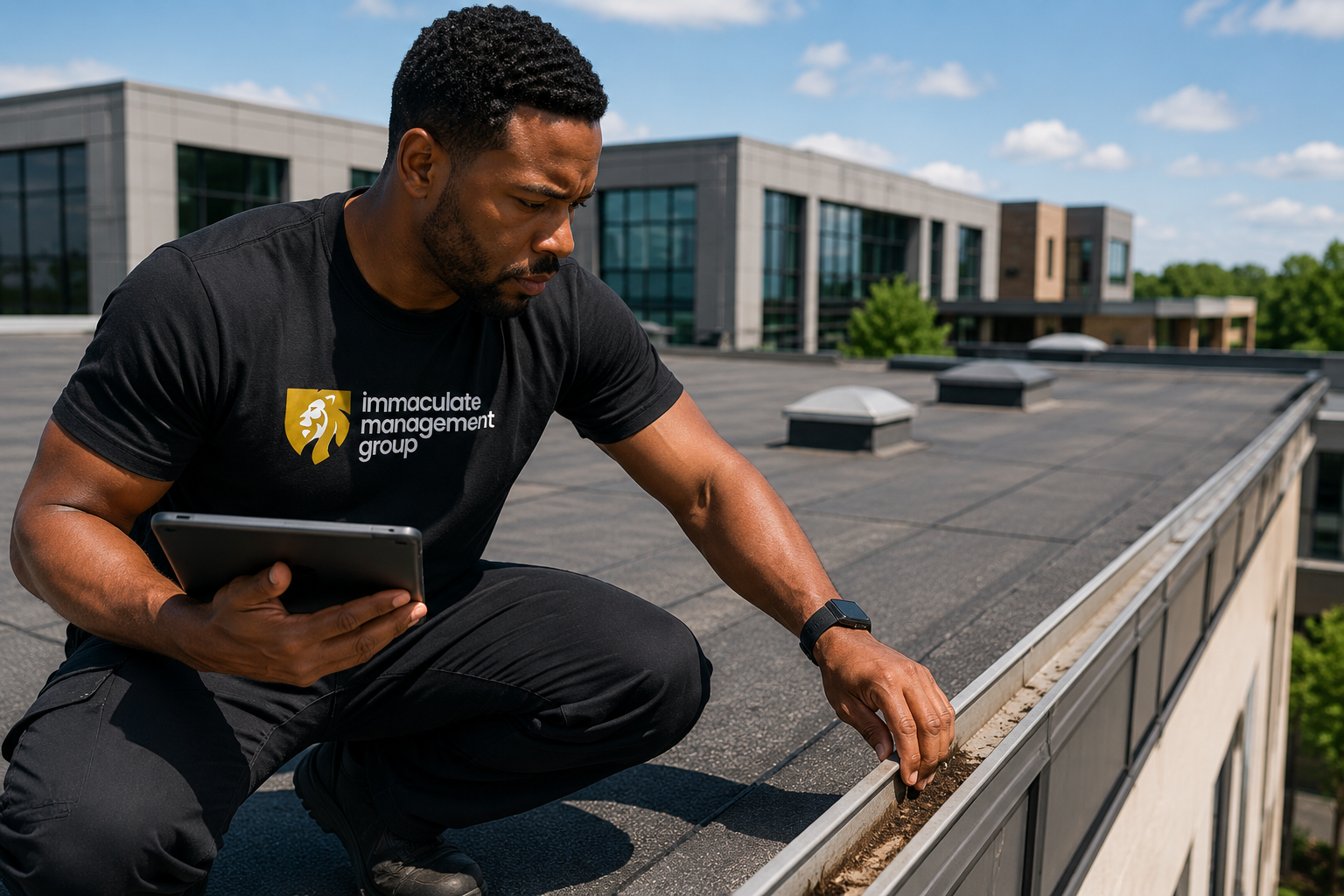
The transition into summer is one of the most important inspection periods because it allows managers to identify damage left behind by winter before intense summer weather worsens the situation.
At IMG, seasonal transitions are treated as critical maintenance windows rather than routine calendar changes.
Preparation always costs less than recovery.
Roof Inspections Protect More Than Buildings
Many people think roof inspections are only about structural protection, but their impact extends much further.
Roof performance affects indoor comfort, energy efficiency, operational stability, and tenant satisfaction. Small vulnerabilities in roofing systems often increase cooling costs because damaged insulation and trapped moisture reduce HVAC efficiency.
During summer, this becomes even more noticeable.
Commercial office spaces depend on stable indoor temperatures to support productivity and employee comfort. Healthcare facilities require controlled environments to protect patient well-being. Residential communities rely on consistent comfort to maintain resident satisfaction and retention.
A compromised roof affects all of these experiences.
Facility managers must therefore view roof inspections not as isolated maintenance tasks but as part of overall operational leadership.
The condition of a roof influences how a building performs every single day.
The Hidden Risks Facility Managers Often Miss
One of the biggest challenges in roofing maintenance is that the most serious problems are often invisible from ground level.
Surface-level inspections alone may not reveal hidden moisture intrusion, weakened seams, deteriorating flashing, or drainage vulnerabilities. By the time stains appear inside the building, water has often traveled through multiple layers of the structure.
Summer storms intensify these risks quickly.
Heavy rainfall combined with weakened roofing areas can create sudden leaks that disrupt operations immediately. Drainage systems clogged with spring debris may overflow during storms, leading to pooling water and accelerated deterioration.
Facility managers who rely only on reactive maintenance often discover problems after the damage is already expensive.
This is why professional inspections matter.
Detailed inspections evaluate roofing materials, drainage systems, flashing, seals, rooftop equipment areas, gutter performance, and early warning signs that untrained observation may overlook.
IMG approaches inspections proactively because hidden risks create the most expensive surprises.
Preventive Roof Maintenance Extends Property Lifespan
One of the most overlooked benefits of roof inspections is lifespan protection.
Many property owners assume roof replacement timelines are fixed, but proactive maintenance can significantly extend the life of roofing systems. Small repairs completed early prevent larger structural deterioration later.
A blocked drainage system corrected during spring may prevent years of moisture damage. Resealing vulnerable sections before summer storms can preserve roofing materials much longer. Addressing flashing concerns early may prevent major water penetration entirely.
Preventive maintenance protects capital investments.
Roof replacement is one of the largest expenses property owners face. Extending roof lifespan even by a few years can create substantial financial advantages for businesses, healthcare organizations, schools, and residential communities.
The goal is not simply avoiding emergencies.
The goal is maximizing long-term value through consistent care and strategic maintenance decisions.
Roof Inspections Improve Safety and Liability Protection
Facility management is deeply connected to risk management.
Roofing failures can create slip hazards, structural concerns, electrical risks, mold exposure, and operational disruptions that increase liability exposure for property owners.
Insurance claims involving water damage often become more complicated when preventive maintenance records are inconsistent or incomplete. In some cases, repeated neglect may even affect coverage outcomes.
This makes inspections important from both operational and legal perspectives.
Facility managers who prioritize inspections demonstrate responsible oversight. Documentation of inspections, maintenance actions, and repair planning strengthens accountability and supports stronger risk management practices.
Safety culture begins with preparation.
At IMG, preventive inspections are viewed as part of broader operational responsibility—not simply maintenance scheduling.
Strong management protects people first.
Why Summer Is the Worst Time for Roofing Emergencies
Summer creates the highest pressure period for roofing systems.
Intense sunlight, high temperatures, heavy rainstorms, and increased HVAC demand place constant stress on buildings. This also happens during periods of high occupancy, increased business activity, and stronger tenant expectations.
Emergency roofing repairs during summer are therefore especially disruptive.
Contractor availability becomes more limited during peak repair season. Emergency scheduling becomes more expensive. Tenant frustration increases faster when comfort is interrupted during extreme heat or storm conditions.
In residential communities, unresolved leaks affect daily living. In commercial environments, operational downtime affects productivity. In healthcare facilities, reliability becomes critical to patient care and safety.
The best time to inspect a roof is before these pressures arrive.
Facility managers who prepare early avoid competing with seasonal emergency demand later.
Roof Inspections Strengthen Tenant Confidence
Tenants may never see the roof directly, but they absolutely experience the results of roofing quality.
Comfort, dryness, indoor air quality, energy performance, and operational consistency all shape tenant perception. Residents and businesses feel more confident in properties that appear proactive, stable, and well-managed.
Leaks and recurring maintenance issues create the opposite effect.
Trust is difficult to maintain when problems repeatedly disrupt comfort or safety.
This is why preventive inspections contribute directly to tenant retention and satisfaction. People are more likely to remain in spaces where management demonstrates attention to detail and operational reliability.
At IMG, property management is ultimately about people.
Buildings matter because people depend on them every day.
The Financial Advantage of Acting Early
One of the clearest benefits of roof inspections is cost predictability.
Emergency repairs create sudden financial pressure. Preventive maintenance allows owners to plan strategically, budget responsibly, and prioritize repairs before problems escalate.
Planned repairs are almost always more affordable than emergency restoration.
A small repair completed early may prevent major structural damage later. Identifying weaknesses before storm season allows facility managers to coordinate work under less stressful conditions and lower urgency costs.
This creates stronger financial stability for property owners and organizations.
Preventive maintenance is not an expense—it is cost control.
The longer roofing problems remain unaddressed, the more expensive they become.
Why Professional Facility Management Makes the Difference
Roof inspections are only valuable when supported by strong management systems.
Inspection findings must lead to timely decisions, vendor coordination, repair scheduling, documentation, and long-term planning. Without proper oversight, even identified risks may remain unresolved.
This is where professional facility management creates measurable value.
IMG helps property owners move beyond reactive maintenance by creating structured preventive systems that protect operations before emergencies occur.
Strong management is not about waiting for damage.
It is about reducing the likelihood of disruption entirely.
Facility excellence comes from consistency, preparation, and operational discipline.
The most reliable properties are rarely the ones making the most emergency calls—they are the ones quietly preventing problems behind the scenes.
Looking Ahead: Prevention Creates Stability
As Ohio moves deeper into summer, facility demands will continue increasing. Cooling systems will work harder, storm activity will intensify, and occupant expectations will rise.
Properties that prepare early will experience stronger operational stability and fewer costly surprises.
Roof inspections represent one of the smartest preventive steps facility managers can take because they protect multiple systems at once—comfort, safety, finances, tenant relationships, and long-term property performance.
The strongest facilities are built on proactive leadership.
At IMG, we believe prevention is one of the clearest signs of professional management excellence.
Small inspections today often prevent major emergencies tomorrow.
Final Thoughts: Smart Facility Management Starts Above the Ceiling
The roof may sit above daily operations, but its impact reaches every part of the property experience.
It protects comfort.
It protects safety.
It protects business continuity.
It protects trust.
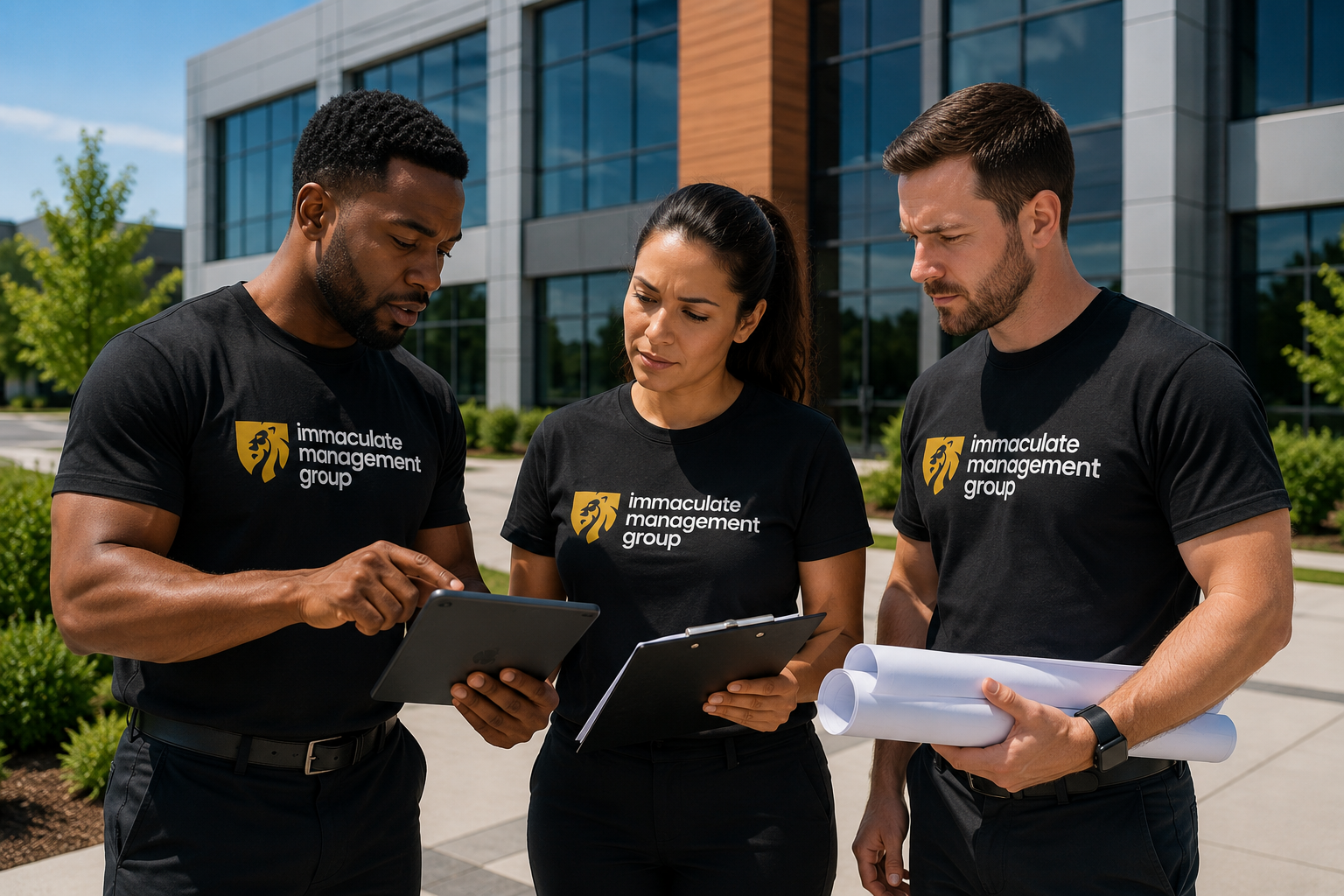
Facility managers who prioritize roof inspections before summer are not simply maintaining buildings—they are protecting people, operations, and long-term value.
In a state like Ohio, where seasonal transitions place constant stress on facilities, proactive inspections are no longer optional. They are essential.
At Immaculate Management Group, we believe the best-managed properties are the ones where preparation happens before disruption.
Because great properties don’t happen by chance—they happen by management.
Don’t wait for summer storms or costly leaks to reveal hidden roofing problems. Proactive roof inspections help protect your property, reduce emergency repair costs, improve tenant confidence, and extend the lifespan of your building systems.
At Immaculate Management Group (IMG), we help property owners and facility leaders stay ahead of expensive disruptions through preventive maintenance, seasonal inspections, and professional facility oversight tailored to long-term success.
Whether you manage healthcare facilities, schools, residential communities, office parks, or commercial properties, our team is committed to helping you create safer, stronger, and more reliable environments.
Now is the time to inspect before emergencies happen.
Contact Immaculate Management Group today and discover how proactive facility management protects what matters most.
Because prevention will always cost less than repair.