
How Seasonal Property Inspections Prevent Expensive Emergency Repairs
Property management is often judged by how quickly problems are solved, but true excellence is revealed in how effectively problems are prevented. For property owners, facility managers, and commercial leaders across Ohio, one of the smartest investments is not emergency repair—it is seasonal property inspection.
Many expensive building failures do not happen overnight. Roof leaks, plumbing failures, HVAC breakdowns, electrical hazards, drainage issues, and structural wear often begin as small warning signs that go unnoticed. By the time they become visible emergencies, the financial damage is already significant.
This is why seasonal property inspections are not simply a maintenance routine—they are a business strategy. They protect long-term property value, reduce liability risks, improve tenant satisfaction, and create stronger operational stability.
At Immaculate Management Group (IMG), we understand that prevention is always more cost-effective than repair. Whether managing healthcare facilities, retirement communities, schools, office parks, or residential properties, proactive inspections create the foundation for safer, more reliable environments.
In Ohio, where weather conditions shift dramatically between seasons, inspections become even more important. Winter snow, spring rain, summer heat, and fall debris each create unique pressures on buildings and infrastructure. Ignoring those transitions often leads to costly surprises.
The best-managed properties are rarely the ones with the fastest emergency response—they are the ones where emergencies happen less often.
That begins with seasonal inspections.
Why Emergency Repairs Cost More Than Most Owners Expect
Emergency repairs are rarely limited to the original problem. A leaking roof does not only require roof repair—it can lead to damaged ceilings, mold growth, tenant disruption, and insurance complications. A neglected HVAC issue does not only affect temperature—it can result in system failure during peak summer demand, resident complaints, and costly urgent replacement.
The visible repair is often only the beginning.
What makes emergencies expensive is the combination of urgency, disruption, and secondary damage. Contractors charge more for urgent work. Tenants lose confidence when comfort and safety are interrupted. Businesses may lose productivity. Residents may reconsider lease renewals. Healthcare and retirement facilities face even greater risks when system failures affect vulnerable occupants.
In many cases, the real cost is not the repair itself—it is the operational damage surrounding it.
Seasonal inspections reduce this risk by identifying small issues before they become large financial events. A loose roof flashing repaired in spring costs far less than interior water restoration during summer storms. A clogged drainage system cleared early prevents flooding that may affect multiple units.
IMG approaches inspections with this larger financial picture in mind. Maintenance is not simply about fixing what is broken—it is about protecting everything connected to it.
The Ohio Weather Factor: Why Seasonal Inspections Matter More Here
Ohio’s climate creates a unique challenge for property owners because each season places different stress on buildings. Winter snow and freezing temperatures can damage roofs, freeze pipes, weaken pavement, and create hidden moisture issues. Spring brings heavy rain, drainage concerns, and landscaping recovery. Summer places high demand on cooling systems, electrical performance, and outdoor infrastructure. Fall introduces gutter blockages, leaf buildup, and preparation for winter exposure.
Each season leaves behind evidence.
Ignoring seasonal transitions means allowing one season’s damage to become the next season’s emergency. A roof weakened during winter may fail during spring rain. Poor drainage ignored in spring may create foundation concerns by summer. HVAC systems left unchecked before summer may fail during the hottest week of the year.
This cycle is predictable, which means it can be managed.
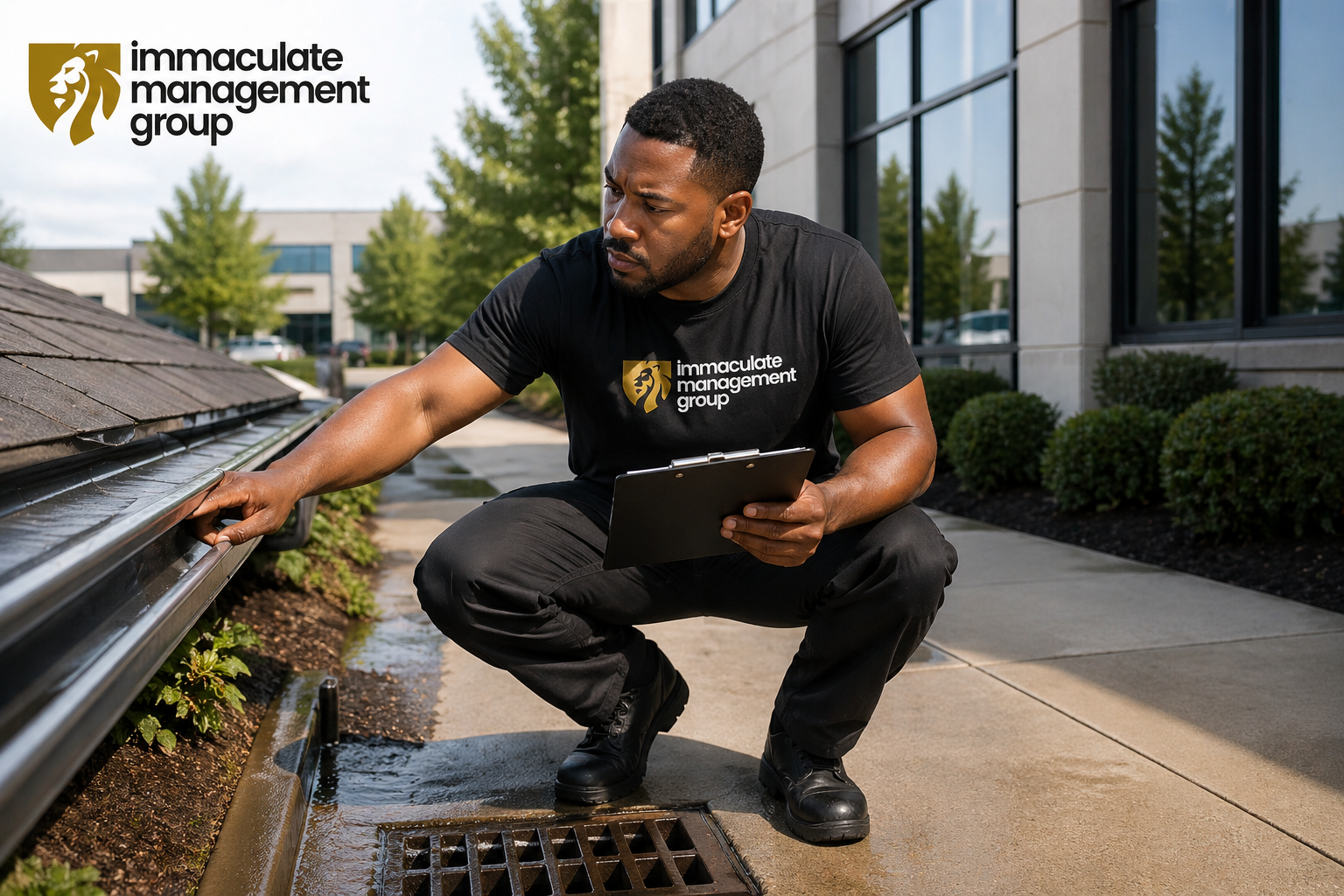
At IMG, seasonal inspections are planned around these environmental realities. Ohio properties require management that understands not just buildings but also how local climate shapes building performance.
Preparation is not optional—it is operational leadership.
Roof Inspections: The Most Overlooked Financial Protection
Few building systems create more expensive emergencies than roofing problems. Unfortunately, roofs are also among the most ignored because damage often remains invisible until interior issues appear.
Small cracks, damaged flashing, blocked gutters, missing shingles, and drainage failures may seem minor, but they create the pathway for major water intrusion. Once moisture enters the structure, repair costs multiply quickly.
Water damage affects insulation, ceilings, drywall, electrical systems, flooring, and indoor air quality. In healthcare and retirement environments, even small moisture issues can create serious health concerns for residents and patients.
Seasonal roof inspections allow these risks to be addressed early.
Spring is especially important because winter snow and ice often leave hidden vulnerabilities. Summer storms can then turn those weak points into major leaks.
A scheduled inspection costs far less than structural restoration.
Property owners often think of roofing as a large capital expense and delay attention because they fear replacement costs. In reality, inspections often extend roof lifespan significantly by protecting smaller sections before system-wide failure occurs.
IMG believes roof maintenance should be proactive, not reactive. The goal is not to wait for leaks—it is to prevent them entirely.
HVAC Systems and the Cost of Comfort Failure
Comfort is one of the fastest ways tenants judge property quality. When heating or cooling systems fail, dissatisfaction rises immediately.
HVAC breakdowns are especially costly because they happen during peak demand. Summer failures create emergency calls, urgent contractor fees, and major disruption for residents, employees, patients, or visitors.
In schools, office parks, and healthcare facilities, comfort directly affects productivity and trust. In retirement communities, it affects health and daily well-being.
Most HVAC emergencies begin with warning signs that inspections can catch early. Dirty filters, blocked airflow, worn components, refrigerant concerns, and drainage issues often appear long before full system failure.
Preventive servicing before seasonal demand reduces both cost and stress.

The financial difference between routine servicing and emergency replacement is substantial. The emotional difference for tenants is even greater.
Residents may forget a routine inspection happened, but they will remember the day air conditioning stopped working in July.
Strong management protects both the system and the relationship.
Plumbing and Drainage: Silent Problems with Expensive Consequences
Plumbing issues often remain hidden until damage becomes impossible to ignore. Leaks behind walls, drainage failures, clogged systems, and unnoticed moisture can quietly create thousands of dollars in repairs.
Water travels quickly and damages widely.
Seasonal inspections help identify pressure issues, slow leaks, blocked drains, outdoor irrigation concerns, and vulnerable pipe conditions before larger failures occur.
Spring is especially critical because thawing temperatures and heavy rainfall place new stress on drainage systems. Poor water flow around a building can affect foundations, basements, parking areas, and landscape stability.
Standing water also creates safety concerns and impacts curb appeal.
For residential communities, plumbing issues create frustration and inconvenience. For healthcare facilities, they can disrupt sanitation standards and daily operations. For schools and office buildings, even a small leak can interrupt productivity and create liability concerns.
IMG treats plumbing and drainage inspections as a core part of property protection, not an occasional response.
The most expensive water damage is often the damage no one noticed early enough.
Exterior Maintenance and Safety Visibility
Property safety begins before anyone enters the building. Walkways, parking lots, lighting systems, stairways, and outdoor access points shape both perception and liability.
Cracked sidewalks, poor lighting, damaged railings, uneven pavement, and neglected entrances create risks that affect residents, visitors, and businesses alike.
These issues may appear small, but they are often the beginning of insurance claims, legal exposure, and preventable accidents.
Seasonal inspections create visibility.
After winter, pavement damage becomes clearer. Spring reveals drainage failures around walkways. Summer exposes lighting weaknesses in high-traffic outdoor areas. Fall introduces slip risks from leaf accumulation and blocked paths.
These details matter because people notice them immediately.
A poorly maintained entrance communicates neglect before a conversation even begins. A clean, safe exterior builds confidence.
At IMG, inspections are not limited to mechanical systems—they include the lived experience of the people using the property every day.
Safety is not just compliance. It is trust.
Tenant Satisfaction Begins Before Complaints
Many property owners think maintenance begins when tenants report a problem. Stronger management begins before the complaint ever happens.
Residents remember reliability more than repair speed. They notice whether lighting works consistently, whether landscaping feels cared for, whether parking areas feel safe, and whether seasonal transitions appear managed.
Preventive inspections reduce frustration because they reduce surprises.
A resident whose comfort remains uninterrupted feels secure. A business tenant whose operations are protected trusts management more deeply. A family choosing assisted living for a loved one notices signs of attention long before asking direct questions.
Trust is built through consistency.
This is why inspections are not just operational—they are relational.
Properties with strong preventive systems often experience higher retention, stronger referrals, and fewer emergency complaints because confidence grows quietly over time.
IMG understands that people do not stay because a building is perfect. They stay because management feels dependable.
That dependability starts with preparation.
Vendor Coordination and Inspection Discipline
Seasonal inspections are only valuable when they lead to action. Identifying problems without follow-through creates false confidence.
This is where professional management matters most.
Inspections require vendor coordination, scheduling discipline, documentation, budgeting decisions, and clear communication. Property owners managing multiple facilities often struggle not because they ignore maintenance but because consistent execution becomes difficult across locations.
A roof inspection may require immediate gutter clearing, contractor review, and future budgeting for replacement planning. HVAC findings may require servicing schedules that align with occupancy demands. Exterior repairs may involve safety prioritization before cosmetic upgrades.
Without strong management systems, these details become delayed.
IMG bridges that gap by turning inspection results into operational decisions.
The value of management is not only in identifying what needs attention—it is in ensuring the right action happens at the right time.
This is where cost savings become real.
Seasonal Inspections as a Leadership Standard
There is a leadership principle inside preventive maintenance: strong leaders address risk before it becomes visible.
Facility excellence is rarely dramatic. It is often quiet, consistent, and built through routines that most people never notice because problems never occur.
That is the goal.
A successful property manager is not measured only by crisis response but by how many crises never happen at all.
Seasonal inspections represent discipline. They show owners that assets are protected. They show residents that safety matters. They show staff that standards are real.
In healthcare spaces, leadership protects patient environments. In schools, it protects student experience. In commercial properties, it protects operational continuity.
The building becomes a reflection of management quality.
At IMG, inspections are not treated as maintenance tasks alone—they are part of leadership culture.
Strong facilities reflect strong decisions.
Looking Ahead: Summer Success Starts Before Summer Arrives
Many summer emergencies are actually spring decisions delayed.
HVAC failures, drainage floods, parking lot hazards, roof leaks, and landscaping neglect often become visible during summer, but the warning signs were present much earlier.
This is why preparation matters more than reaction.
Properties that enter summer with completed inspections experience fewer disruptions, stronger occupancy performance, and better resident satisfaction. Those that delay often spend the season managing preventable problems.
Summer should be a season of growth, not recovery.
The strongest leasing periods, visitor traffic, and tenant expectations often arrive during warmer months. This means operational readiness becomes directly connected to revenue performance.
IMG helps property owners prepare early because the best emergency strategy is avoiding the emergency entirely.
The work done before summer often determines how successful summer becomes.
Prevention Protects More Than Property
Seasonal property inspections do more than prevent expensive repairs—they protect confidence.
They protect the resident who expects comfort and safety.
They protect the owner who wants long-term value and predictable costs.
They protect the healthcare facility where reliability affects patient care.
They protect the school environment where safe operations shape daily learning.
They protect businesses that depend on uninterrupted performance.

At Immaculate Management Group, we believe the best-managed properties are not the ones constantly solving emergencies—they are the ones quietly preventing them.
That is the difference between maintenance and management.
Emergency repairs will always exist, but they should never define the property experience.
Seasonal inspections turn uncertainty into strategy.
They replace surprise with preparation.
They turn small attention into major savings.
And in Ohio, where every season brings new demands, that proactive mindset is not just smart—it is essential.
Don’t wait for small maintenance issues to become major financial emergencies. Seasonal property inspections are one of the smartest ways to protect your investment, improve tenant satisfaction, and maintain long-term operational stability.
At Immaculate Management Group (IMG), we help property owners stay ahead of costly repairs through proactive inspections, preventive maintenance, and professional facility oversight designed for real results.
Whether you manage residential communities, healthcare spaces, schools, retirement facilities, or commercial office parks, our team is committed to creating safer, stronger, and more reliable environments.
Now is the time to inspect before problems escalate.
Contact Immaculate Management Group today and let us help you protect what matters most—your property, your people, and your peace of mind.
Because great properties don’t happen by chance—they happen by management.