
The Difference Between a Cleaning Vendor and a Facility Partner — And How to Tell Which One You Have
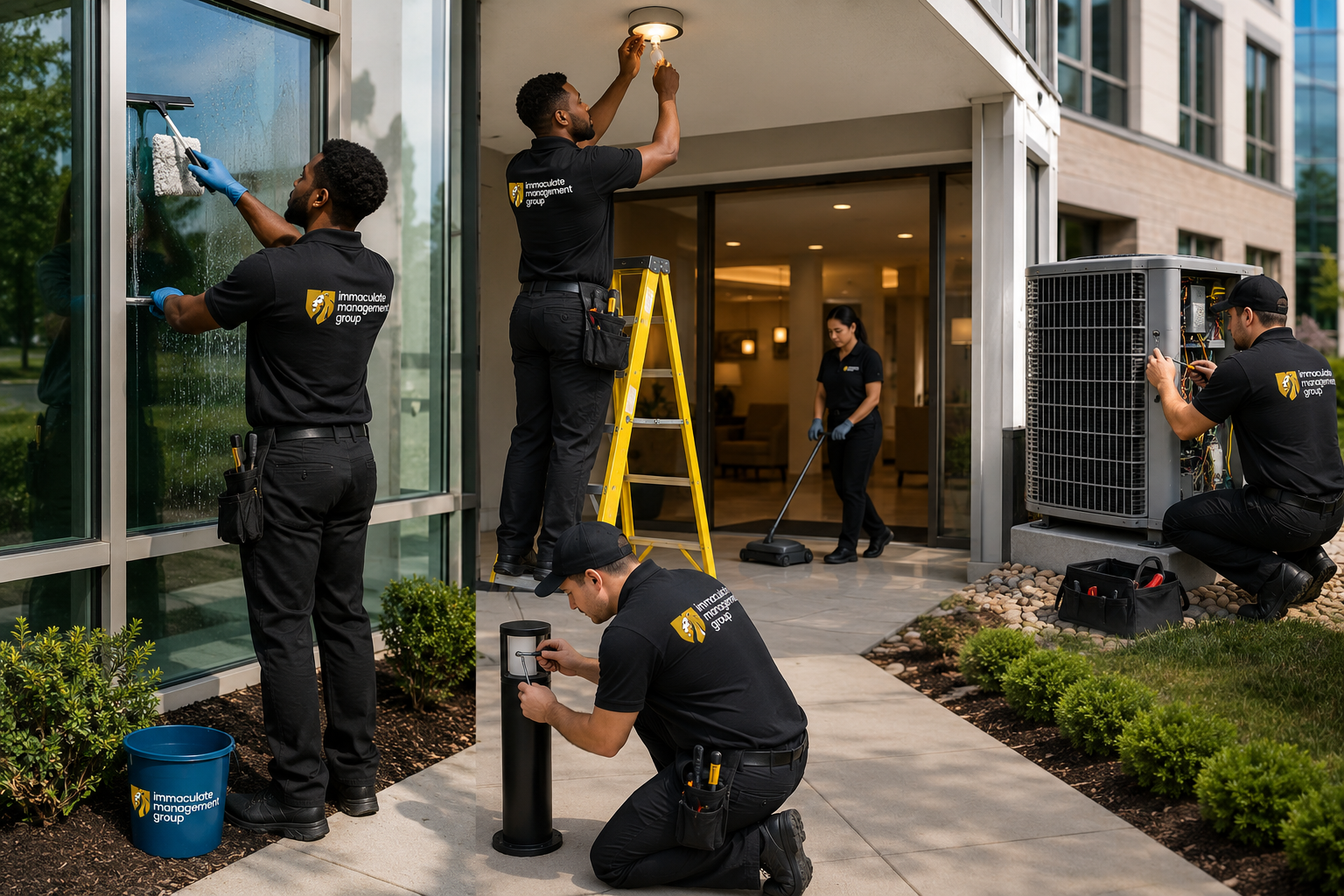
There is a conversation that happens in commercial real estate, property management, and corporate operations circles that rarely gets said out loud. It goes something like this: the building looks fine on the surface, the service invoices are paid, and the vendor shows up on schedule—and yet something is consistently off. Complaints trickle in. Small problems quietly grow into expensive ones. The people responsible for the building feel like they are managing the vendor rather than being served by one.
If any part of that sounds familiar, there is a good chance you have a cleaning vendor. What you actually need — and what the best-run commercial facilities in Northeast Ohio rely on — is a facility partner.
These are not the same thing. Not even close.
The difference between a cleaning vendor and a facility partner is not just about the scope of services offered. It is about mindset, accountability, communication, and the long-term relationship between a service provider and the building they serve. Understanding this difference could be one of the most important operational decisions you make for your property — because the wrong choice does not just affect how clean your floors are. It affects tenant retention, liability exposure, operational continuity, and the long-term value of your investment.
This post breaks down exactly what separates the two, how to diagnose which one you currently have, and what to look for if you are ready to make a change.
What a Cleaning Vendor Actually Is
A cleaning vendor is a transactional service provider. They are hired to perform a defined set of tasks—vacuum the carpets, mop the lobby, clean the restrooms, and empty the trash—on a schedule that was agreed upon at the start of the contract. They show up, they do the work, they leave. If the work gets done to a passable standard, the contract continues. If it does not, you call and complain. The cycle repeats.
There is nothing inherently wrong with this model for certain applications. A small single-floor office that just needs basic janitorial maintenance twice a week probably does not need much more than a reliable cleaning vendor. The tasks are simple, the stakes are relatively low, and the relationship does not need to be complex.
But the moment a property becomes more complex—multi-tenant commercial buildings, healthcare facilities, educational institutions, mixed-use developments, large corporate campuses—the vendor model starts to crack. Here is why.
A cleaning vendor's relationship with your building begins and ends at the task list. They are not thinking about your building between visits. They are not proactively flagging the water stain forming near the second-floor HVAC unit. They are not noticing that the parking lot lighting near the east entrance has two bulbs out and that this creates a liability concern. They are not thinking about how the change in season is about to affect your grounds maintenance schedule. They are not your problem-solvers. They are your task-completers.
And when problems arise—a major spill, an unexpected pest issue, a last-minute request ahead of a big client visit—a vendor's response is often slow, transactional, and sometimes simply outside their scope. "That's not in the contract" is the most expensive sentence a service provider can ever say to a facility manager.
This is not a criticism of every cleaning company that operates on a vendor model. Many of them do excellent work within the boundaries of what they offer. The issue is that facility management at a serious level of complexity requires more than task completion. It requires a different kind of relationship entirely.
What a Facility Partner Actually Is
A facility partner operates from a fundamentally different premise. Instead of asking "what tasks do I need to complete today," a facility partner asks "what does this building need to operate at its best, and how do I help make that happen?"
This shift in perspective changes everything about how service is delivered.
A facility partner understands your building. Not just the floor plan and the cleaning schedule, but also the occupancy patterns, the tenant expectations, the seasonal vulnerabilities, the history of recurring problems, and the operational goals of the people who run it. They invest time at the beginning of the relationship to understand not just what you need done, but why it matters, who it affects, and what success looks like to you.
A facility partner communicates proactively. They do not wait for you to notice a problem. When they see something — a drainage issue developing, a pest entry point near a loading dock, a section of walkway that is beginning to crack and will become a slip liability by winter — they tell you. In writing. With a recommended course of action. Before it becomes an emergency.
A facility partner is accountable beyond the task list. If something goes wrong, they do not hide behind contract language. They own it, they address it, and they communicate clearly about what happened and how it will be prevented in the future. Accountability is not just a value — it is a business model. A facility partner understands that their reputation is tied to the condition of your building, and they protect both.
A facility partner brings integrated capability. Rather than managing five different vendors for cleaning, landscaping, pest control, painting, and project management—each with their own schedule, their own invoice, and their own communication style—a true facility partner consolidates those capabilities under one point of accountability. This reduces coordination burden on your team, eliminates the gap between vendors where problems fall through the cracks, and creates a unified standard of service across every touchpoint of your property.
A facility partner thinks long-term. A vendor thinks about the current contract period. A partner thinks about the next three to five years of your building's performance. They make recommendations that serve your long-term interests, even when those recommendations mean pointing out things that will cost money to fix. Because a partner who helps you avoid a $200,000 emergency repair by flagging a $3,000 maintenance issue early is not just a service provider—they are an asset to your operation.
The Seven Signs You Have a Vendor, Not a Partner
How do you know which one you currently have? Here are seven clear indicators.
1. You hear about problems after they happen, not before.
If your facility service provider is only communicating with you reactively — responding to complaints, addressing issues after they escalate, showing up when called — that is vendor behavior. A partner surfaces problems early. You should be hearing about potential issues from your service provider before you hear about them from tenants, employees, or your insurance adjuster.
2. Every additional request becomes a negotiation.
With a vendor, anything outside the original scope triggers a conversation about additional charges, scheduling conflicts, or "that's not really what we do." With a partner, the response to an unexpected need is "let us figure out how to handle this for you." That does not mean everything is free — it means the orientation is toward solving your problem, not toward protecting their task list.
3. You are managing them more than they are serving you.
If your facility manager or operations team spends significant time following up on service completion, reminding the provider about recurring tasks, or quality-checking work that should consistently meet a standard—you are spending management energy that should be directed elsewhere. A partner manages their own performance so you do not have to.
4. They do not know your building.
Ask your current service provider a specific question about your building—when was the last time the east stairwell was deep cleaned? What is the pest pressure pattern around your loading dock in summer? And what maintenance items are coming up in the next 90 days? If they cannot answer from memory or from documented records they maintain, they do not know your building. A partner keeps institutional knowledge about your property. A vendor shows up and executes.
5. There is no relationship above the service crew.
With a vendor, your primary point of contact is often the crew that shows up on site. There may be a supervisor you can reach occasionally. But there is no senior relationship — no account manager, no operations leader, no one who takes ownership of your building's performance at a leadership level. A partner has a named relationship owner who is accountable for the overall quality of service and who you can reach when something important needs to be addressed.
6. Their technology and documentation are minimal or nonexistent.
A serious facility partner maintains records—service logs, inspection reports, maintenance histories, and compliance documentation. They use systems to track what has been done, what is coming up, and what anomalies have been observed. A vendor shows up, does the work, and leaves. If you asked for a 12-month service history from your current provider and they could not produce a clean, organized document within 24 hours, that tells you something important.
7. They have never made a recommendation you did not ask for.
Think back over the last year of your relationship with your current facility service provider. How many times did they proactively recommend something—a change in approach, an emerging issue to address, a better practice, or a service addition that would benefit your property? If the answer is never, or close to it, they are operating as a vendor. A partner's value is not just in executing tasks. It is in the thinking, experience, and proactive insight they bring to your operation.

Why This Distinction Matters More Than Most Property Owners Realize
The gap between a cleaning vendor and a facility partner might seem like a philosophical distinction. In practice, it has very real financial and operational consequences.
Tenant retention is directly affected by facility quality. Research consistently shows that one of the top reasons commercial tenants choose not to renew leases is dissatisfaction with building maintenance and management. Not rent. Not location. Maintenance. A building that is consistently well-maintained, where problems are addressed quickly and proactively, retains tenants at significantly higher rates than one where the facility experience is reactive and inconsistent. The revenue impact of that difference — across a multi-tenant commercial property over three to five years — can be substantial.
Liability exposure compounds when facility management is reactive. A slip-and-fall on a walkway that had visible cracking for three months. Mold discovered in a server room that a thorough facility inspection would have caught early. A pest infestation in a food service area that had warning signs for weeks. These are not rare scenarios — they are common consequences of vendor-model facility management where no one is watching the whole picture. The legal and insurance costs associated with these incidents dwarf the cost of proactive facility partnership.
Deferred maintenance is the most expensive line item on any property budget. Every minor issue that goes unaddressed becomes a major repair. Every piece of equipment that is not properly maintained has a shortened lifespan. Every exterior surface that is not regularly cleaned and inspected deteriorates faster. A facility partner who proactively identifies and recommends addressing small issues is not adding to your cost — they are reducing it, systematically, over time.
Operational disruption is a hidden cost most property managers underestimate. When a facility emergency hits—a major system failure, a significant infestation, a flooding event—the direct repair cost is only part of the impact. Tenant disruption, temporary closure costs, staff time consumed by crisis management, and reputational damage with current and prospective tenants are all costs that rarely appear on a maintenance invoice but are very real. A facility partner's proactive approach is essentially a form of operational insurance.
What the Transition Looks Like
If you have read this far and recognize that you currently have a vendor relationship when you need a partner relationship, the good news is that transitioning is simpler than most property managers expect — and the benefits begin almost immediately.
The key elements of a successful transition are documentation, communication, and alignment.
Before bringing on a new facility partner, document the current state of your property thoroughly. Walk every area, note every existing issue, and photograph anything that needs attention. This becomes the baseline from which your new partner will operate, and it protects you from inheriting liability for pre-existing conditions.
Have a clear conversation with any prospective facility partner about your expectations—not just for task completion, but for communication cadence, reporting format, escalation protocols, and proactive recommendations. A real partner will not just accept these expectations—they will probably have their own framework for delivering on them and will want to align it with your needs.
Expect a transition period of 30 to 60 days where the new partner is learning your building. The best facility partners are obsessive about this phase — walking every square foot, asking detailed questions, reviewing any historical records available, and building their own documented understanding of the property. This investment at the front end is what makes everything that follows better.
Finally, build a regular communication rhythm. Monthly check-ins, quarterly performance reviews, and an annual planning conversation are the foundation of a real partner relationship. These touchpoints are not just about reviewing performance — they are about planning ahead, anticipating seasonal changes, aligning on budget priorities, and ensuring that the people responsible for your building are genuinely aligned with your goals.
What This Means for Commercial Properties in Northeast Ohio
Northeast Ohio presents specific facility management challenges that make the vendor-versus-partner distinction particularly important.
The regional climate is demanding. Winters in Cuyahoga, Lake, and surrounding counties create significant and consistent pressure on every element of a commercial building — from exterior surfaces and walkways to drainage systems, parking lots, and landscaping. A vendor who shows up to clean the lobby is not thinking about how the freeze-thaw cycle is affecting your building envelope. A partner who knows Northeast Ohio's seasonal patterns is planning for them months in advance.
The commercial real estate market in greater Cleveland is competitive. Properties that are well-maintained and consistently managed retain tenants and attract new ones. Properties where the facility experience is inconsistent lose out — not dramatically in any single incident, but steadily, over time, in the compound effect of small dissatisfactions and deferred issues.
The regulatory environment for commercial facilities—particularly healthcare, educational, and food service-adjacent properties—continues to raise the bar. A vendor relationship that was adequate five years ago may not be sufficient today. A facility partner who stays current on regulatory requirements and proactively ensures compliance is not just a convenience—in certain property types, they are a necessity.
How to Vet a Facility Partner Before You Sign
Knowing you need a facility partner is one thing. Finding one who genuinely operates that way is another. The facility management industry has no shortage of companies that use the language of partnership in their sales process and revert to vendor behavior the moment the contract is signed. Here is how to tell the difference before you commit.
Ask for a sample inspection report. A serious facility partner conducts regular documented inspections of the properties they serve. If a prospective provider cannot show you a sample inspection report—with specific observations, photographs, priority ratings, and recommended actions—they are telling you something important about how they operate.
Ask how they handle a situation outside their core scope. Give them a specific scenario: "We have a tenant who needs a minor interior painting repair done on short notice before a client visit. How do you handle that?" A vendor will tell you that is outside their scope or will quote you a separate engagement. A partner will tell you how they coordinate that kind of request — either through their own integrated capabilities or through a trusted subcontractor relationship — and how they ensure it gets done to your standard.
Ask for references from properties similar to yours. Not just any reference — specifically properties that are comparable to yours in size, type, and complexity. A facility partner who has successfully served a similar property will be able to speak in specific, operational terms about what that looked like. Ask the reference directly: how often does the provider communicate proactively? Have they ever flagged a problem before you saw it yourself? How do they handle something going wrong?
Ask what their onboarding process looks like. A serious facility partner has a structured approach to learning a new property. They should be able to describe it in specific terms — what they document, what questions they ask, what the first 30 to 60 days look like, and what deliverable you should expect at the end of the onboarding period. If the answer is vague, or if onboarding sounds like it simply means "we'll start the cleaning schedule on Monday," manage your expectations accordingly.
Ask what technology they use. This does not need to be sophisticated enterprise software, but a facility partner should have systems for scheduling, service documentation, inspection records, and communication. The question is not whether they use a particular platform. The question is whether they have a documented, organized record of what they do and when they do it for each property they serve.
Finally, pay attention to how they listen during the sales process. A vendor will spend most of the conversation talking about their services, their pricing, and their availability. A partner will spend a significant portion of the conversation asking you questions—about your building, your challenges, your priorities, and your history with previous providers. The curiosity a provider demonstrates before they have your business is the best available predictor of the attention they will bring once they do.

The Question Worth Asking Today
If you manage or own commercial property in Northeast Ohio, there is one question worth taking seriously after reading this: when was the last time your facility service provider told you something you did not already know?
Not an invoice. Not a service completion confirmation. Something genuinely useful—a problem they spotted before it became expensive, a recommendation that improved your operation, or a piece of insight that helped you make a better decision about your building.
If the answer is "recently," you may already have a partner. If the answer is never — or you cannot remember — it may be time to raise your expectations.
The buildings that perform best over time, that retain tenants, minimize liability, and protect property value, are not the ones with the lowest facility management costs. They are the ones with the right facility relationships — where a trusted partner is watching the whole picture, thinking ahead, and treating your building's performance as their own professional responsibility.
That is the difference between a vendor and a partner. And it is worth knowing which one you have.
Immaculate Management Group is a full-service facility management contractor based in Northeast Ohio, providing commercial cleaning, landscaping, painting, pest control, project management, and transportation services to world-class commercial facilities. MBE/EDGE Certified. To speak with our team about your facility needs,
Contact us at info@theimggroup.com or call 440-833-4258.